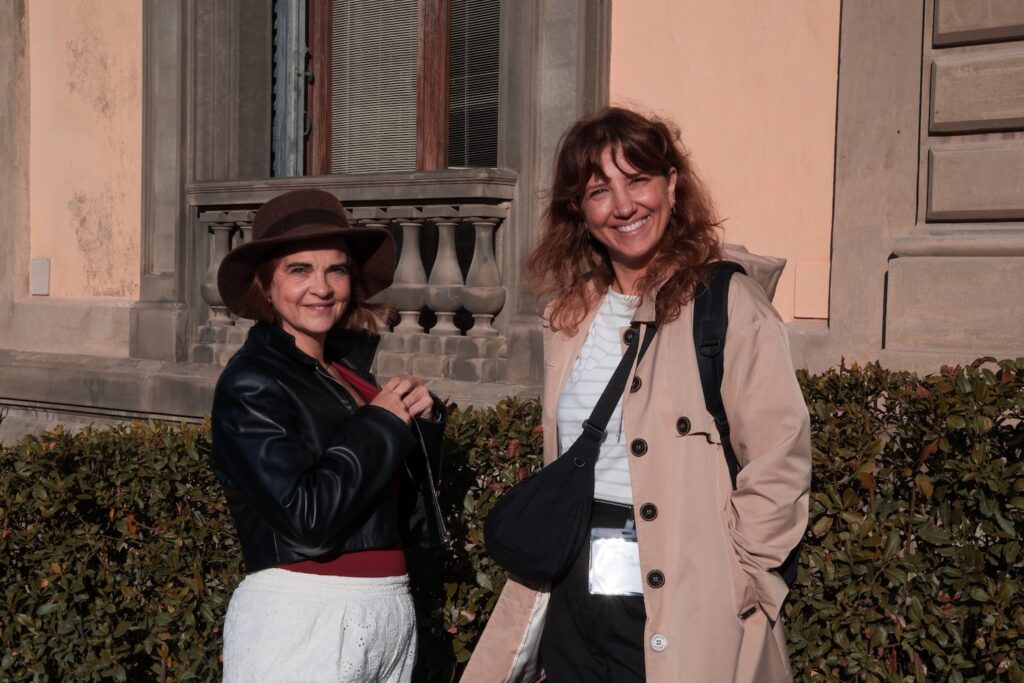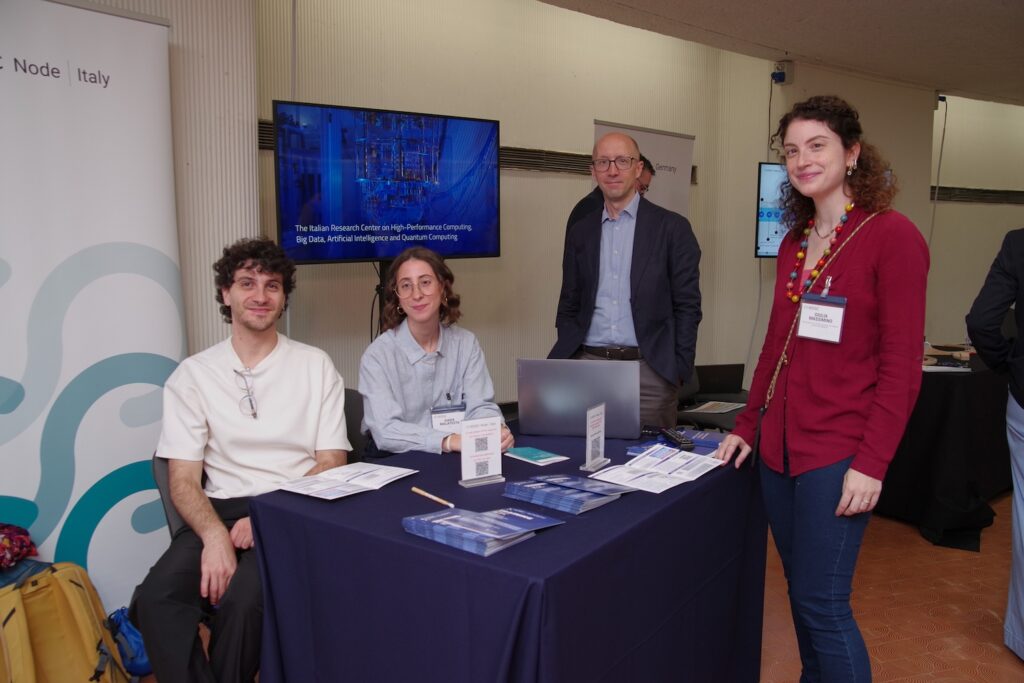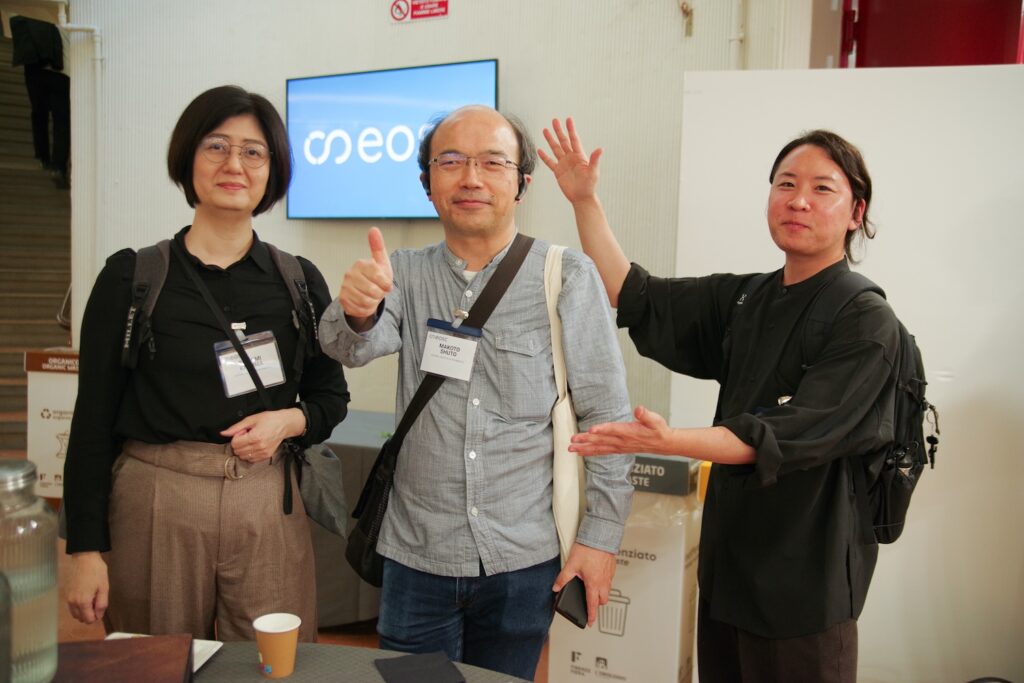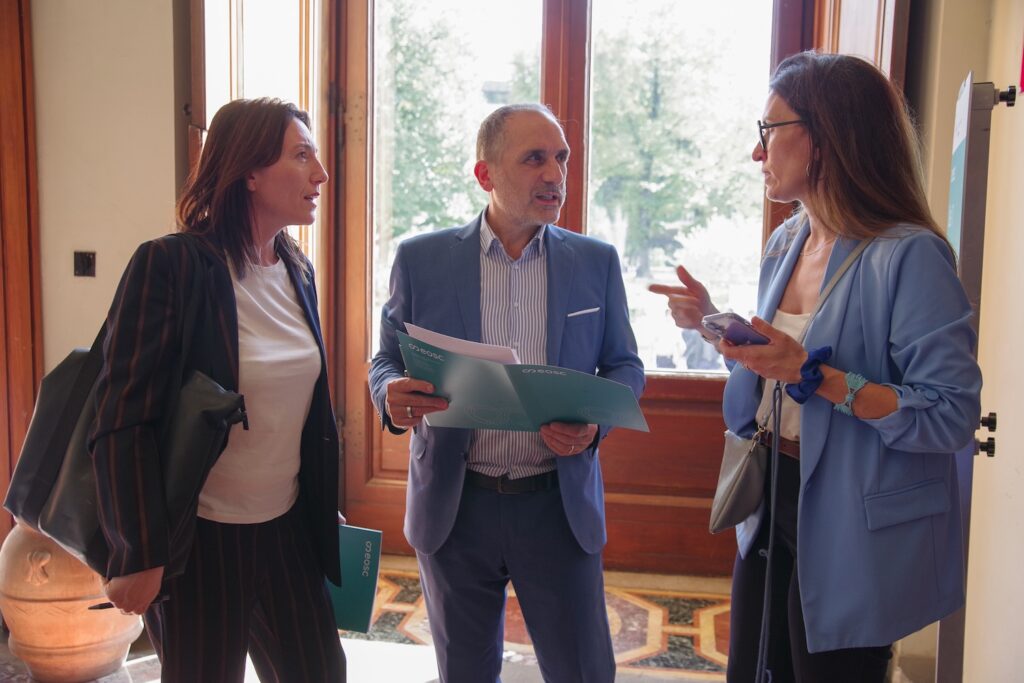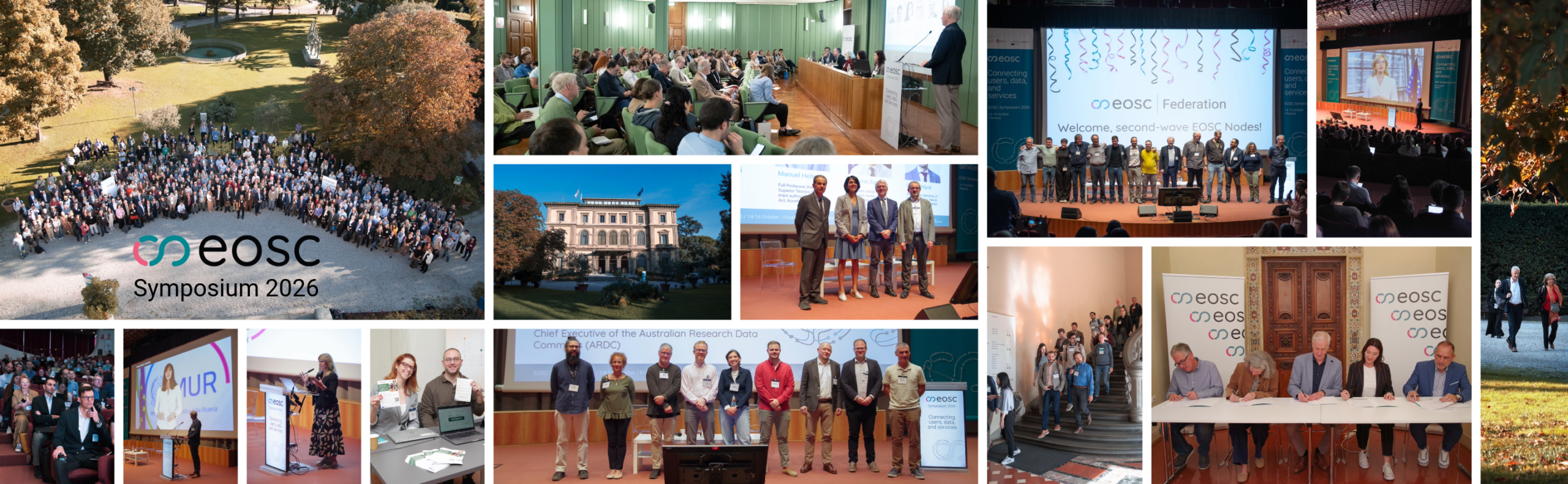
With the EOSC Federation in production, 500 participants gathered in Florence to acknowledge a decade of collective achievement, and to confront the scientific, operational and political challenges shaping the next phase of European research and innovation.
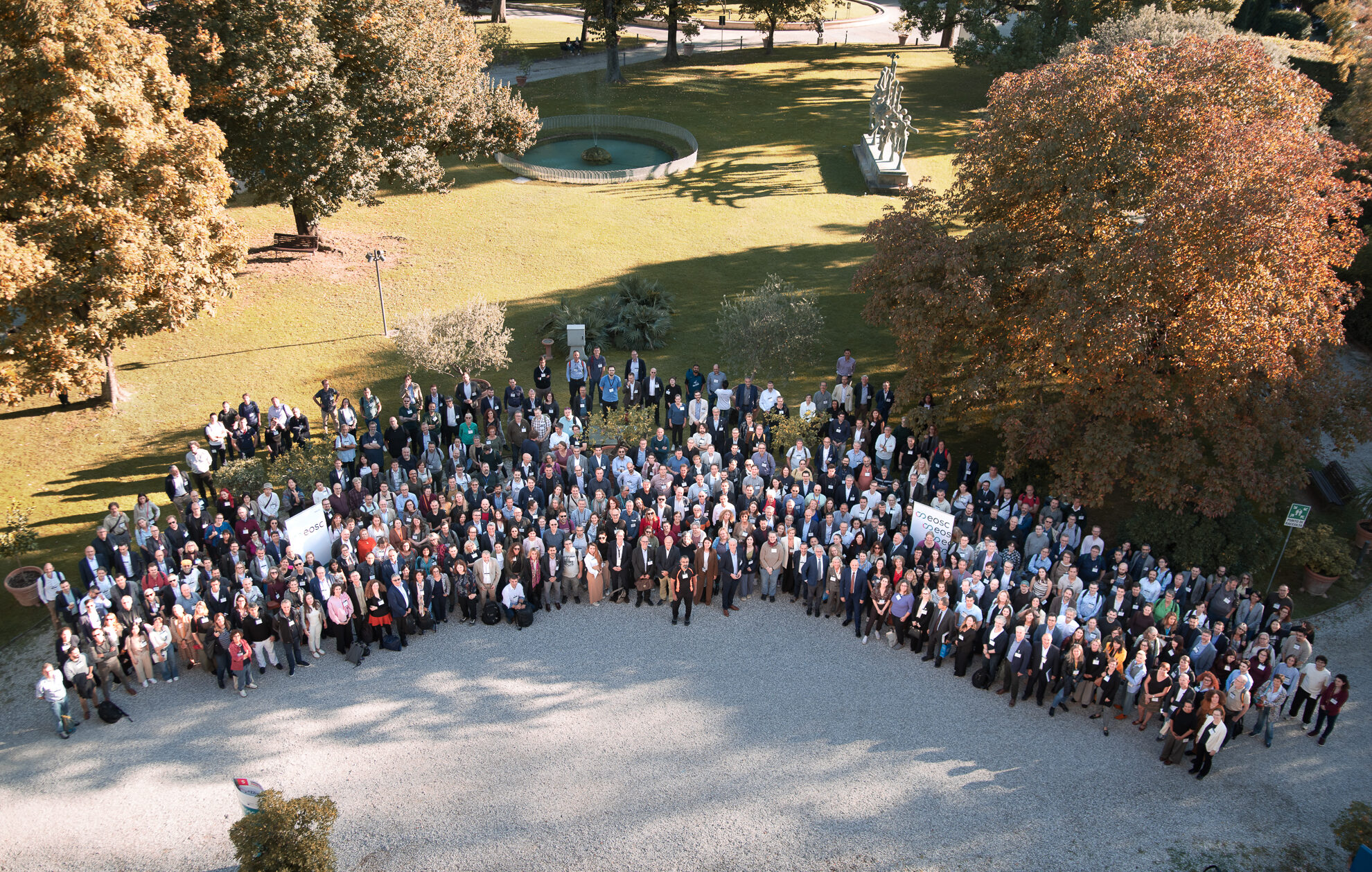
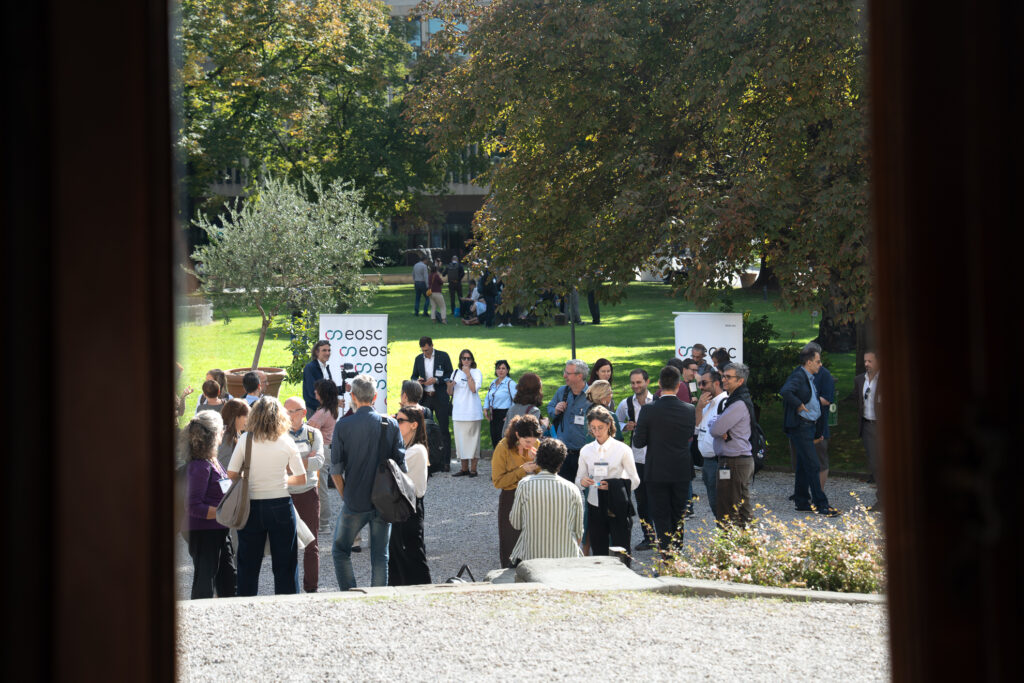
FLORENCE—The EOSC Symposium 2026 marked a turning point in the development of EOSC and the EOSC Federation. Meeting in Florence on 14–16 October, just days after the EOSC Federation entered production, approximately 500 participants from 35 countries celebrated a milestone ten years in the making. With 14 EOSC Nodes in production, offering 124 scientific services, Europe has established the foundation of a distributed research environment connecting data, services and expertise across boundaries.
Across three days, policymakers, researchers, and EOSC community leaders dove headlong into what comes next—how EOSC will become a sustainable European research asset, deliver capabilities that researchers cannot obtain elsewhere, and respond to the opportunities and challenges of Artificial Intelligence.

Day 1: The political and scientific stakes are established
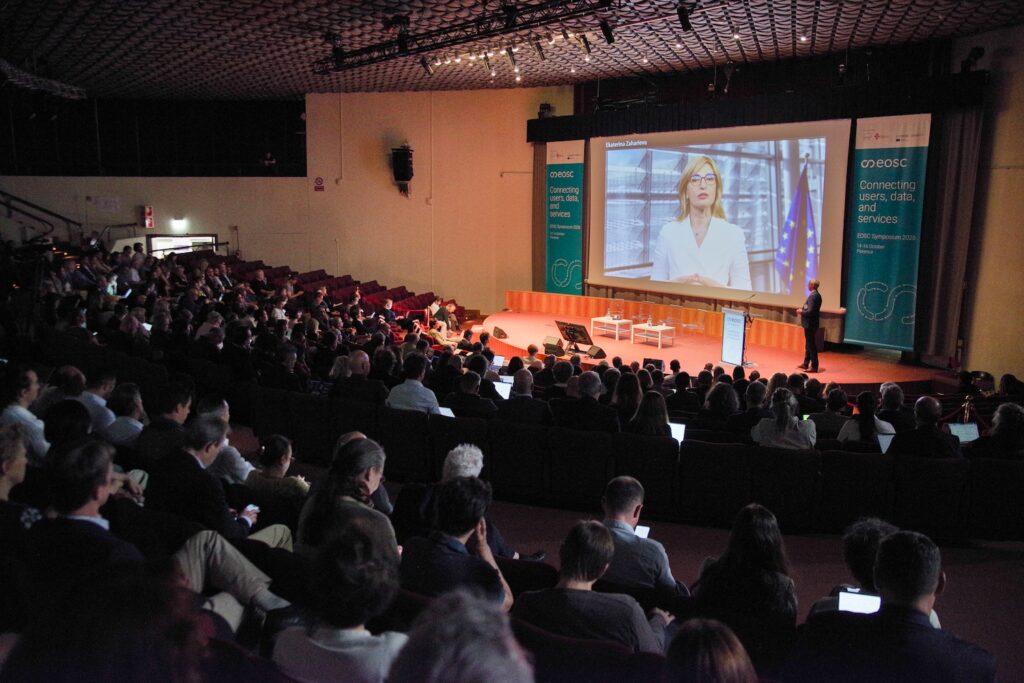
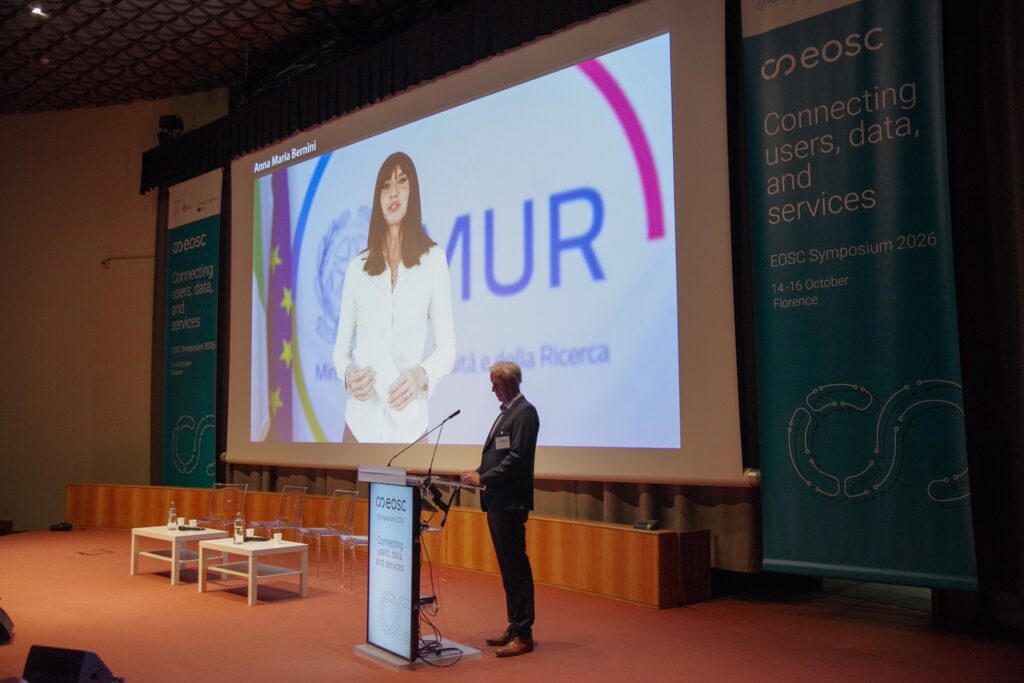
The Symposium opened with a strong affirmation of EOSC’s strategic importance to Europe. In video messages, Italian Minister of University and Research Anna Maria Bernini emphasised the essential role of trusted, interoperable research data in the age of AI, while European Commissioner for Startups, Research and Innovation Ekaterina Zaharieva placed EOSC within Europe’s broader ambitions for scientific and technological leadership.
“Europe needs to harness its strengths with great ambition to innovate, stay competitive and lead on our own terms and according to our values. In this context, the European Open Science Cloud plays a strategic role,” Zaharieva declared. She called for “the scale, the speed and the cohesion” needed to translate Europe’s scientific strengths into global leadership.
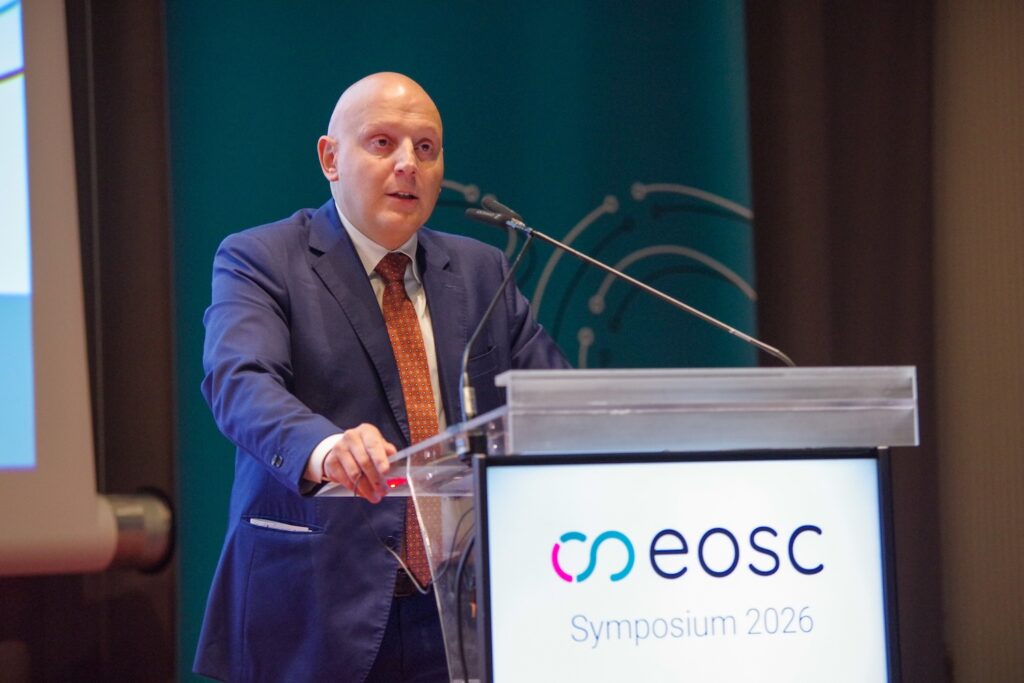
Fresh off his participation in the European Research Area and Innovation Committee (ERAC) meeting in Dublin, Gianluigi Consoli, Director General for Internationalisation at Italy’s Ministry of University and Research, took the stage in Florence to relay an encouraging political message for EOSC’s future under the next EU Framework Programme, FP10.
“The importance of EOSC was highlighted not only by Italy, but also by a majority of Member States,” he reported, adding, “I believe this is an important political signal.” DG Consoli went on to firmly reinforce Italy’s longstanding commitment to EOSC and the country’s endorsement of a distinct Work Programme-based partnership for EOSC in FP10 in order to build on Italy’s national investments. “EOSC does not replace our research infrastructures. It connects them.”
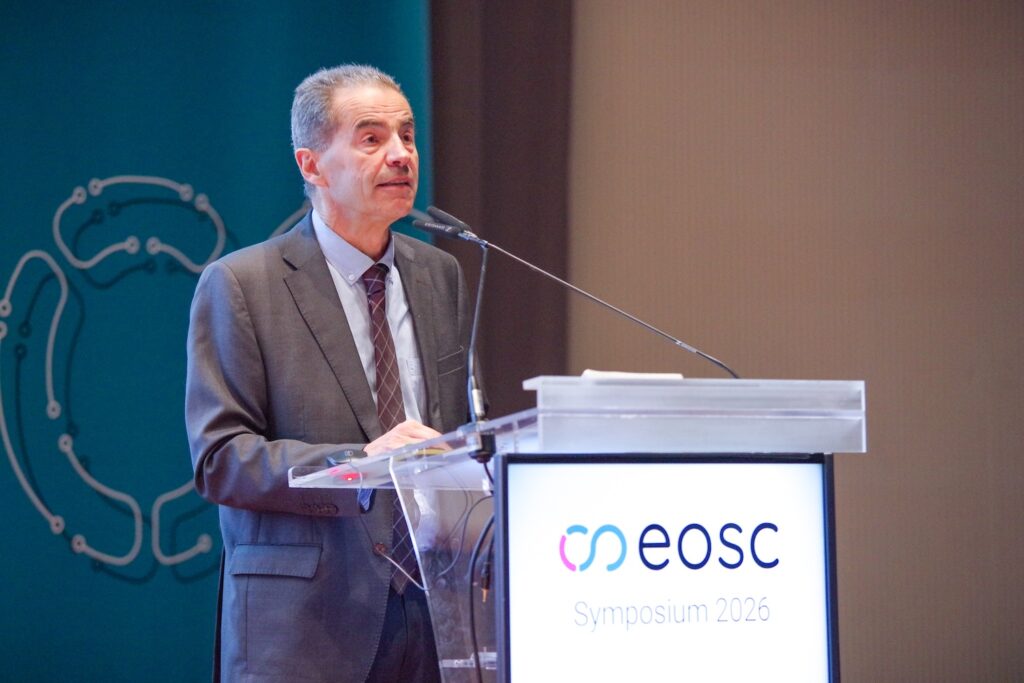
These political messages found a compelling scientific and social counterpart in the opening keynote by Manuel Heitor, Professor at Instituto Superior Técnico and lead author of the influential 2024 Align, Act, Accelerate report. “Now is the time for radical innovation,” Heitor argued, describing data and Open Science as “the grassroots of contemporary radical changes.” He challenged EOSC to take centre stage in developing a distributed European research infrastructure to serve the public good. His emphasis was on organising demand for data and scientific services around urgent societal challenges, from cancer prevention to environmental resilience, creating capabilities that individual institutions cannot provide alone.
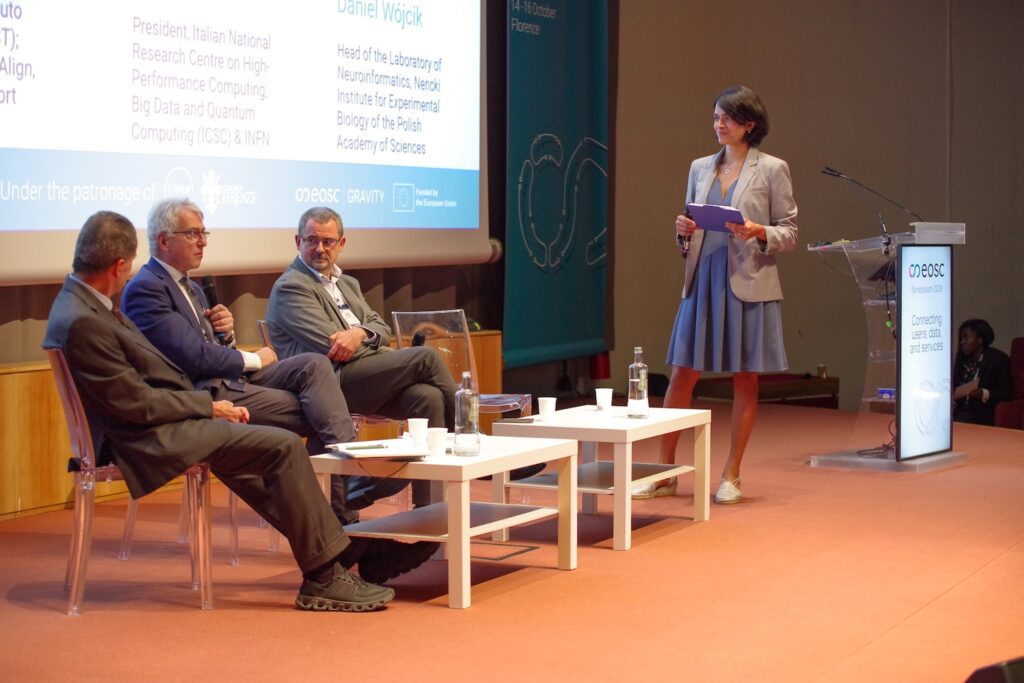
In the following panel discussion, Antonio Zoccoli, President of both Italian research juggernauts, the National Institute for Nuclear Physics (INFN) and the ICSC National Research Centre for High Performance Computing, Big Data and Quantum Computing, identified computing, trusted data, and models and expertise as three essential pillars of European AI sovereignty. “[The] second pillar, which is data, trustable data, interoperable data…this is clearly, in my opinion, the role of the European Open Science Cloud.” Without European capabilities across all three, he warned, Europe risks becoming dependent on foreign technology providers even for fundamental scientific research.
The ambitions of Heitor and Zoccoli now have an operational foundation. Bob Jones, the EOSC Association’s (EOSC-A) Special Envoy for the EOSC Federation, introduced the newly minted production-grade EOSC Federation and outlined the governance structures and mandatory federating capabilities established among the 28 EOSC Nodes either in production or on their way.
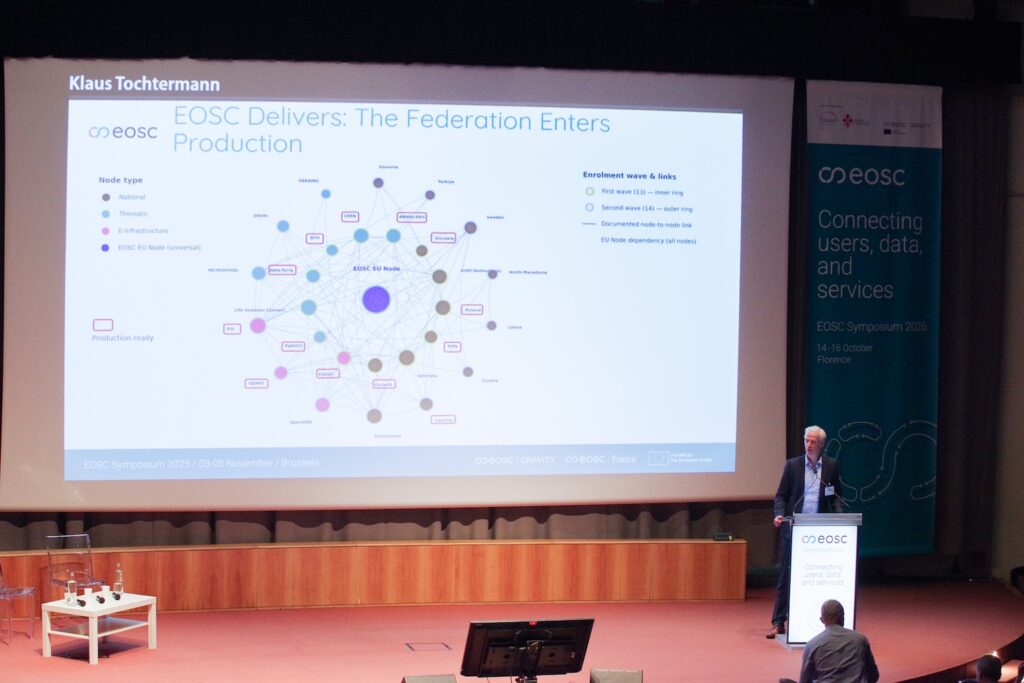
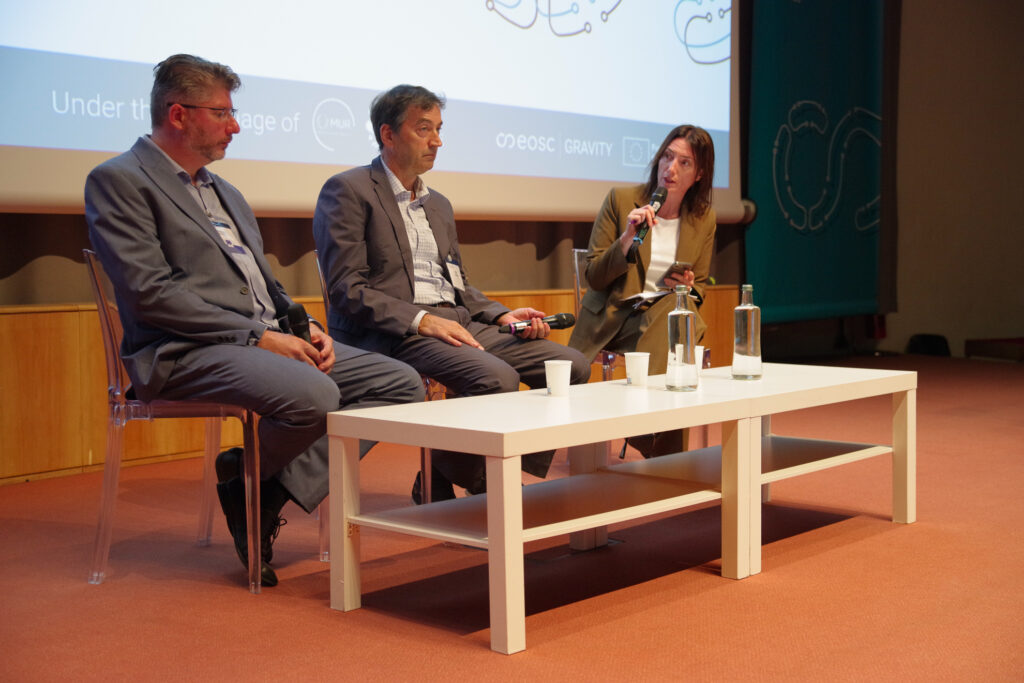
To demonstrate its early impact and give a tantalizing peak into the Federation’s potential, the late-afternoon lightning talks provided real-world examples spanning sensitive paediatric health data, hospital data spaces, distributed AI workflows, machine-actionable licences, cultural heritage, astrophysics, FAIR data management and research training. Their diversity demonstrated the Federation’s scientific reach, while revealing the work still needed to turn successful use cases into dependable services.
Meanwhile, the Federation’s political future served as the continuous backdrop to the day’s proceedings. Participating remotely, Jean-David Malo, Acting Director for ERA & Innovation in the European Commission’s DG RTD, reaffirmed the Commission’s financial support for EOSC, while acknowledging that future implementation arrangements remain under discussion. EOSC Steering Board Co-Chair Aneta Pazik-Aybar and EOSC-A President Klaus Tochtermann, however, held the line on the Member States’ and EOSC-A’s insistence on a distinct Work Programme-based Partnership for EOSC under FP10.
Day 2: Making the Federation useful, trusted and sustainable
The second day concentrated on the conditions for long-term success: community engagement, interoperability, sustainable services, and closer integration with Europe’s wider research infrastructure landscape.
Introduced by Michael Arentoft, Head of DG RTD’s Open Science and Research Infrastructures Unit, keynote speaker Rosie Hicks, Chief Executive of the Australian Research Data Commons, challenged Europe to rethink how it builds and sustains digital research infrastructure.
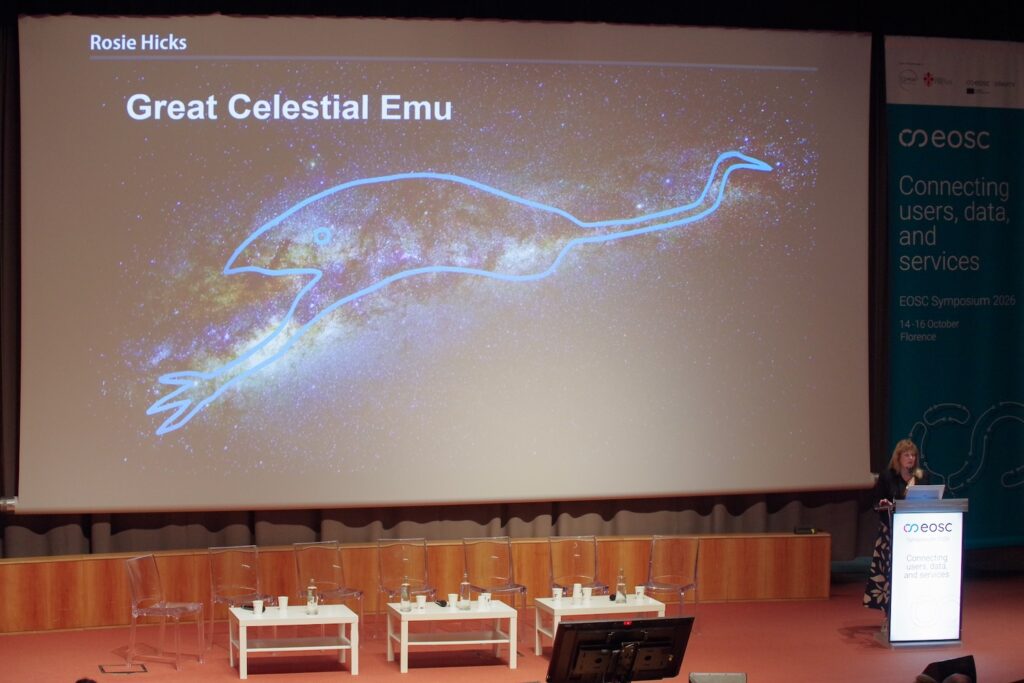
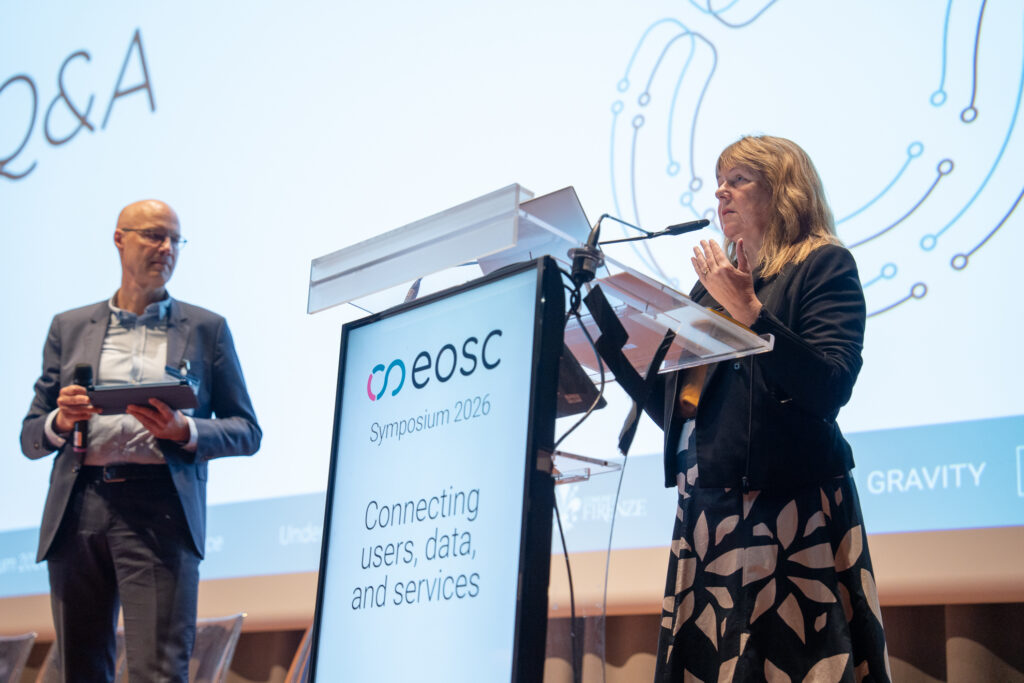
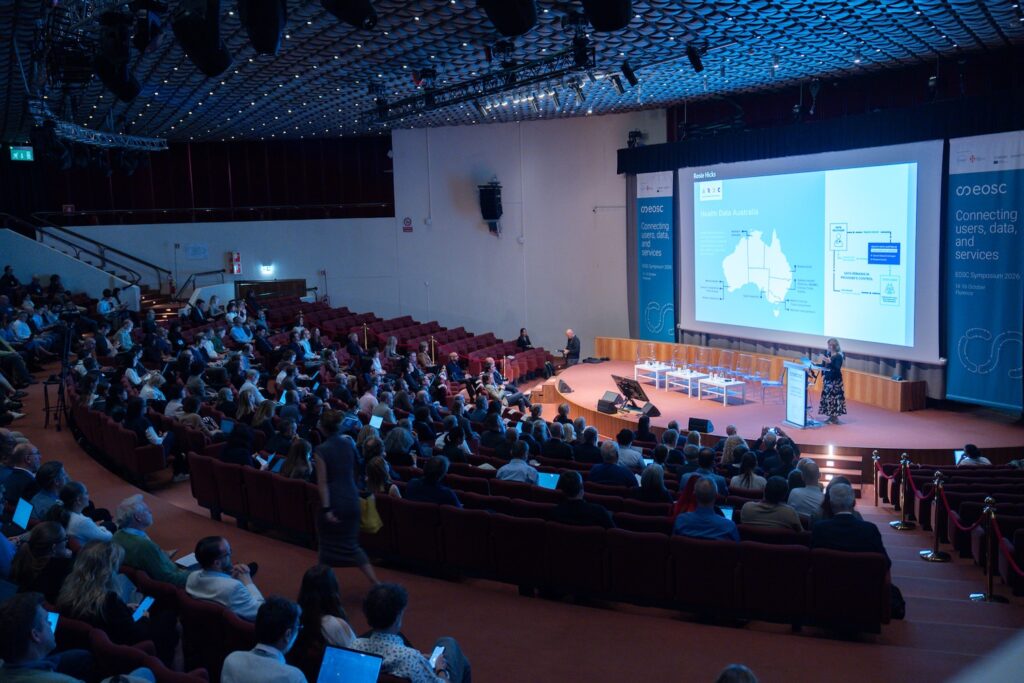
Drawing on Australia’s National Collaborative Research Infrastructure Strategy, Hicks described a shift from successive project calls towards longer-term services developed with research communities. ARDC works with researchers to define their infrastructure needs, concentrating investment in fewer, larger and more durable activities.
She illustrated this approach with the example of Health Data Australia, developed with 72 organisations across nine Nodes. “It doesn’t have a project manager; it has a product manager,” Hicks observed, reflecting a commitment to continuous service development rather than treating infrastructure as a time-limited project.
Her comparison with physical research infrastructure was equally pointed: “I can’t let us treat digital infrastructure in a way that we would not treat physical. You don’t build a synchrotron and expect it to have a five-year life cycle.”
Following Hicks’s talk, the Symposium participants broke out along three parallel tracks to explore complementary dimensions of precisely this challenge of growth and stability.
Track 1: EOSC collaborations and future opportunities examined how EOSC can connect with Europe’s wider research, data and computing initiatives. Sessions explored AI leadership and capacity building, contributions from ERICs and ESFRIs, and synergies with European Data Spaces, including the European Health Data Space and cultural heritage infrastructures. Discussions of the EU’s SIMPL and other interoperability approaches demonstrated the importance of connecting not only technical platforms, but also the institutional and regulatory frameworks governing data reuse.
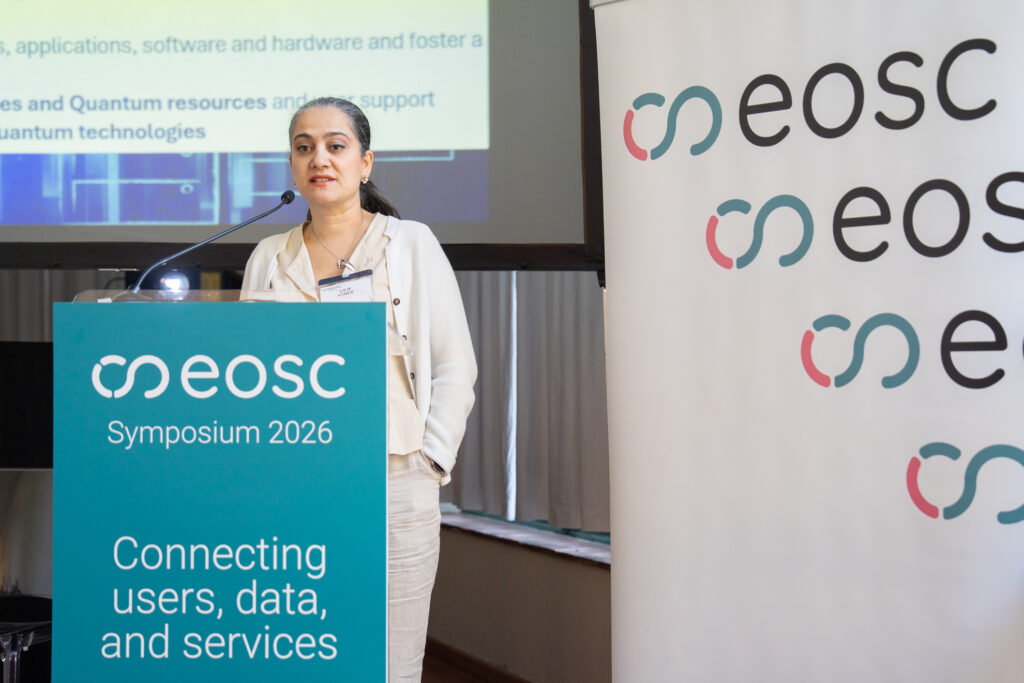
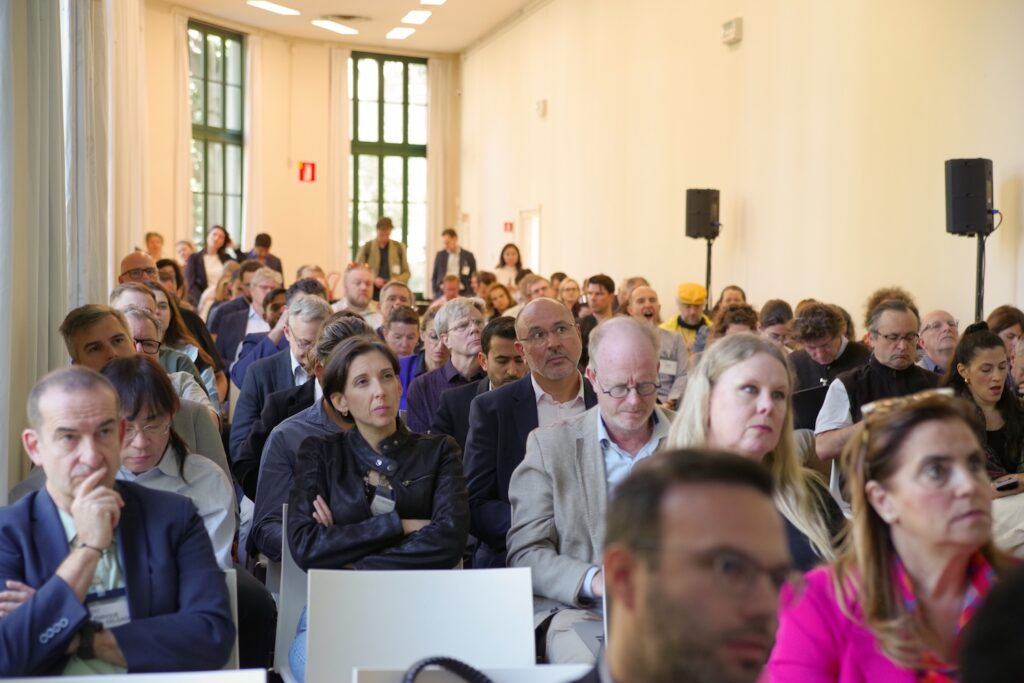
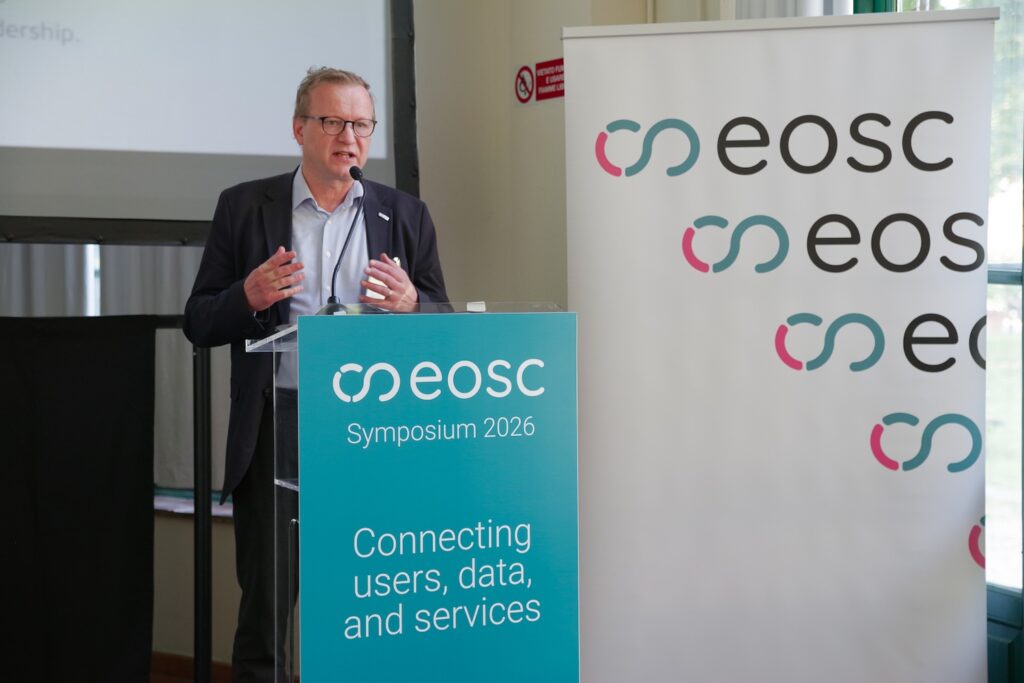
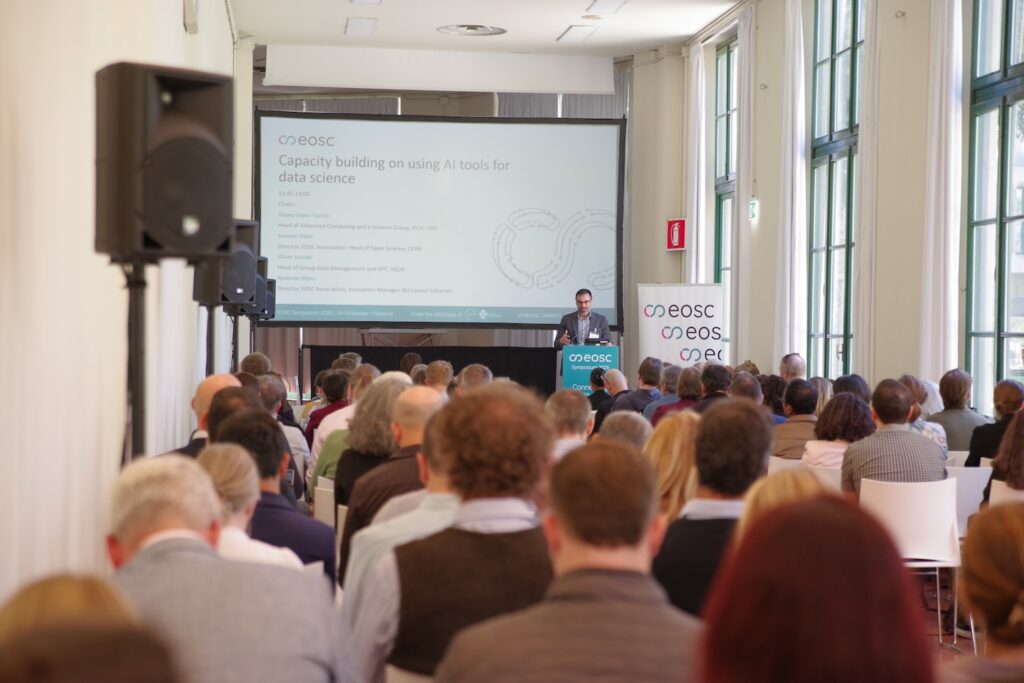
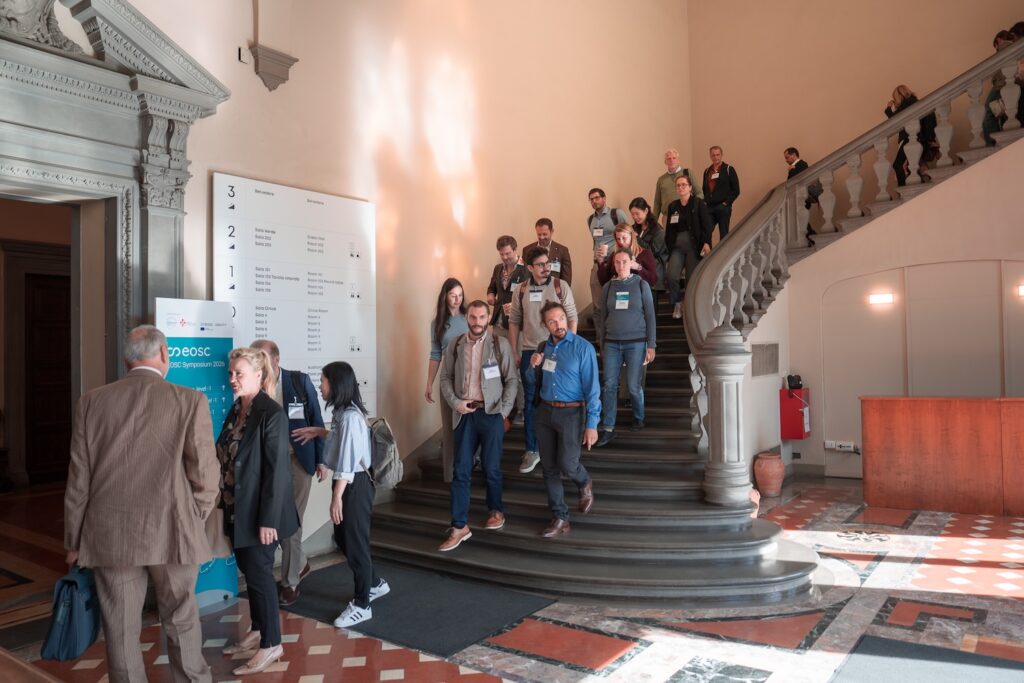
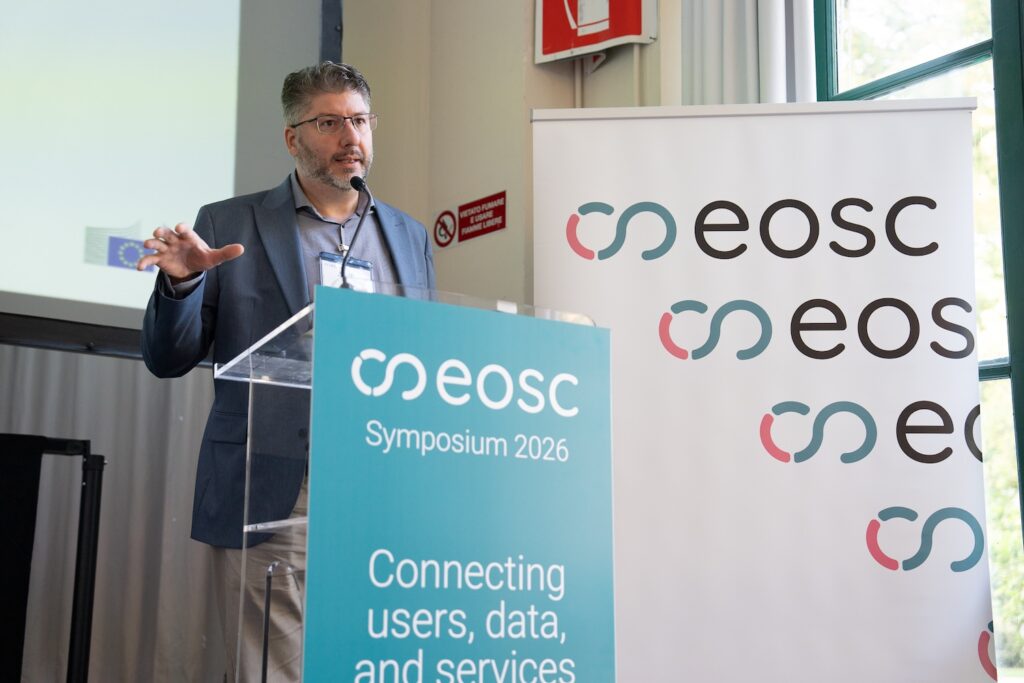
Track 2: EOSC best practices and user experience focused on researchers and service providers. Sessions on data federation, trustworthiness, and sovereignty examined how to make resources accessible while preserving appropriate control over sensitive or restricted data. Practical experiences with EOSC Nodes highlighted benefits and remaining barriers. Discussions on automated FAIRification explored how to increase the supply of reusable datasets, while the emerging EOSC Federation User Forum offered researchers a mechanism to share experiences, discover resources and influence service development.
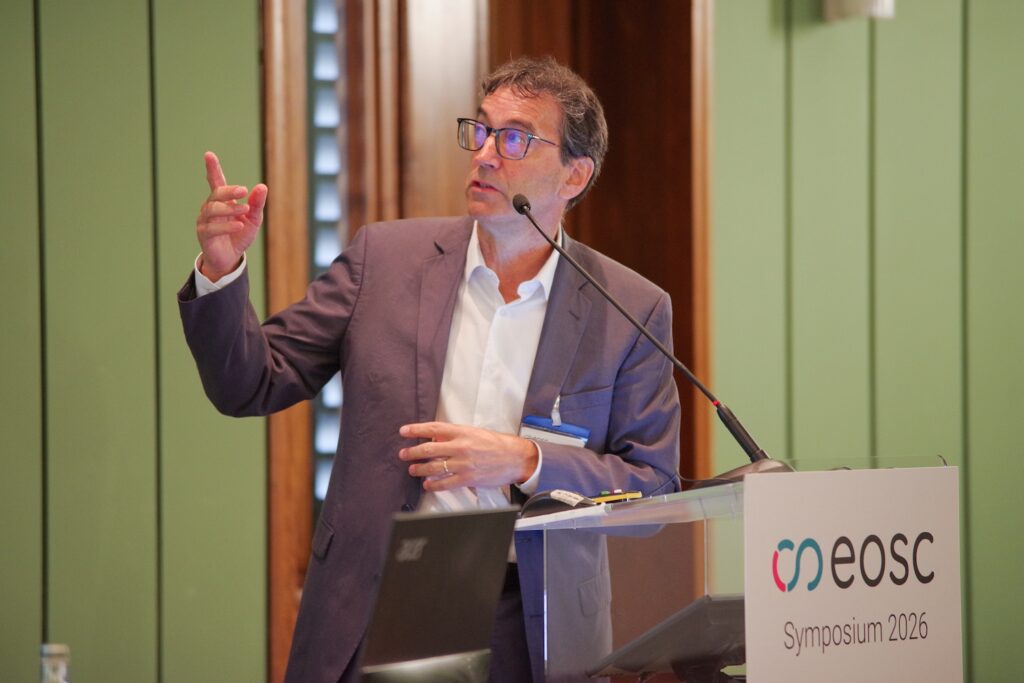
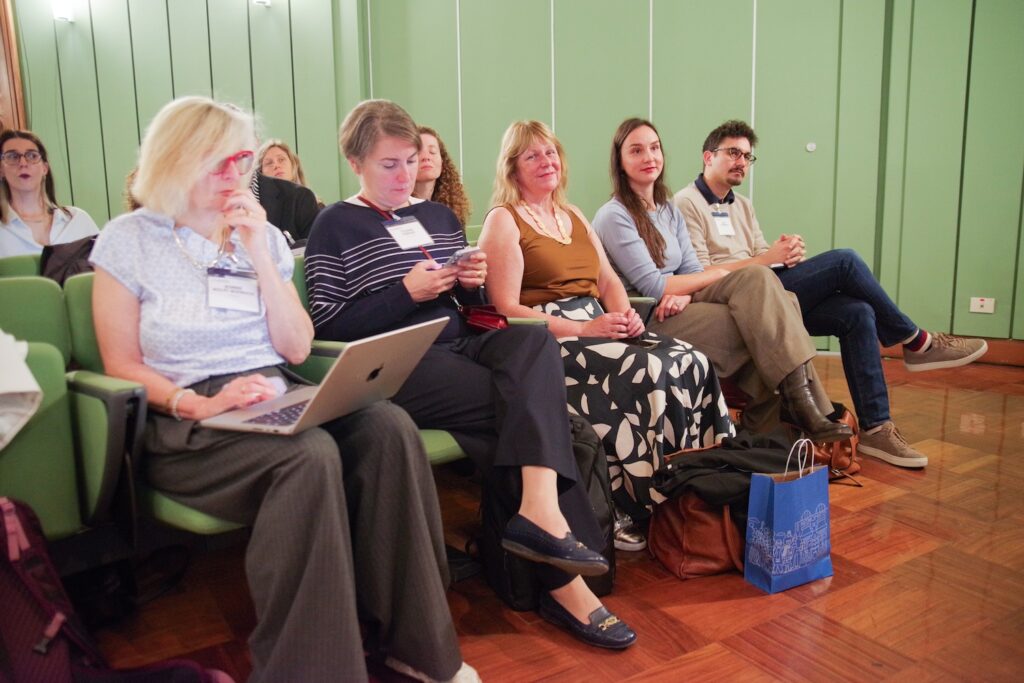
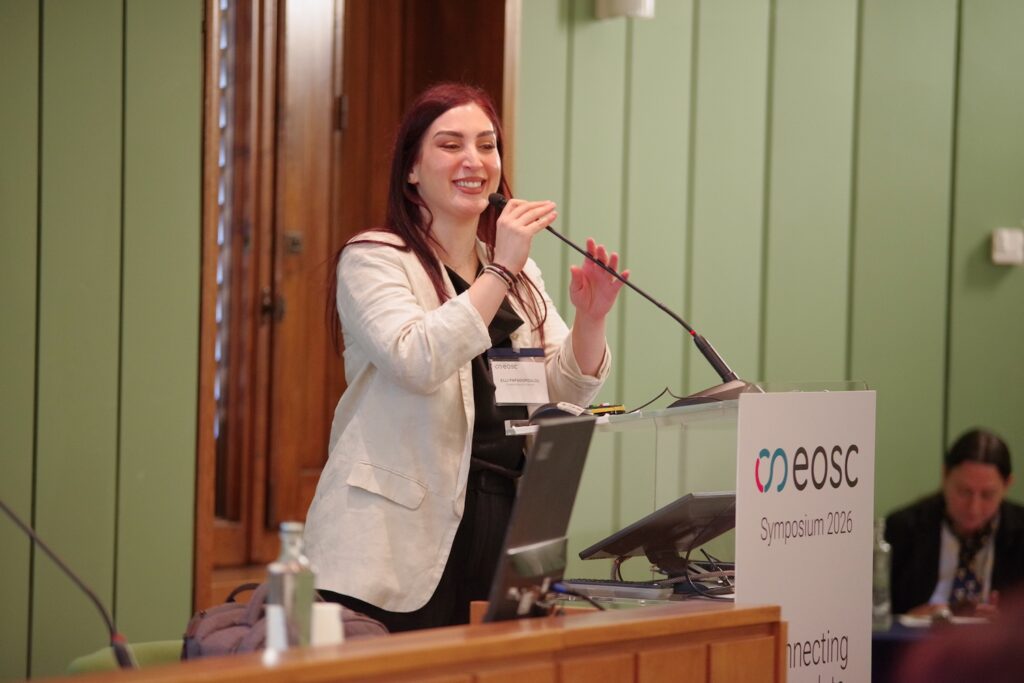
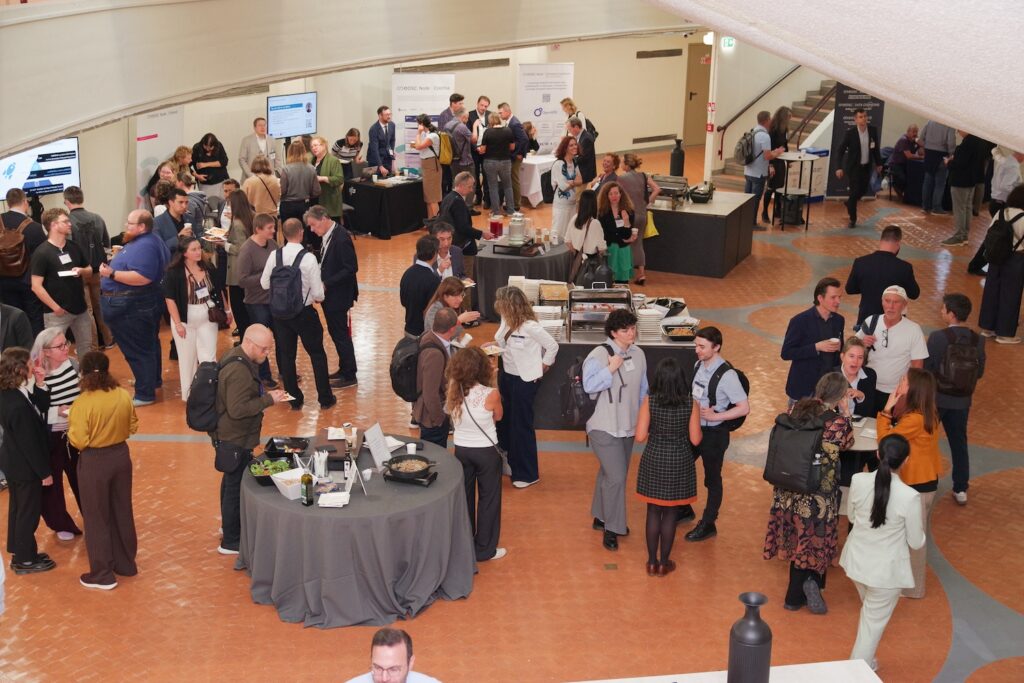
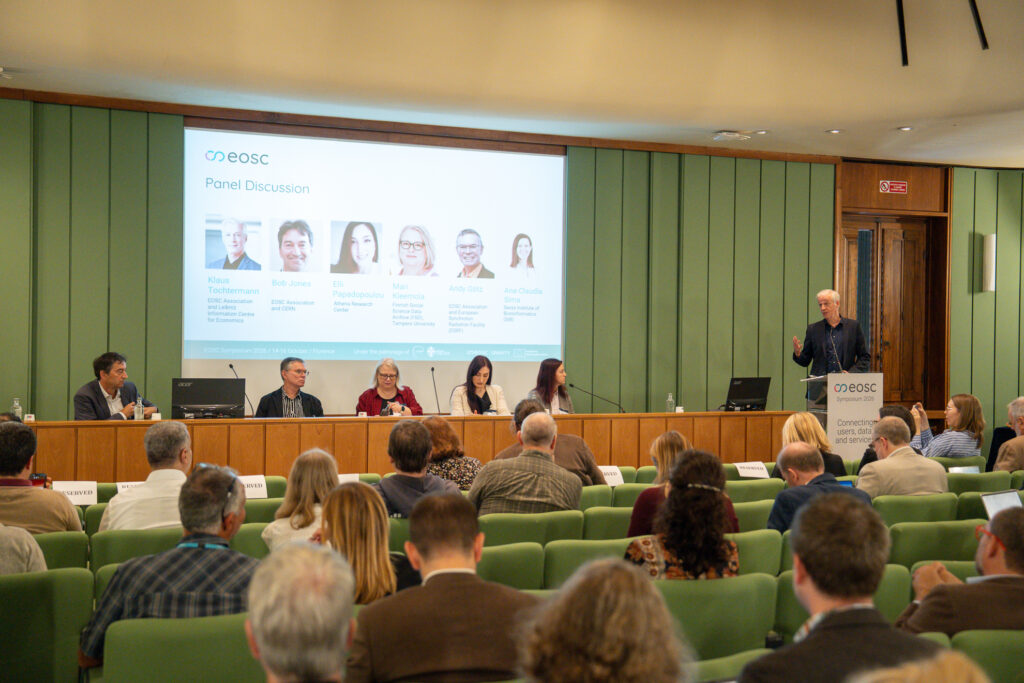
Track 3: EOSC Federation operationalisation addressed the foundations of a sustainable shared infrastructure. Participating Nodes shared lessons from entering production, while sessions on interoperability and mandatory federating capabilities explored authentication, catalogues, help desks, monitoring, and service management. Business-model discussions confronted the challenge of sustaining services across autonomous organisations with different funding arrangements and responsibilities. Together, these sessions reinforced the importance of common standards, predictable resources and mutual trust alongside technical interoperability.
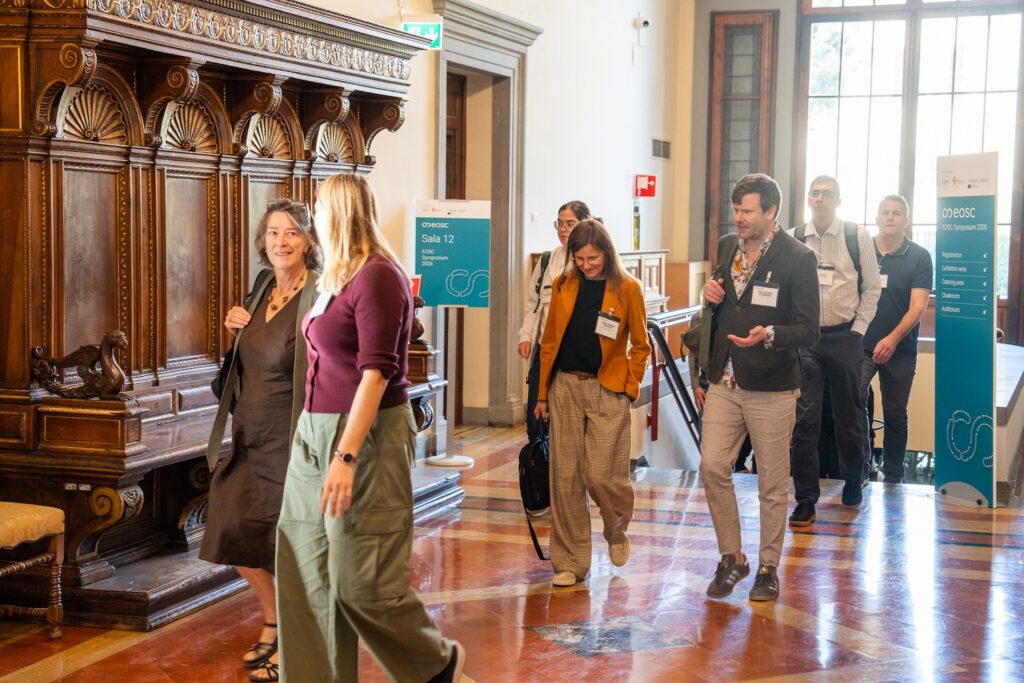
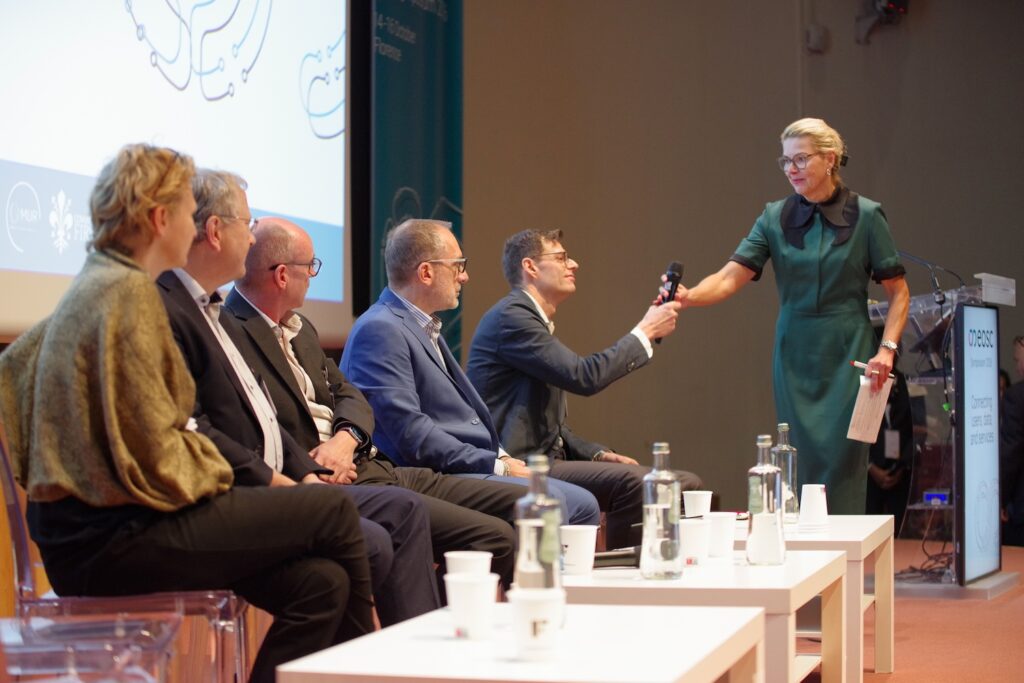
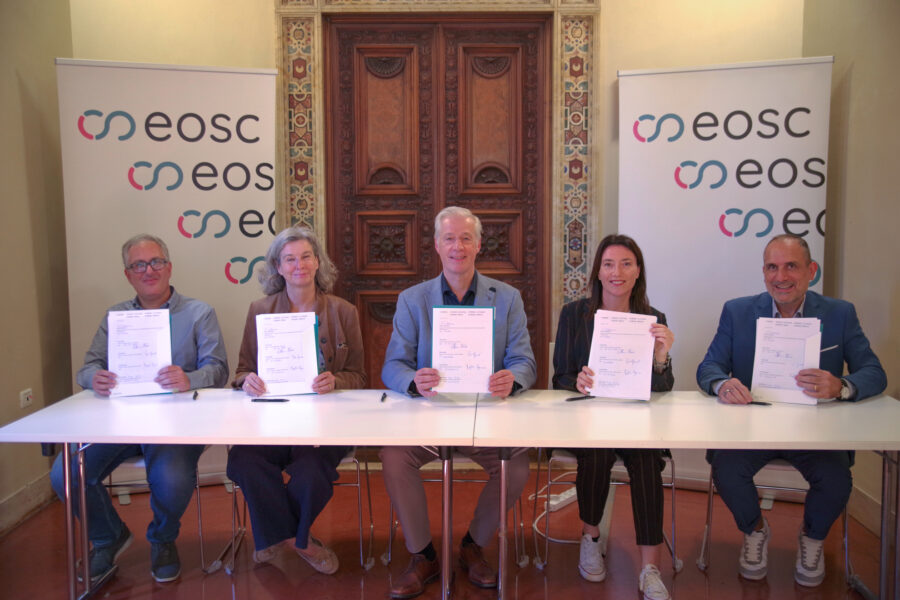
The persistent work to reduce fragmentation and duplication also took a concrete step forward on Day 2, when EOSC-A signed a Memorandum of Understanding with four newly funded Horizon Europe projects—EOSC4ALL, EOSC-CONNECT, EOSC-Marine and EOSC Mesh—representing approximately €33.5 million in EU funding. The agreement will coordinate contributions to Federation architecture, interoperability, community engagement and sustainability, helping ensure that project results become part of a coherent operational environment.
The day concluded with a well-deserved social and networking gala dinner, celebrating the community whose long-term cooperation has made the Federation possible.
Day 3: Charting AI leadership and the Federation’s next chapter
The final day examined both the scientific community’s responsibilities in the wake of AI’s rapid adoption and the role EOSC will play in strengthening Europe’s capacity for AI-driven research.
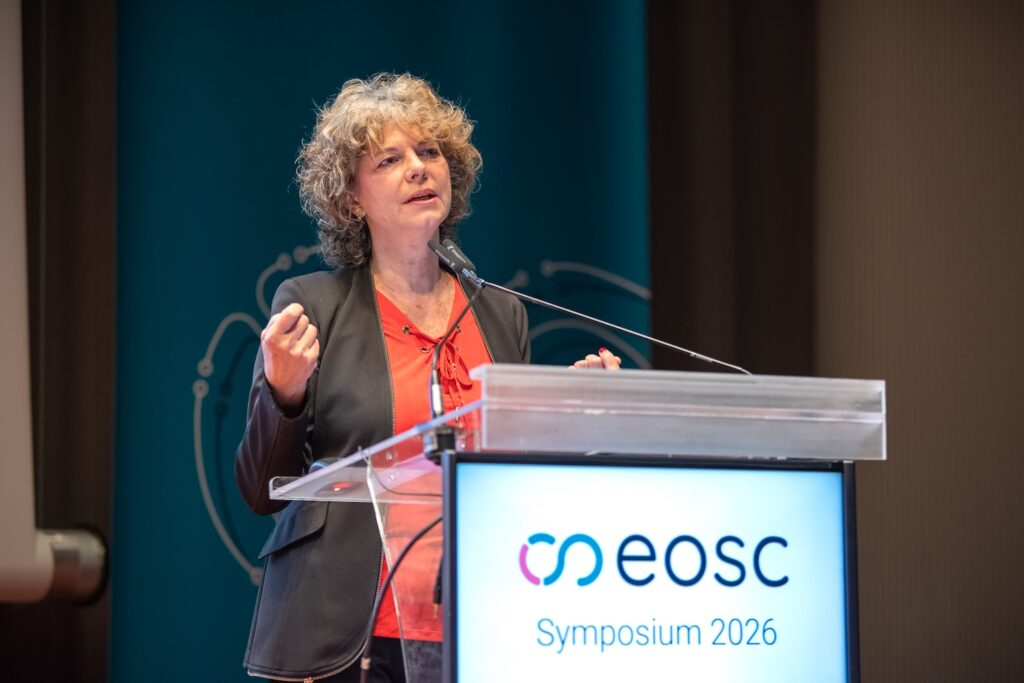
Opening keynote speaker Mercè Crosas, Director of the Computational Social Science and Humanities Laboratory at the Barcelona Supercomputing Center and President of CODATA, identified two equally important dimensions of AI readiness. The first concerns the imperative to be technically prepared with what concerns data, people and infrastructure, while the second concerns the readiness of scientific communities to reconsider their norms and values as AI transforms research methods and practice.
“We [researchers] need to avoid becoming passive AI users,” Crosas warned. “We should decide how we integrate AI.” Crosas called for common AI-readiness frameworks, stronger coordination between EOSC and Europe’s AI Factories, discipline-led declarations on AI in science, and new arrangements governing commercial AI use of open research data, drawing on Wikimedia’s model agreement.
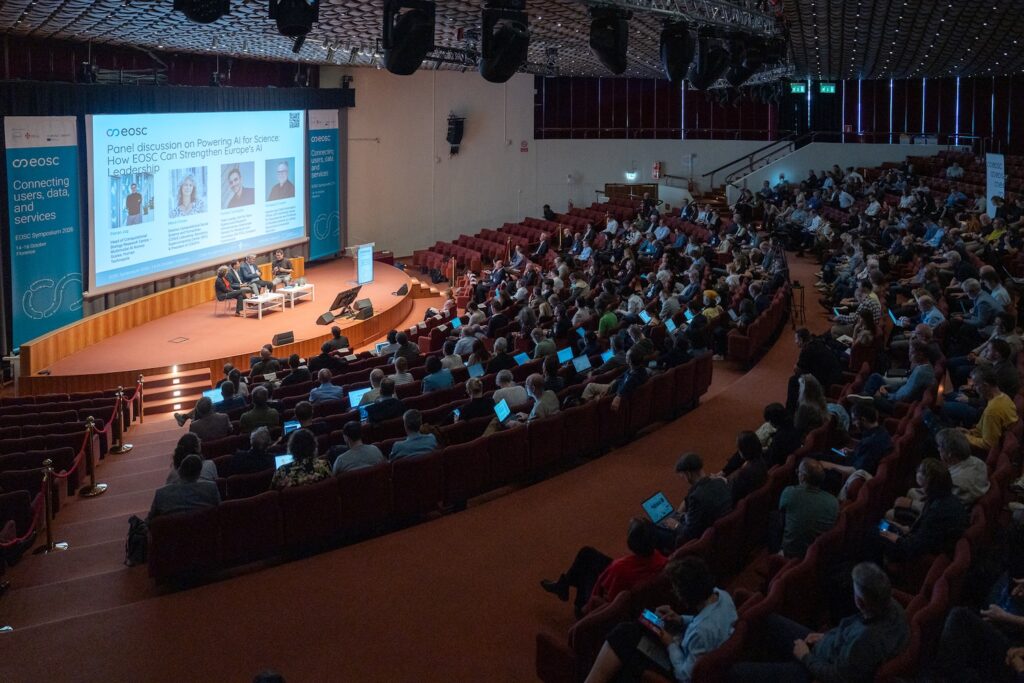
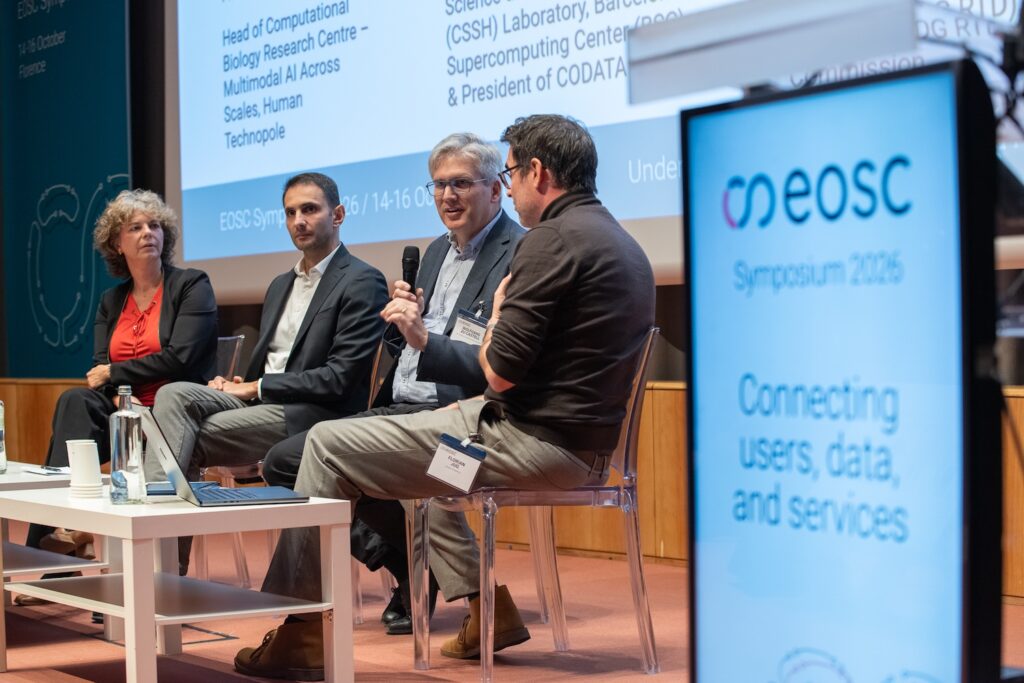
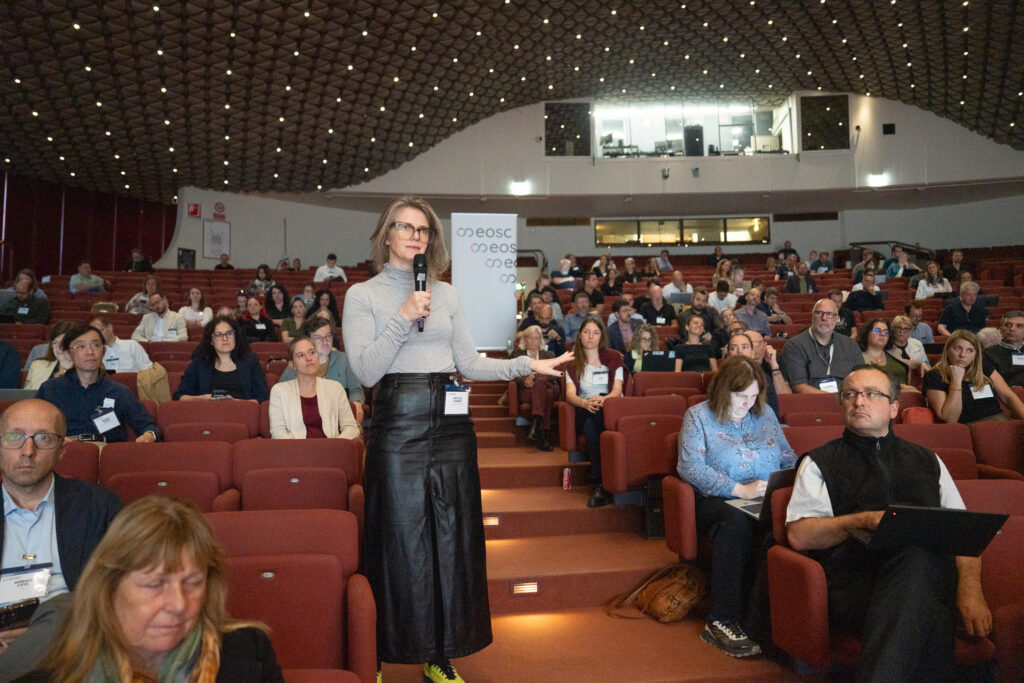
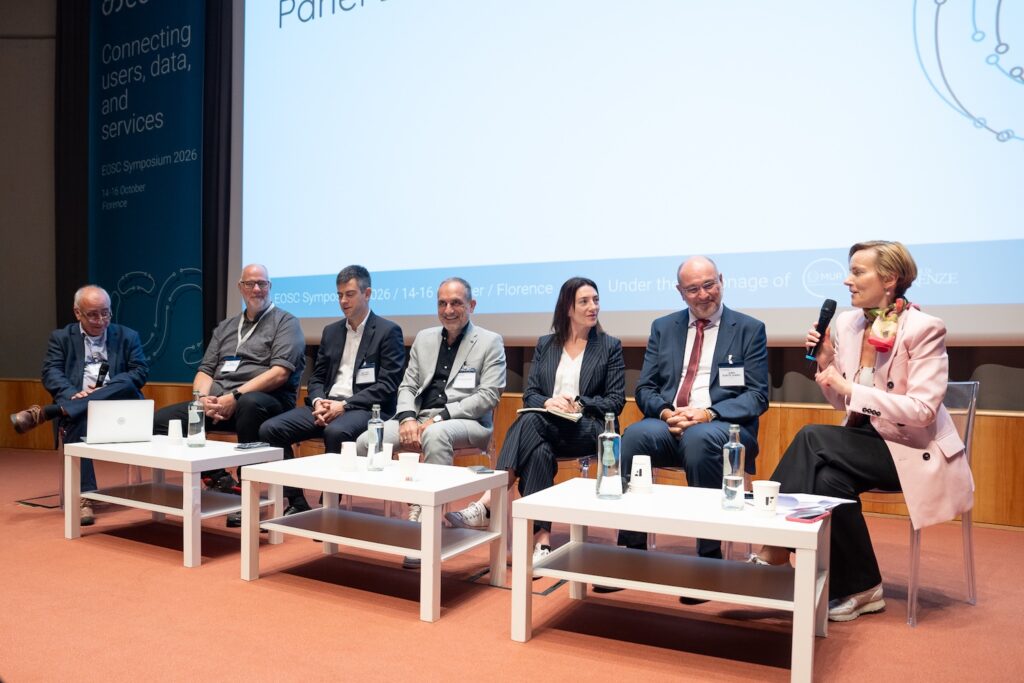
A spirited panel discussion followed, debating Europe’s position in the global AI race. Moderator Florian Jug of Human Technopole challenged the panel to find the threshold between European strengths and values and European shortcomings and naivety when it comes to assessing the Union’s AI posture. The panel also explored the tension between Open Science and the strategic value of research data as autonomous AI systems access and process scientific information.
“Having different layers of access to data is a normal thing in science,” observed Wolfgang zu Castell of the GFZ Helmholtz Centre for Geosciences. “Our problem is that, next to humans, we now have algorithms acting and speaking for humans.” The challenge, he argued, is to extend established principles of trustworthy human access to the machine level.
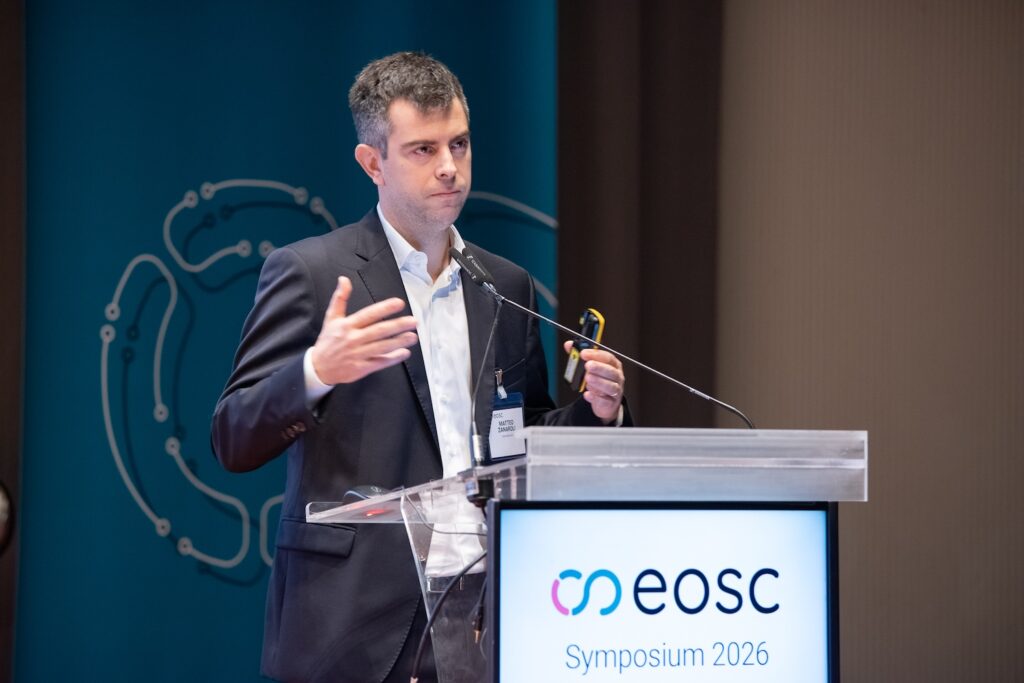
The closing plenary returned to the Federation’s next phase. Matteo Zanaroli, Coordinator of EOSC Node Italy and Co-Chair of the EOSC Node Coordinators Committee, emphasised simpler onboarding, trusted governance, sustainable services, and the need to turn successful scientific use cases into permanent offerings. Discussions also considered a more distributed Federation architecture, progress on a legally binding framework agreement, and closer alignment between funded projects and Node-led governance.
“We have to make noise. We have to be one voice,” Zanaroli urged, calling for sustainable governance and funding. Pasquale Pagano, Coordinator of the European Digital Twin Ocean Node, captured the scientific ambition in three words: “science without borders.” Juan Bicarregui of UK Research and Innovation placed emphasis on the social foundations of federation through five “C”-words: community, collaboration, cooperation, curation, and communication.
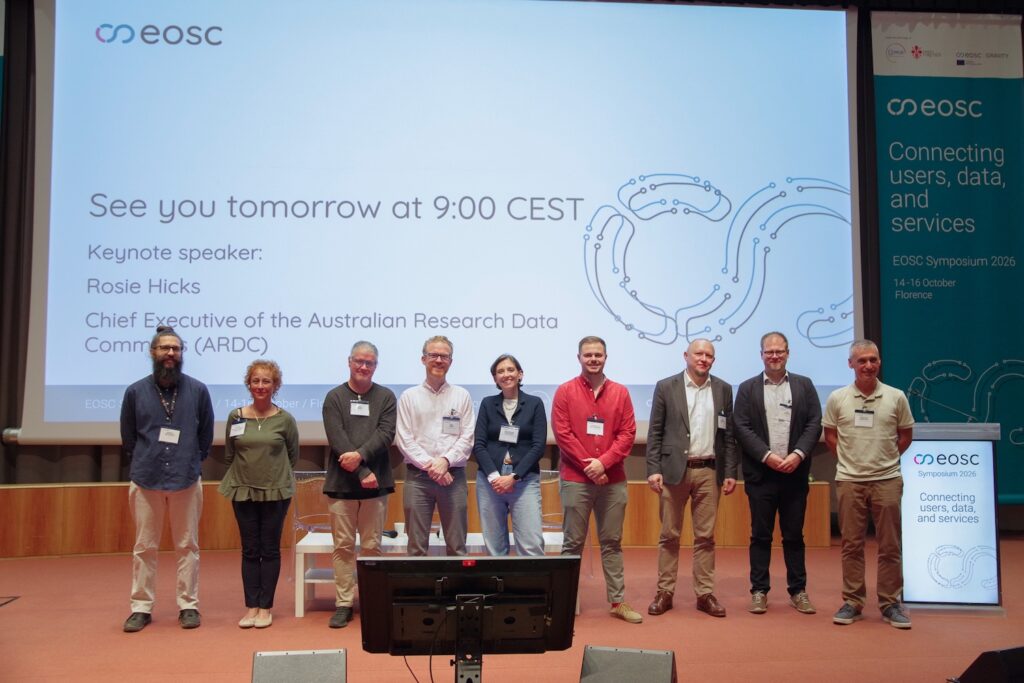
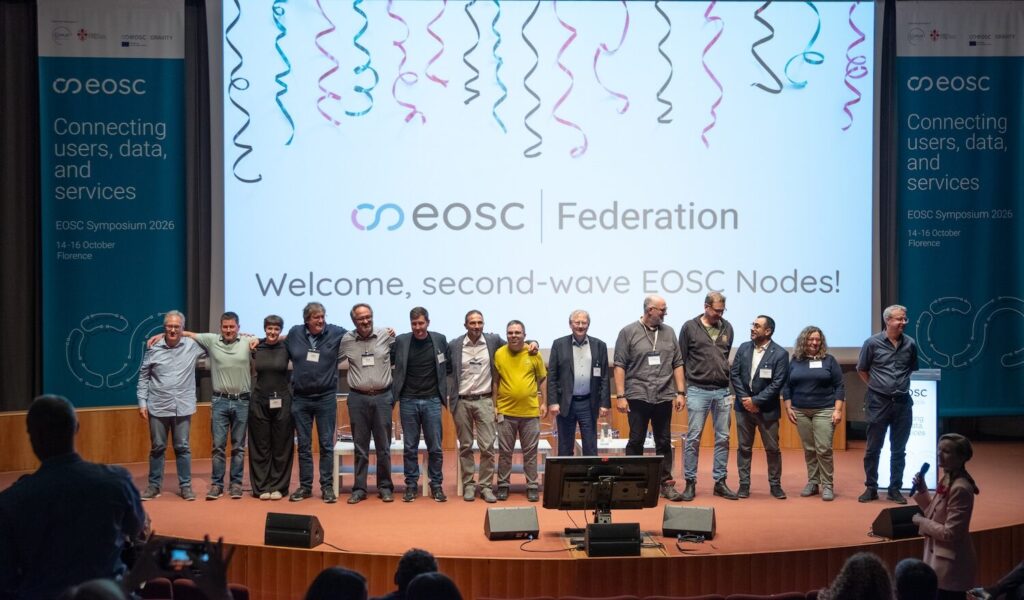
To round out the session, the coordinators of the second wave of EOSC Nodes were led onto the stage for a photo-op and a round of applause. Each then gave a quick presentation of their respective Node, demonstrating the Federation’s growing capabilities: sensitive-data environments, neuroscience, environmental research, food science, scholarly communication and advanced digital services, among others.
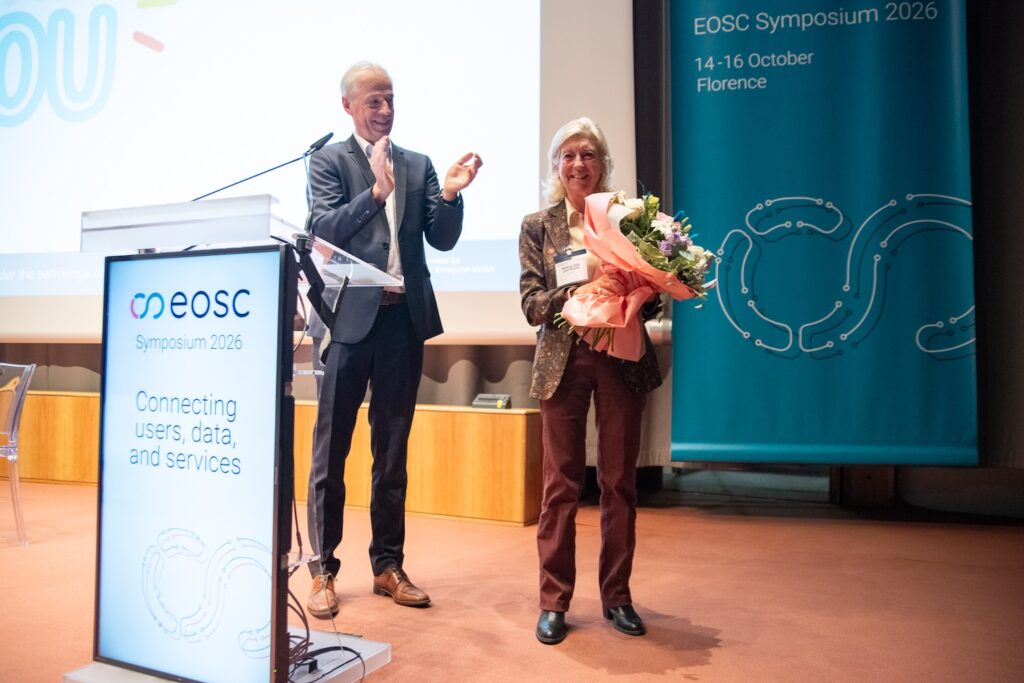
EOSC-A President Klaus Tochtermann closed the Symposium by thanking the speakers, panellists, organisers, and wider community. He paid particular tribute to Marialuisa Lavitrano, outgoing Vice-President and Board member of EOSC-A, acknowledging her longstanding contribution and the extensive relationships she has mobilised in support of EOSC. Her final Symposium as an active Board member was marked with many flowers and warm appreciation.
President Tochtermann then recalled for the participants DG Consoli’s report from the Symposium’s opening plenary. “As you know,” said Tochtermann, “the ERAC meeting took place earlier this week, and the majority of the Member States are in favour of [a] distinct partnership model for EOSC.” The summary implication was clear: this Symposium has demonstrated that a decade of investment and collaboration has produced an operational European Federation and has clarified the conditions for its future success: scientific ambition, sustained engagement with users, trustworthy governance, institutional stability, and continued political commitment.
Tochtermann then announced Kraków, Poland, as the planned location for the EOSC Symposium 2027, setting the challenge for the intervening year: to demonstrate that researchers can solve problems with the Federation that they could not solve without it.