CLIMATE POLICY BRIEF:
EOSC turns Europe’s fragmented climate data into actionable climate knowledge
EOSC connects Europe’s environmental data, observations and models to strengthen the scientific knowledge base for climate mitigation and adaptation. By making climate evidence more accessible, trustworthy and reusable, it supports climate-resilient societies and evidence-based policy decisions.
Europe already generates world-class climate and environmental data through national research infrastructures, European programmes such as Copernicus and ESA, environmental research infrastructures, universities and international observing systems. The challenge, recognised on several occasions by the IPCC, is increasingly to combine these distributed assets across disciplines and borders, while maintaining the quality, provenance and trustworthiness required by policy makers.
EOSC provides this federating layer: the EOSC Federation of 28 EOSC Nodes—supported by 218 European research organisations—which enters production this week prior to embarking on a growth phase that will increase the number of Nodes offering data and services. The Federation does not replace existing infrastructures, but connects data, models, software, computing and services for use by both researchers and AI so they can be discovered and used together, while providers retain stewardship and control.
Three strategic contributions to climate policy
- Openness: EOSC turns existing data into reusable climate knowledge for questions that cut across domains—for example, linking Earth observation, ecosystem, soil, biodiversity and ocean data to understand carbon sinks and land-use change.
- Trust: EOSC makes climate evidence traceable and fit for decision-making to strengthen the transparency of evidence used for mitigation and adaptation policies.
- Sovereignty: EOSC connects globally while retaining European control, allowing national and European infrastructures to remain autonomous while operating through common standards, identities and services.
From climate data to climate action
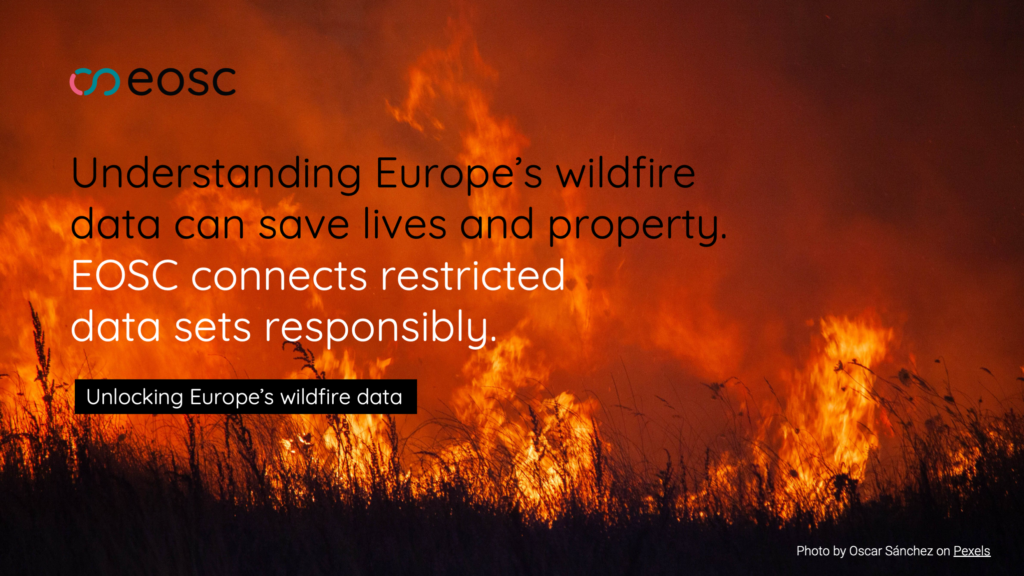
The value of this approach is clear for the EU Mission on climate adaptation and the European Green Deal: combining climate projections with environmental, infrastructure and socio-economic data to assess drought, flood, heat and wildfire risks, and to compare interventions in terms of exposure, vulnerability, cost and effectiveness.
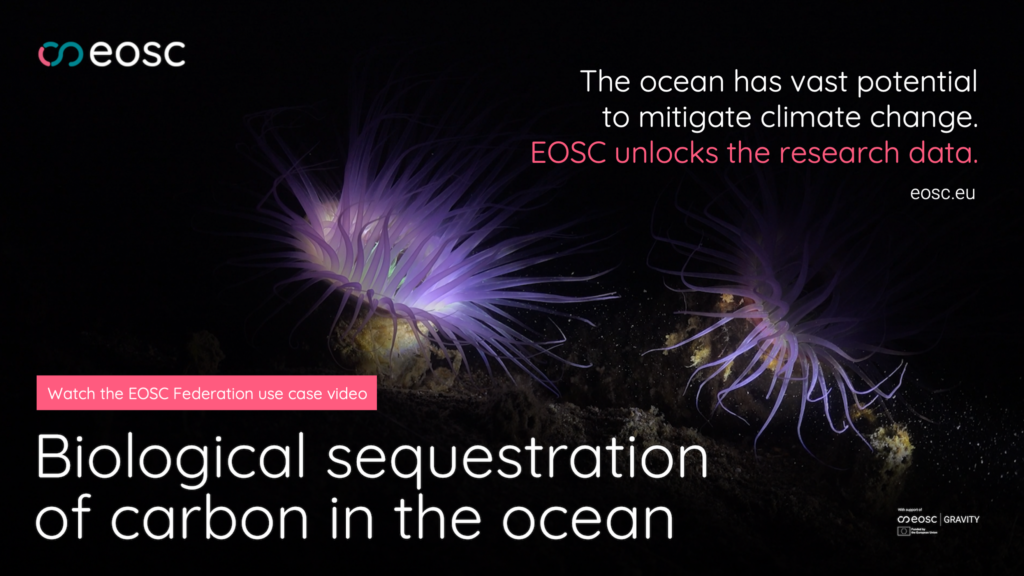
A concrete example is the EOSC Federation use case on biological carbon sequestration in the ocean. It brings together several EOSC Nodes to map the ocean’s marine microbiome in order to strengthen the evidence base for assessing potential carbon-sequestration strategies. Working together, EOSC Nodes can support integrated workflows for:
- Monitoring carbon sequestration and land-use change, combining Earth observation with ecosystem, soil, biodiversity and ocean observations and models.
- Assessing climate risks, combining AI-supported climate projections with high-resolution environmental, infrastructure and socio-economic data to assess drought, floods, heat, wildfire and other risks.
- Designing and evaluating adaptation measures, connecting climate projections and impact assessments with information on exposure, vulnerability, costs and the effectiveness of intervention.
- Supporting regional and local decision-making, by translating global and European climate knowledge into information at the spatial and temporal scales required by public authorities and other users.
- Moving research into operations, by making data, models, software and workflows AI-ready and reusable beyond individual research projects and connecting scientific advances with operational services and policy processes.
Related EOSC Nodes