The EOSC Partnership’s Monitoring and Evaluation Framework tracks the Partnership’s progress towards its objectives. It enables a transparent and evidence-based evaluation of the Partnership’s development.
First adopted in 2022, the Monitoring and Evaluation Framework is designed to adapt to the rapidly changing boundary conditions of the EOSC environment. The latest iteration (July 2024) outlines 28 Key Performance Indicators (KPIs) to be monitored for 2024.
Each KPI aligns with a designated strategic objective and is assigned clear target values and timelines, ensuring robust data collection and transparent reporting. The consistent methodology ensures that the information is meaningful both for measuring the Partnership’s progress and for comparing and aggregating that progress across other EU Partnerships.
Current status
A survey conducted in October 2024 monitored the progress of the EOSC Partnership KPIs against the 2021 baseline, collecting data for the years 2022-2023. The KPIs were selected to align with the objectives set forth in the EOSC Strategic Research and Innovation Agenda (SRIA) and to adhere to the Partnership’s Memorandum of Understanding (MoU).
The results revealed progress on the majority of indicators, confirming a vibrant EOSC-A ecosystem and continuous improvements driven by EOSC-A Members. Half of the indicators that were on track according to the 2022 KPI survey have now been achieved well in advance of their set deadlines.
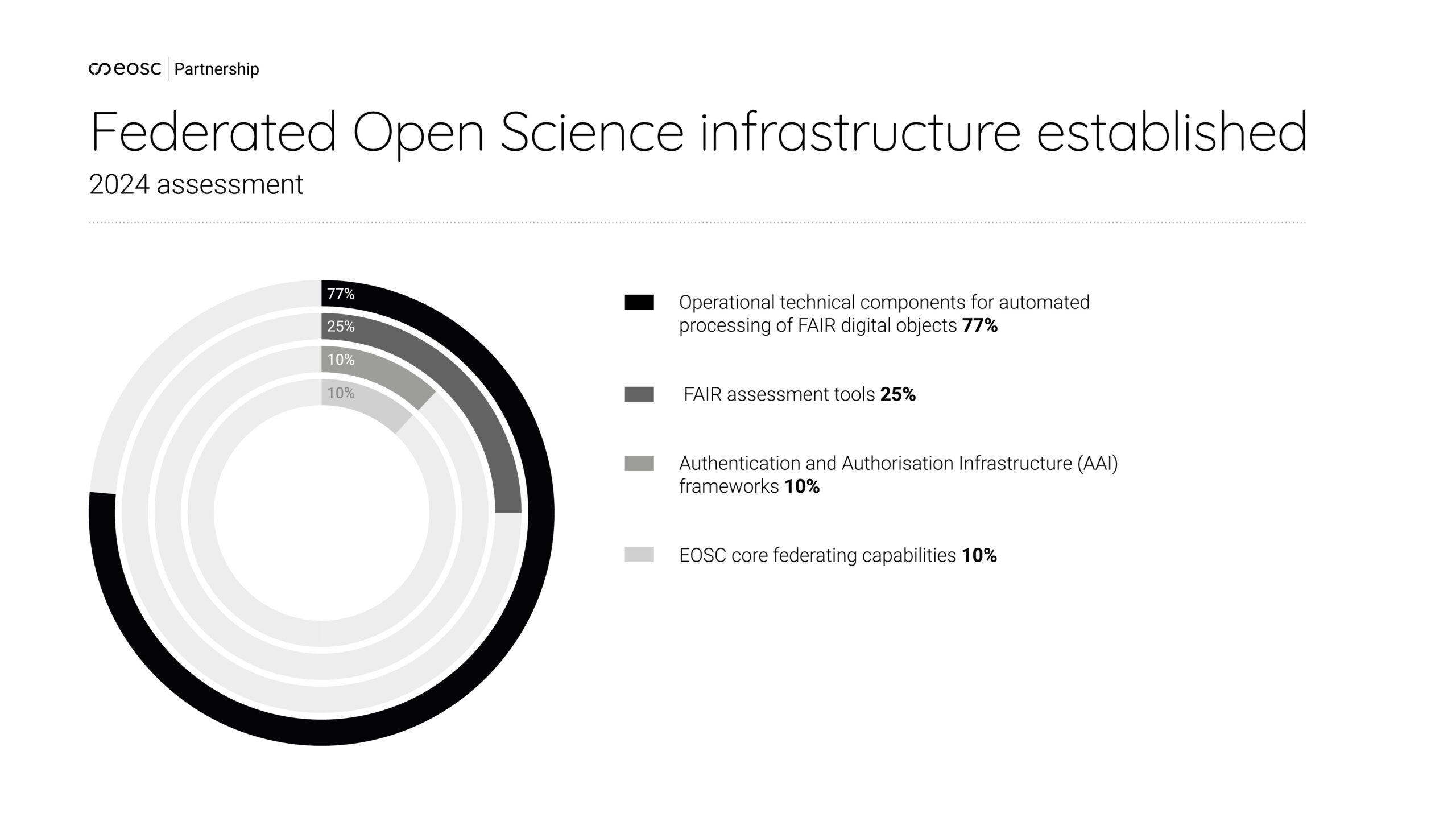
The practice of data FAIRification, including data sharing and reuse, is becoming the norm among the EOSC-A members thanks in large part to the establishment of institutional policies that provide incentives or rewards for such practices. However, further progress is needed in aligning data and software management planning with the emerging needs of Open Science. The true potential of EOSC can only materialise as the EOSC Federation becomes established and users begin to reap benefits from the networked system of service providers.
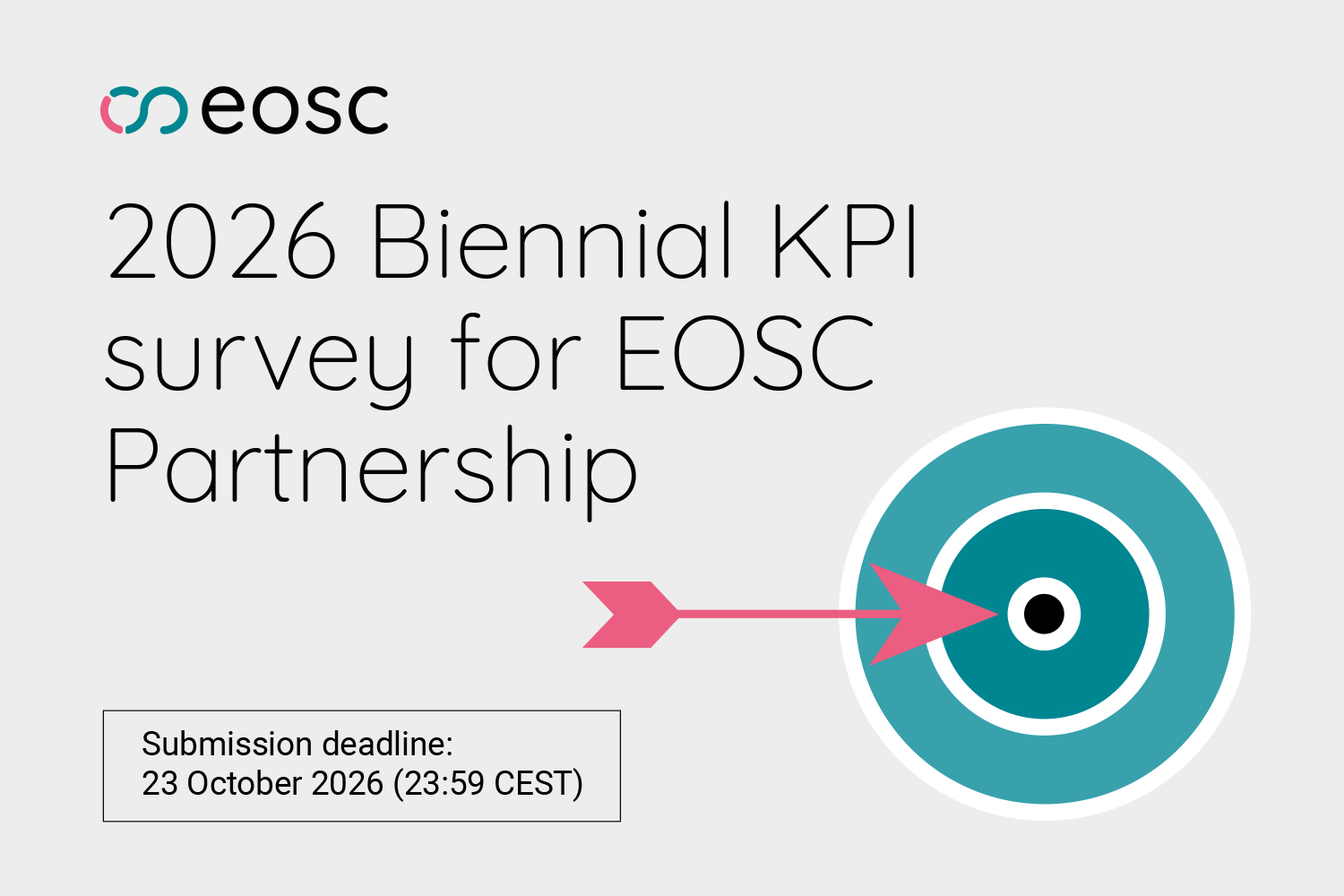
The next KPI survey is scheduled for 2026.
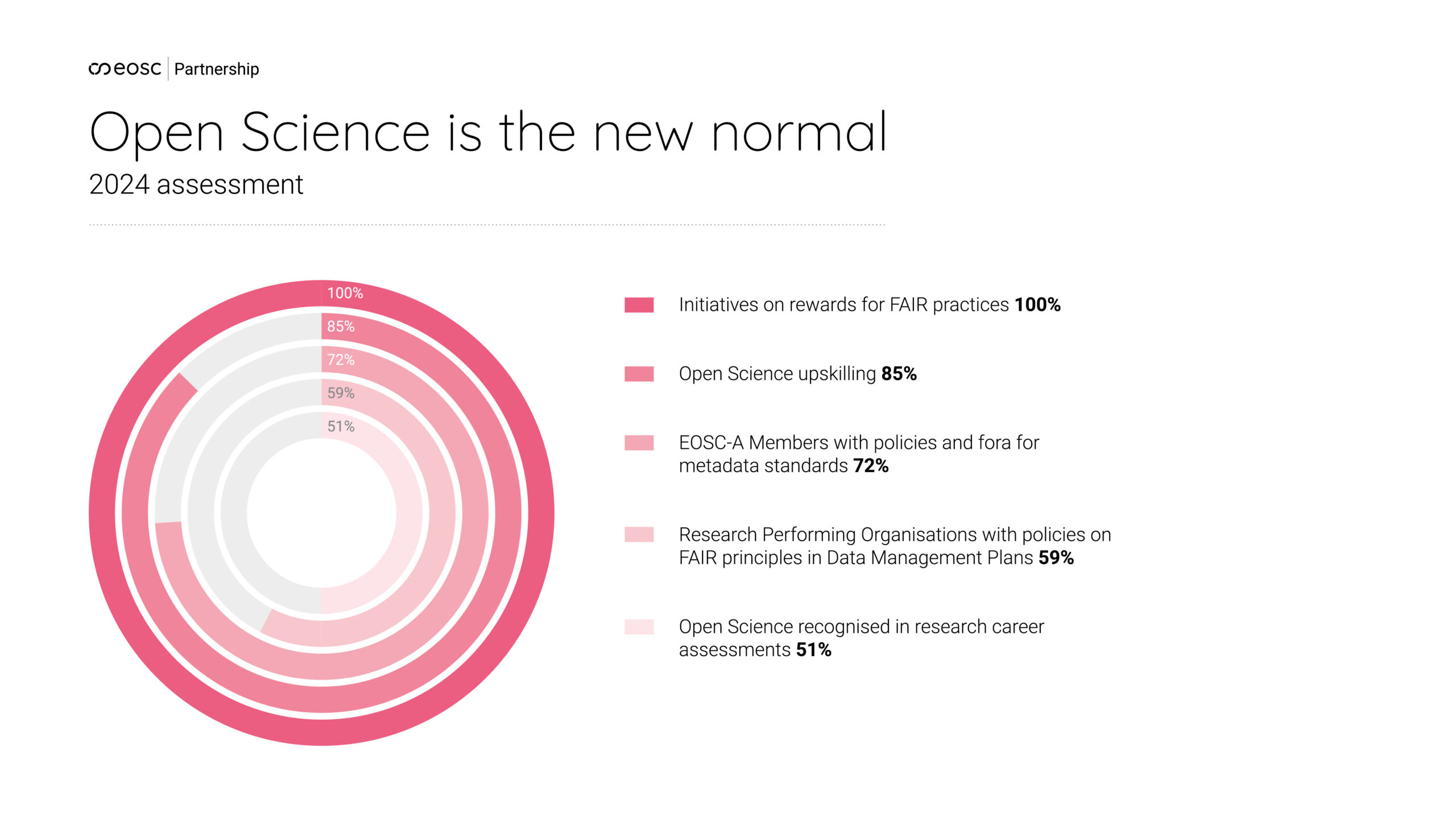
Institutions were well advanced in integrating Open Science practices into their educational curricula and in recognising Open Science in research career assessments, while also providing incentives and rewards for FAIR practices.
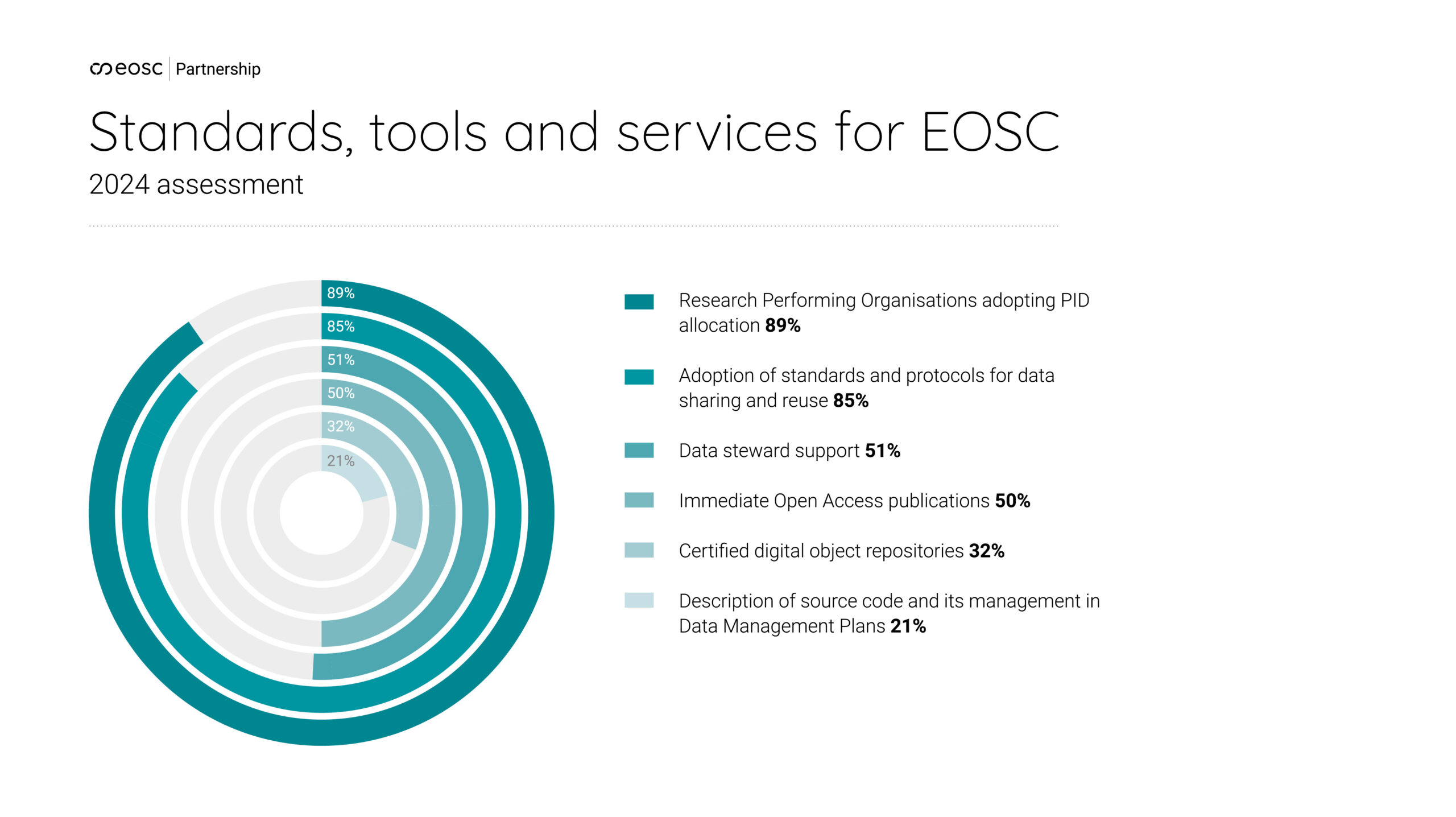
EOSC-A Members demonstrated strong EOSC readiness, particularly in adopting standards and protocols for data sharing and reuse. However, PID allocation and immediate open access publications require further incentives.