The vision for EOSC, recognised as the Common European Data Space for Research and Innovation, is to put in place a ‘system of systems’ to find and access data and services for research and innovation in Europe. This is to help researchers store, share, process, analyse and reuse FAIR research outputs within and across disciplines and borders.
The deployment of a network between data repositories and services is instrumental for Open Science to progress in Europe. For this, the EOSC Federation of Nodes has been created and will continue to grow.
In March 2025 the build-up phase of the EOSC Federation kicked off in Brussels. The Federation was launched in November 2025 and is undergoing its second wave of expansion in 2026 and 2027. The ongoing build-up phase will transition the EOSC Federation from prototype to production by the end of 2026.





Selected scientific use cases of the EOSC Federation
The cross-Node scientific use cases detailed below demonstrate how the EOSC Federation is enabling cross-disciplinary collaboration, empowering researchers, and supporting the creative reuse of FAIR data to accelerate discovery and innovation in Europe. This selection represents only a small number of the use cases undertaken by the Nodes.
- Mapping of Earth’s marine microbiome to inform global climate models and potential carbon sequestration strategies
- Training AI models for improved prostate cancer screening
- Monitoring pathogenic outbreaks and antimicrobial resistance by establishing models for timely cross-border health data sharing in Europe
- Using AI to provide researchers with access to the vast store of scientific data generated at large, public European research infrastructures
- A networked European solution to bring researchers together with the computational resources, large data sets, and scientific workflows essential to basic research and innovation
- A European-based social network of data that brings together high-performance computing with common, scalable approaches to the analysis of the massive imaging data sets collected by astrophysicists, oceanographers, climate scientists, biologists and other researchers
Promotional images and slides
Download a presentation showcasing the scientific use cases of the EOSC Federation via the button below. You are welcome to use the slides in your meetings or share the images on social media to highlight the added value of the EOSC Federation for researchers and the wider scientific community. Individual banners can be downloaded by clicking the thumbnails below, while the relevant call-to-action links are supplied in the captions.
Use case descriptions and videos
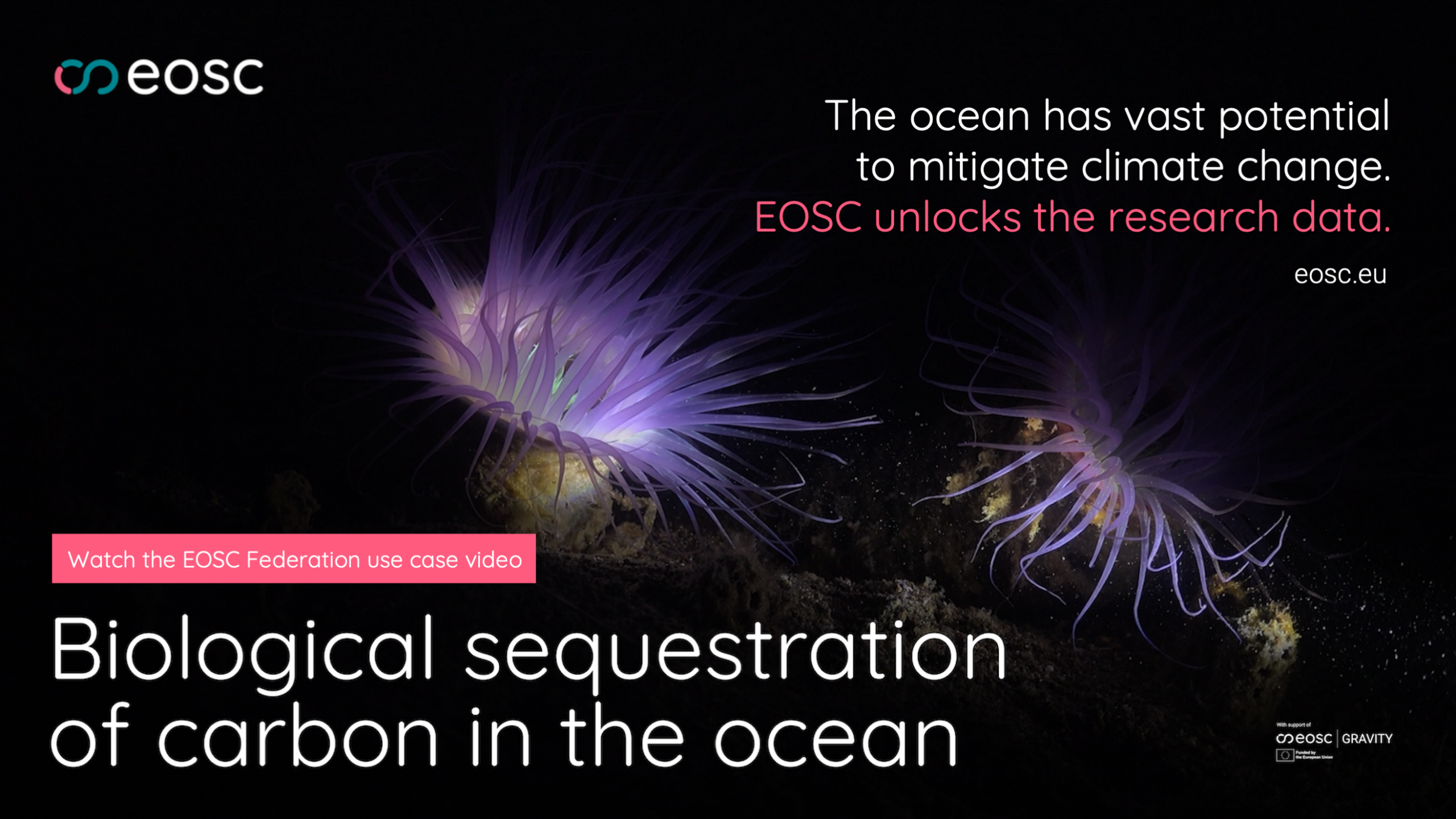
Biological sequestration of carbon in the ocean
The scientific use case addresses the ocean’s critical role in mitigating climate change through biological carbon sequestration, a process by which marine microorganisms capture atmospheric carbon dioxide and store it in the deep ocean for centuries.
Despite its global importance for climate modelling, this mechanism remains poorly represented in current models, which still rely on simplified representations of marine ecosystems. The use case seeks to fill this knowledge gap by integrating genomic, environmental, and modelling data within a unified, open, and interoperable framework provided by the EOSC Federation.
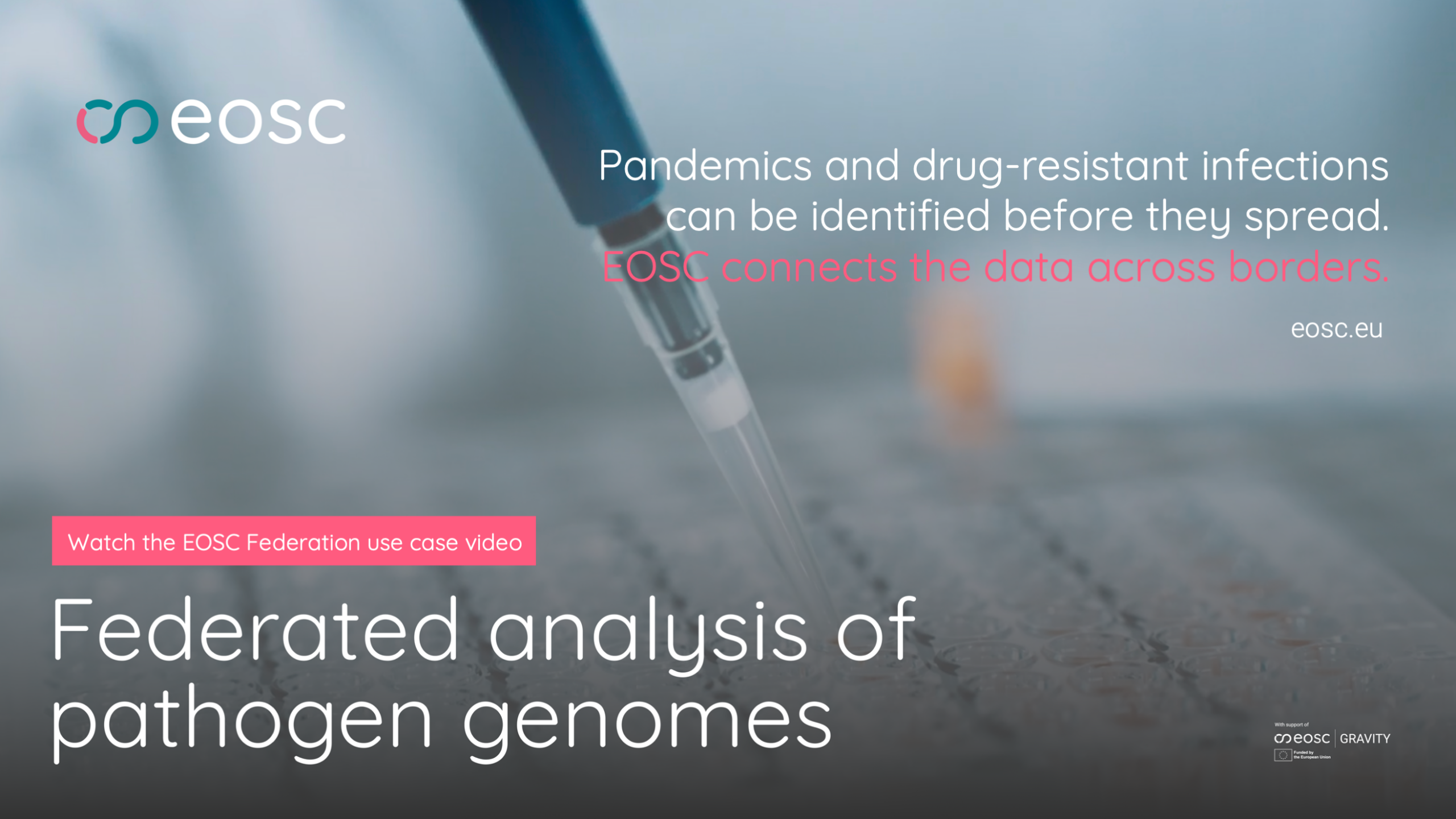
Federated analysis of pathogen genomes
The federated analysis of pathogen genomes science case outlines a federated, cross‑border capability for timely analysis of pathogen genomes that brings computation to the data instead of copying sensitive datasets across institutions.
The objective is to shorten time‑to‑insight for outbreak detection, source attribution, and antimicrobial‑resistance (AMR) surveillance while preserving data sovereignty and meeting European legal and ethical requirements. Experience from COVID‑19 showed that sequencing at scale can transform public‑health decision‑making. Operationally, the effort starts with two neighbouring nodes of the EOSC Federation—the Slovakian national node providing workflows, datasets, computational infrastructure and domain expertise, and the Polish national node (via Poland’s National Science Centre (NCN) and a scientific repository service) supplying key technical support and their own datasets. Their geographical proximity make the two EOSC Nodes an ideal pair for a cross-border pilot. The approach demonstrates how to establish a federation of trusted sites, run harmonized workflows locally, and share only the minimum results needed for action.
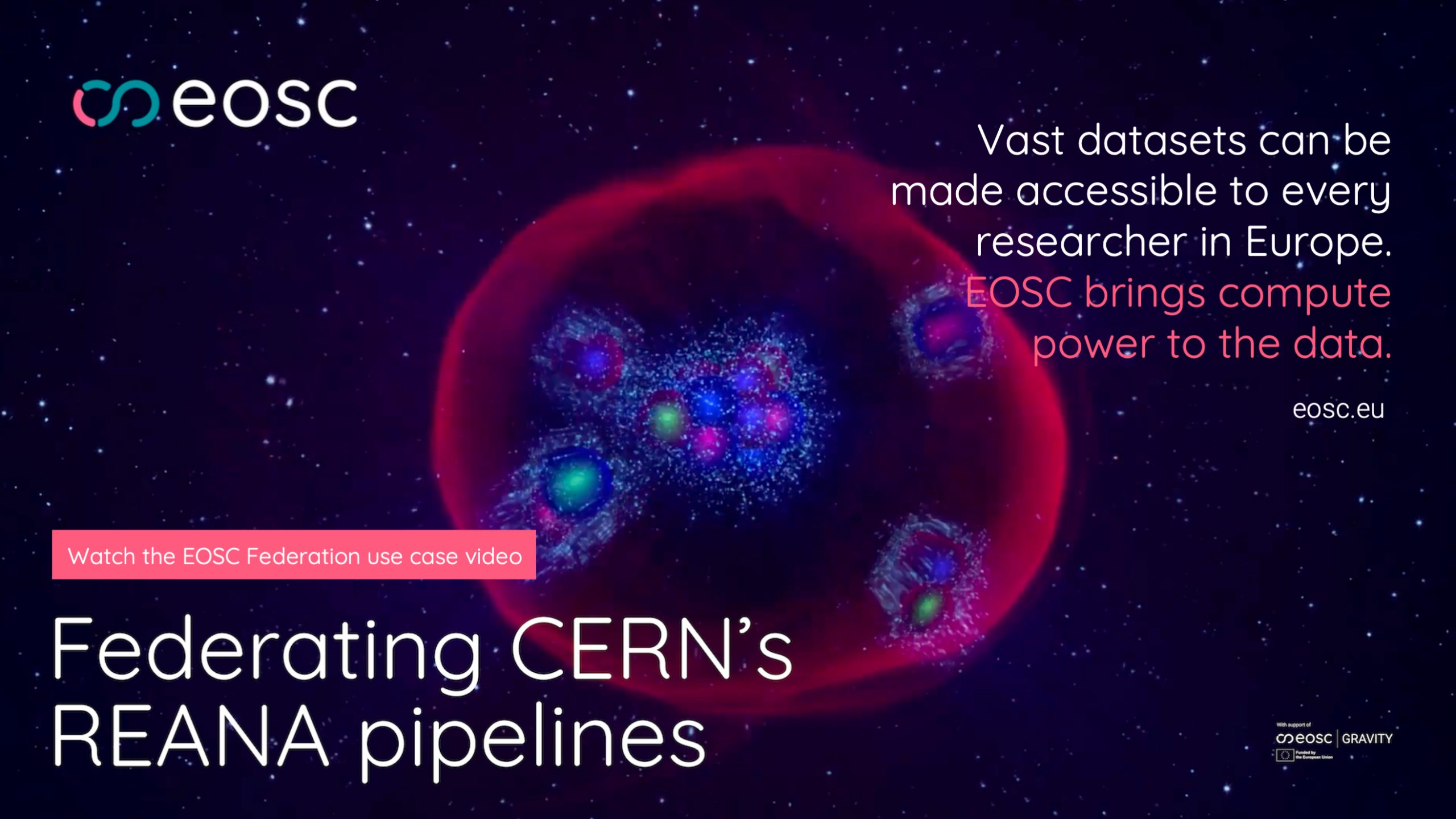
Federating CERN’s REANA pipelines
The REANA science case focuses on enabling near-data computation—sending computational workflows to where large scientific datasets are stored, rather than transferring massive volumes of data to the researcher.
The use case demonstrates this concept through particle physics—a field that generates enormous data volumes—but it is applicable to many other domains, including astronomy and life sciences. The project aims to show how researchers can execute their analyses directly at the data source, using REANA—CERN’s Reproducible research data analysis platform—to manage containerized workflows across federated computing resources.
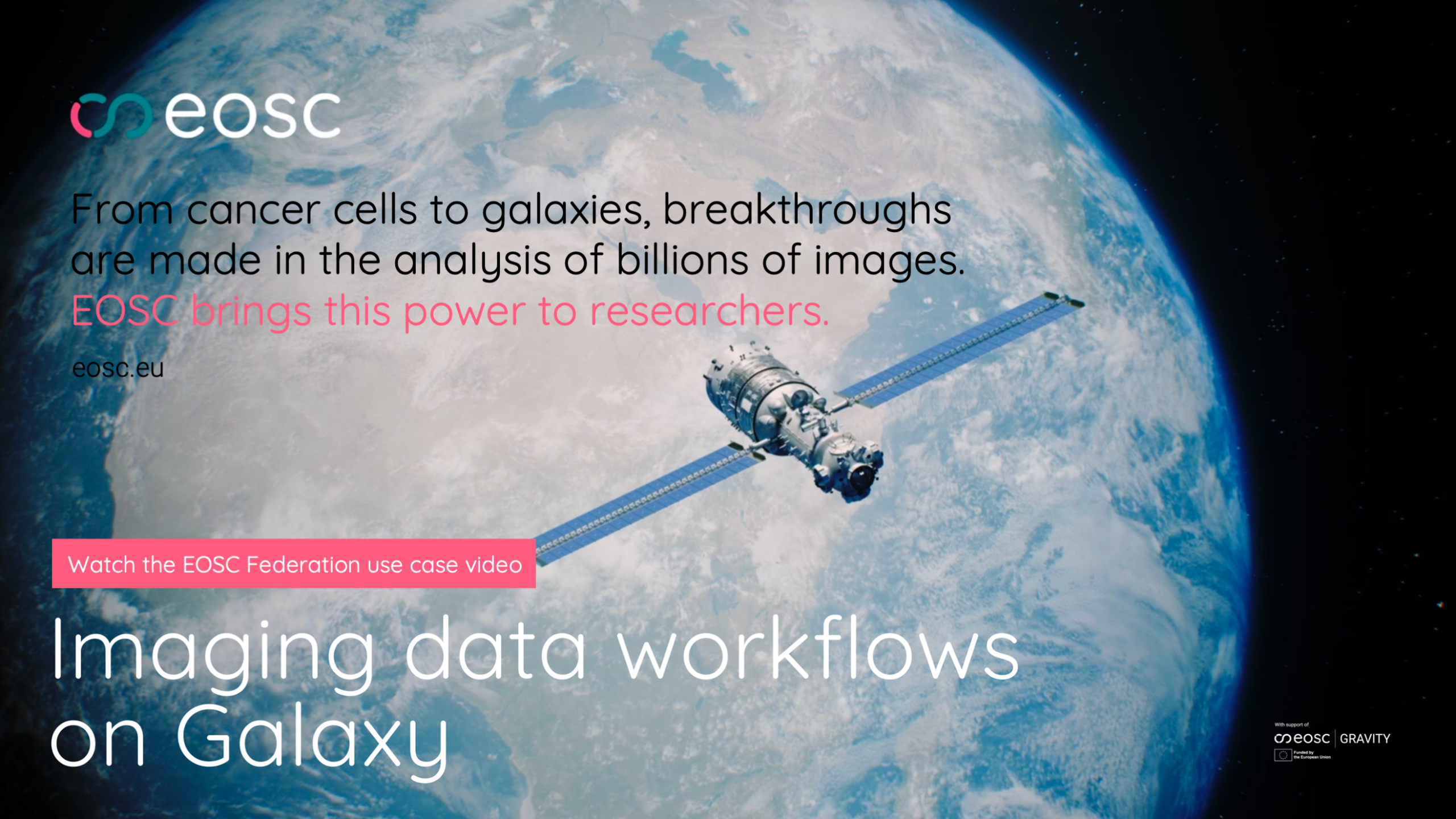
Imaging data workflows on Galaxy
This science case on imaging data workflows on Galaxy demonstrates how a federated, open-access computational platform can transform the way imaging data are processed, shared, and reused across diverse scientific domains.
The use case leverages the Galaxy platform to integrate data from a wide range of imaging-based research fields—such as life sciences (microscopy), astrophysics (telescope data), climate science (satellite data), and marine science (underwater imagery)—into a unified analysis environment. The goal is to demonstrate that Galaxy can be integrated into the EOSC Federation’s common infrastructure to serve many disciplines simultaneously, allowing researchers to share workflows, reuse methods, and access powerful computational tools without needing specialised technical expertise.
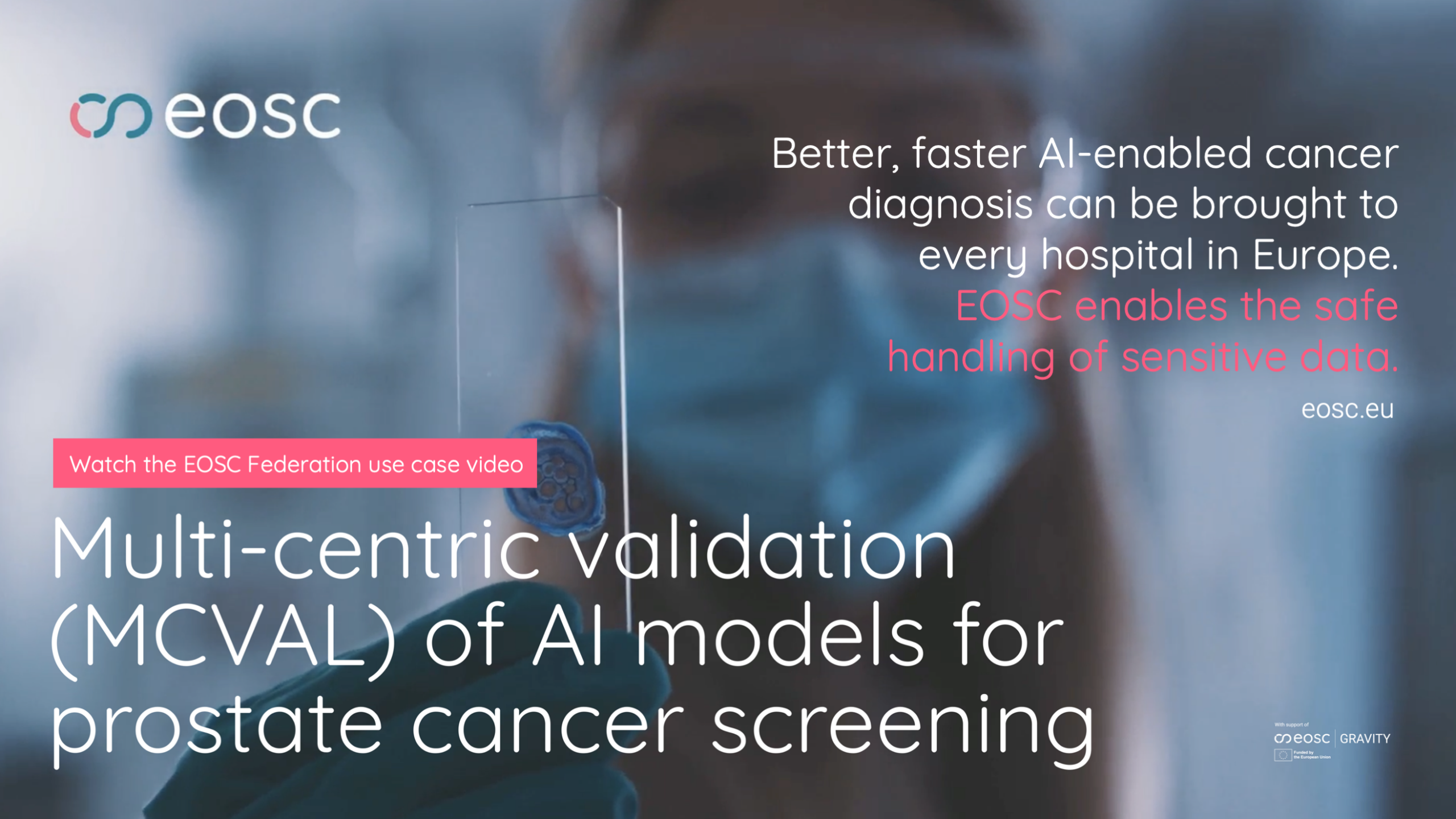
Multi-centric validation of AI models for prostate cancer screening
Advances in digital pathology are transforming cancer diagnosis by enabling high-resolution imaging of tissue samples and the application of artificial intelligence (AI) for clinical decision support.
Prostate cancer, one of the most prevalent malignancies among men worldwide, represents a critical case for early and accurate diagnosis, as survival rates are strongly tied to timely detection and treatment. The objective of the multi-centric validation (MCVAL) of AI models for prostate-cancer screening use case, coordinated by the BBMRI-ERIC EOSC Node, is to create a secure environment in which AI models for prostate cancer screening can be validated using data from different hospitals. Rather than building new diagnostic systems from scratch, the project focuses on testing an existing model trained on whole-slide images and assessing how well it performs when applied to data processed elsewhere.
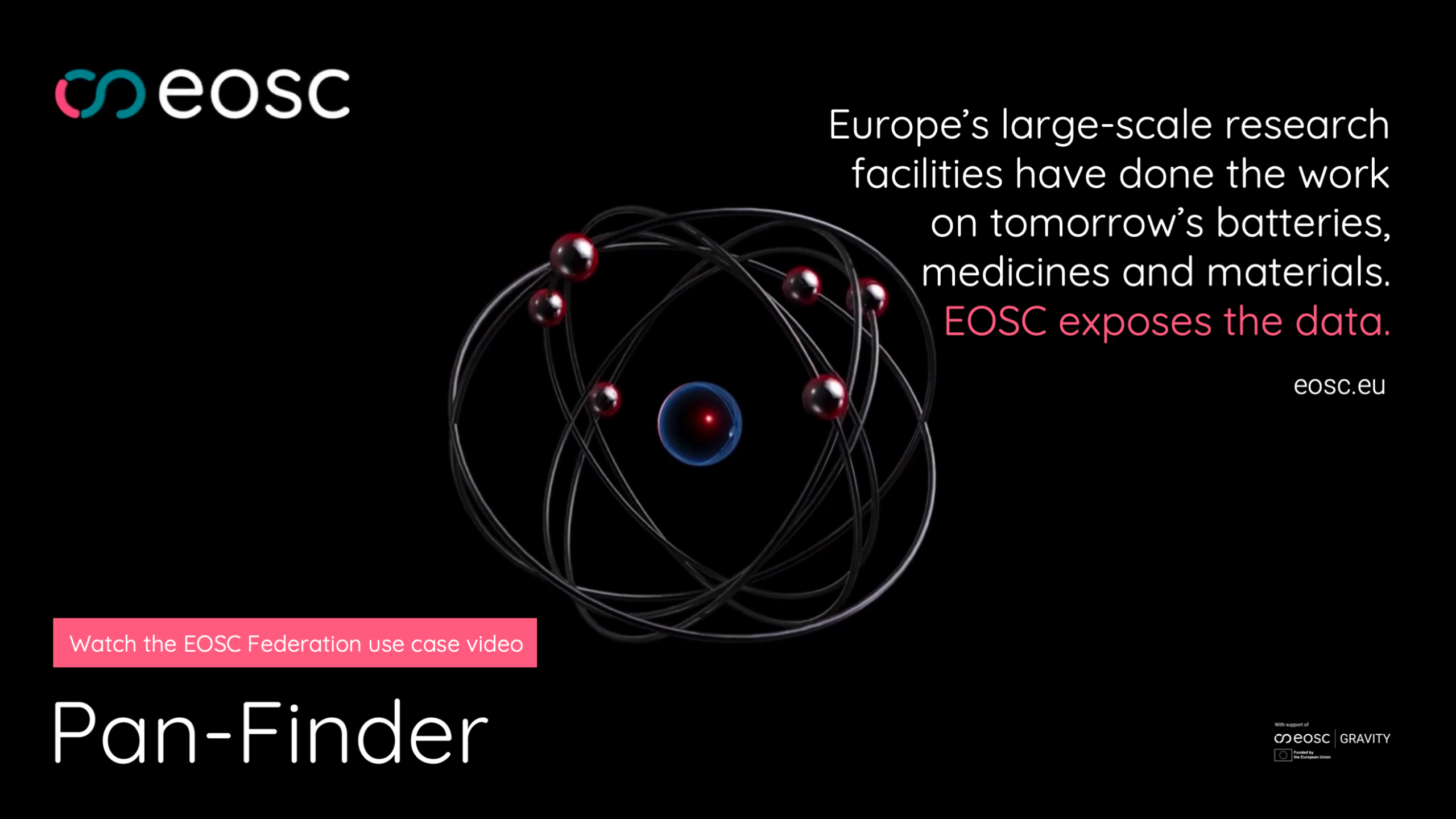
PaN-Finder
The PaN-Finder science case presents an artificial intelligence–driven data discovery platform designed to enhance Open Science within Europe’s research communities by making data from photon and neutron facilities easier to find.
The initiative builds upon previous work undertaken through the PaNOSC (Photon and Neutron Open Science Cloud) project, which aimed to interconnect data catalogues from large-scale research facilities. While the initial federated portal provided a single access point to open data, it was limited by inconsistencies in metadata, domain-specific terminology, and the need for users to possess detailed technical knowledge to perform effective searches. PaN-Finder aims to lower these barriers, making the discovery of open research data more intuitive and inclusive.