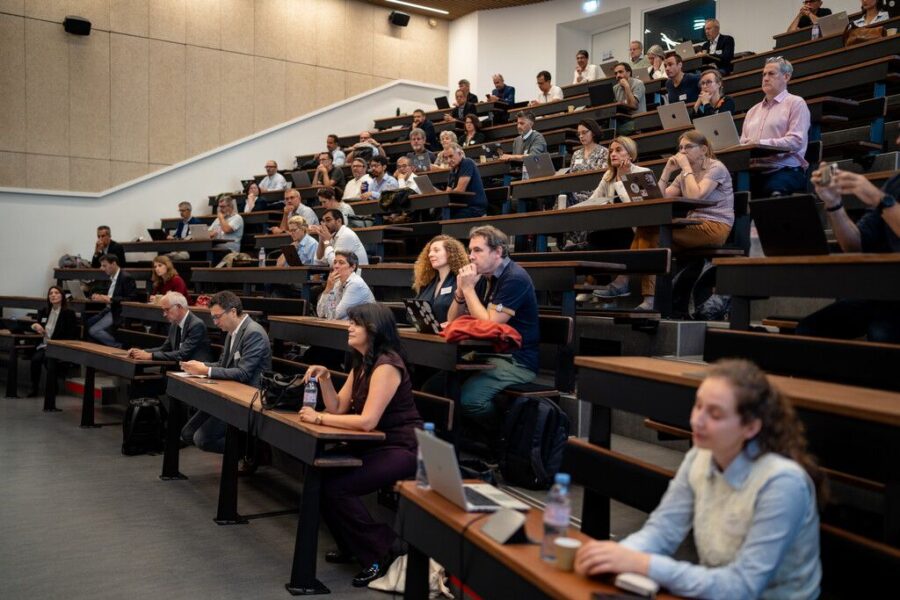
Serving as the key enabler to leverage Europe’s treasure trove of high-quality research data—from cancer screening and pathogen surveillance to climate modelling and CERN-scale data analysis—Europe’s research data federation has moved from prototype to production.
BRUSSELS—As of noon today, 08 October, 14 nodes of the EOSC Federation are in production, marking a major step towards a European research environment in which data, computing resources and more than 120 scientific services can be accessed and used across institutional, disciplinary and national boundaries. With these 13 pioneering nodes joining the operational EOSC EU Node, this moment marks the culmination of a decade of European, national and organisational investment in the development of EOSC.
“Today begins a continent-wide transition from an ambition Europe has shared for more than a decade to a production-grade EOSC Federation that researchers can actually use,” said EOSC Association President Klaus Tochtermann. “The EOSC Nodes entering production are the first vertebrae of the digital backbone that will support Europe’s capacity to connect and govern its own scientific data, to bring that data securely to compute and AI, and to turn it into a new generation of scientific discoveries. These will have significant impact on the application of research findings in areas including health, climate and defense, among others. In a data-driven world, the capabilities the EOSC Federation supports are fundamental to Europe’s scientific leadership, competitiveness and sovereignty.”
A new, shared European research environment takes shape
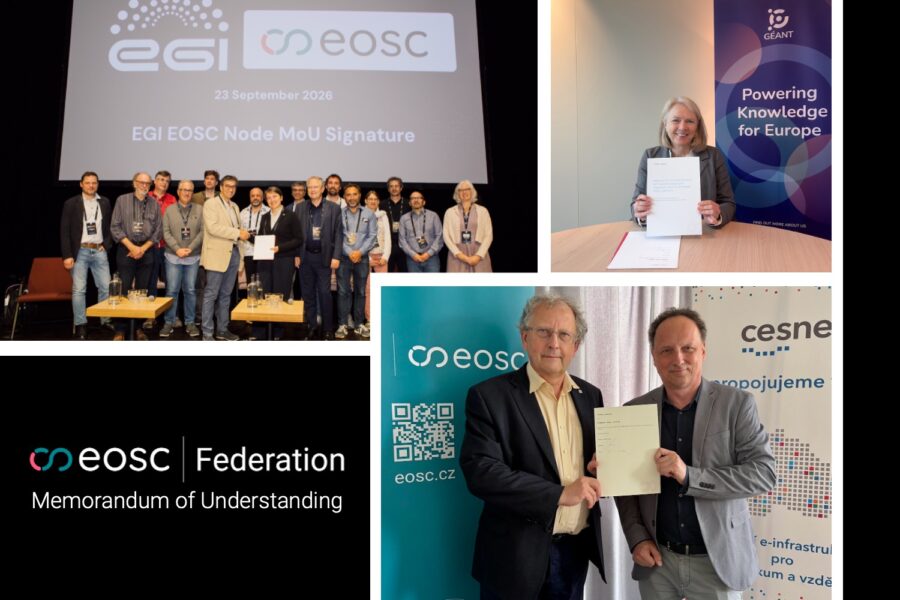
The EOSC Nodes joining the EOSC EU Node in production today include national nodes for Czechia, Finland, Italy, Poland and Slovakia; thematic nodes from the research communities represented by BBMRI-ERIC, CERN, Data Terra, European Digital Twin Ocean and the Photon and Neutron Cloud; and infrastructure nodes from EGI, EUDAT and GÉANT. These nodes will soon be joined by 14 additional EOSC Nodes currently working toward production readiness in the coming weeks and months. Behind all of these EOSC Nodes stand a total of 218 European research organisations.

- Experience the EOSC Federation via the EOSC EU Node
- Explore the EOSC Federation’s scientific use cases, and learn more about how the Federation is being built and by whom
- EOSC and FP10
“The real strength of the EOSC Federation is the community behind it. Our 28 Nodes are connecting research data, services, infrastructure and expertise across Europe, showing what becomes possible when researchers and innovators work across institutional, disciplinary and national boundaries,” said EOSC-A’s Special Envoy to the EOSC Federation Bob Jones. “The scientific use case is already concrete, with growing opportunities to connect research and industry. At the same time, we are building the trust, governance and shared practices that make federation sustainable. As EOSC grows, it becomes a shared ecosystem for European research and innovation.”
The transition to production will be formally recognised at the EOSC Symposium 2026 in Florence next week on 14–16 October. This will set in motion a growth phase for EOSC that will expand the number of nodes, capabilities and resources of the EOSC Federation, including the sequencing of a third wave of EOSC Nodes planned for spring 2027.

From infrastructure to science
The scientific cases already being developed across the Federation show what a trusted web of FAIR (findable, accessible, interoperable and reusable) data and services can enable.
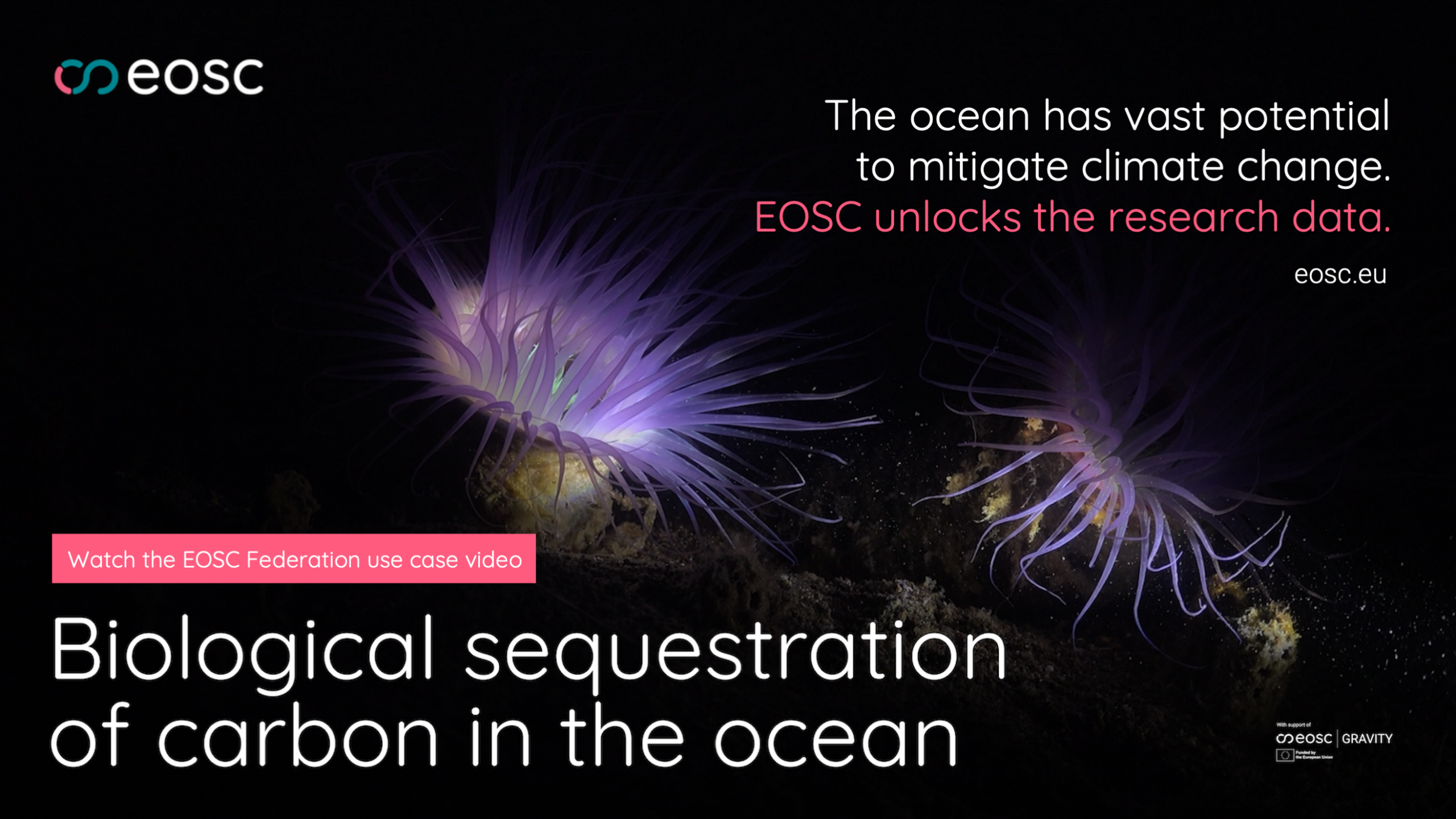
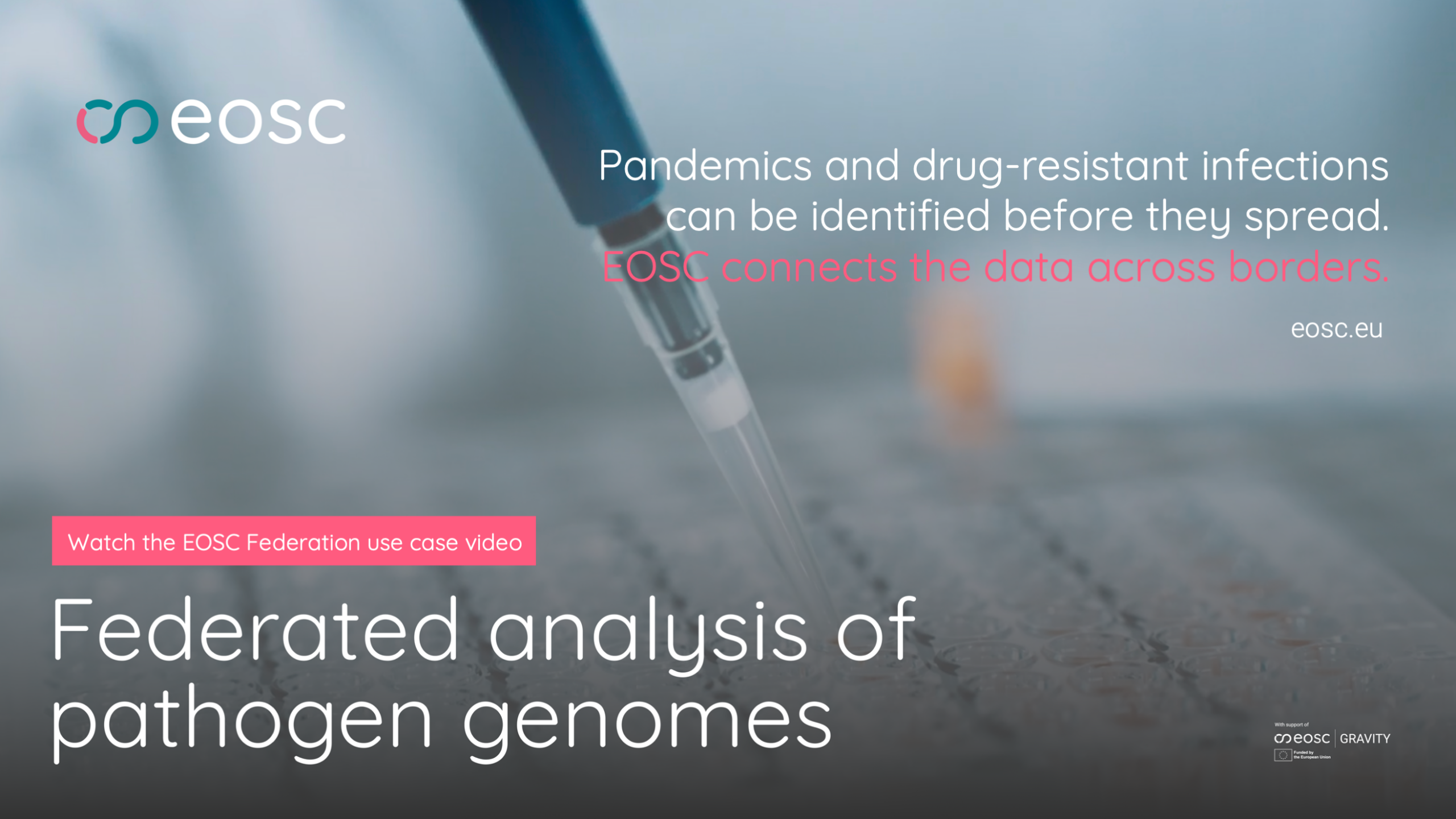
Researchers are combining genomic, environmental and modelling data to improve our understanding of ocean carbon sequestration; establishing federated analysis of pathogen genomes for outbreak detection and antimicrobial-resistance surveillance; validating AI models for prostate-cancer screening across hospitals; and enabling scientists to run computational workflows close to the vast datasets generated by Europe’s large-scale research facilities.
Other use cases are connecting high-performance computing, large-scale imaging data and reusable scientific workflows across disciplines ranging from astrophysics and climate science to biology.
The objective is to enable researchers and innovators to discover and use trusted, high-quality data, services and computing resources wherever they are located, while the data remain the sovereign responsibility of the organisations that manage them.
Supporting Europe’s research and AI ambitions
The scientific capability enabled by the EOSC Federation also contributes directly to wider European policy objectives concerning data sovereignty, security and Europe’s AI and innovation ambitions.



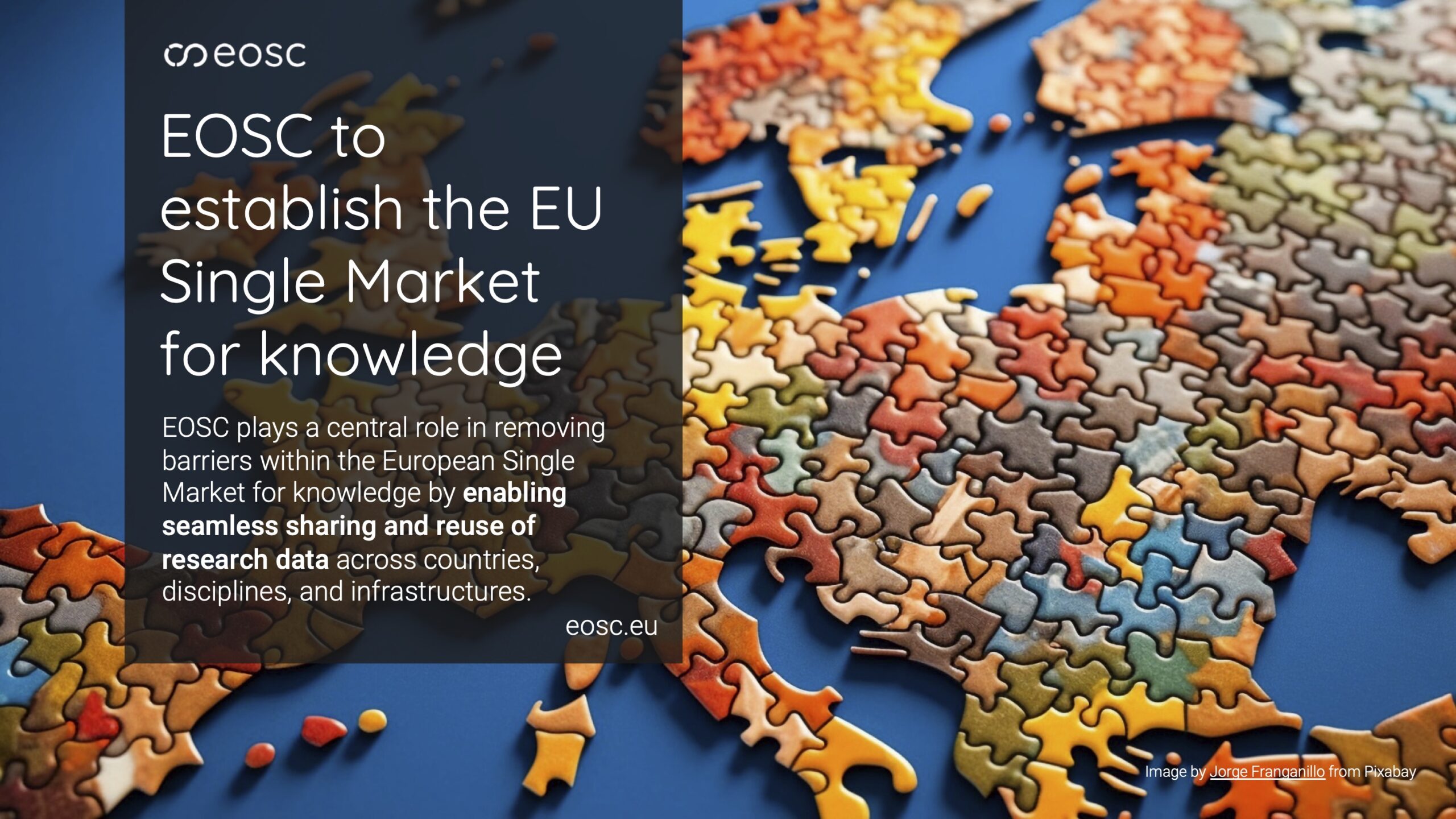
These capabilities are becoming increasingly important as European research becomes more data-intensive and AI-enabled. High-quality AI for science depends on access to trustworthy, well-described research data and the ability to analyse them across disciplines and borders.
Work now continues to improve the researcher experience, expand the scientific scope and reach of the Federation, and consolidate its operation across Europe. As the Federation enters this new phase, the EOSC Association and the EOSC Steering Board have both called for a distinct Work Programme-based Partnership under FP10 to support its sustainable development beyond the current programme.