In September and October 2026, as part of the DAMAP-PL inter-project grant under EOSC Gravity, Gdańsk University of Technology organised workshops for Polish universities on DAMAP, a tool that simplifies the preparation of Data Management Plans (DMPs). As a result, eight Polish universities tested and customised their institutional DAMAP instances to meet their specific needs.
The DAMAP-PL project is coordinated by TU Wien and implemented in collaboration with Cyfronet AGH and Gdańsk University of Technology.
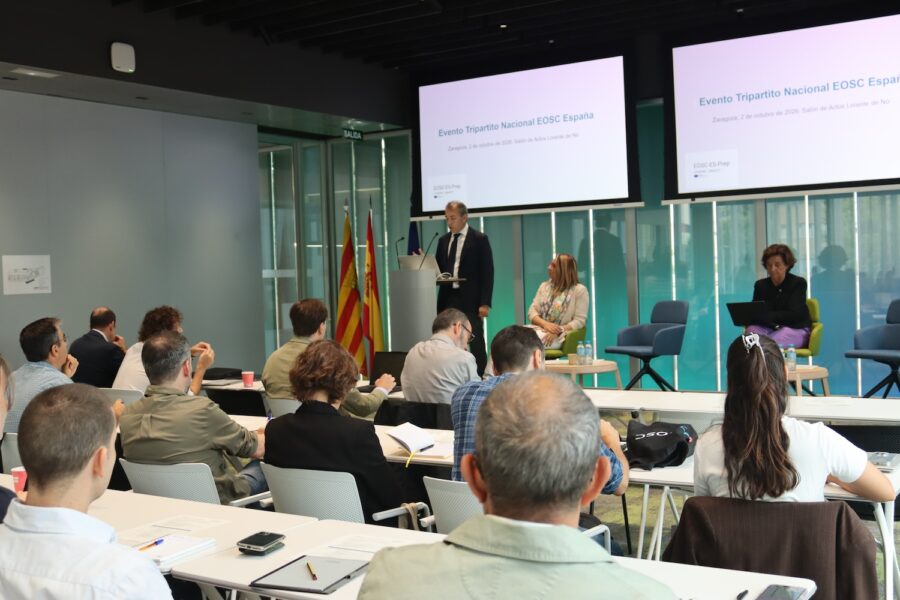
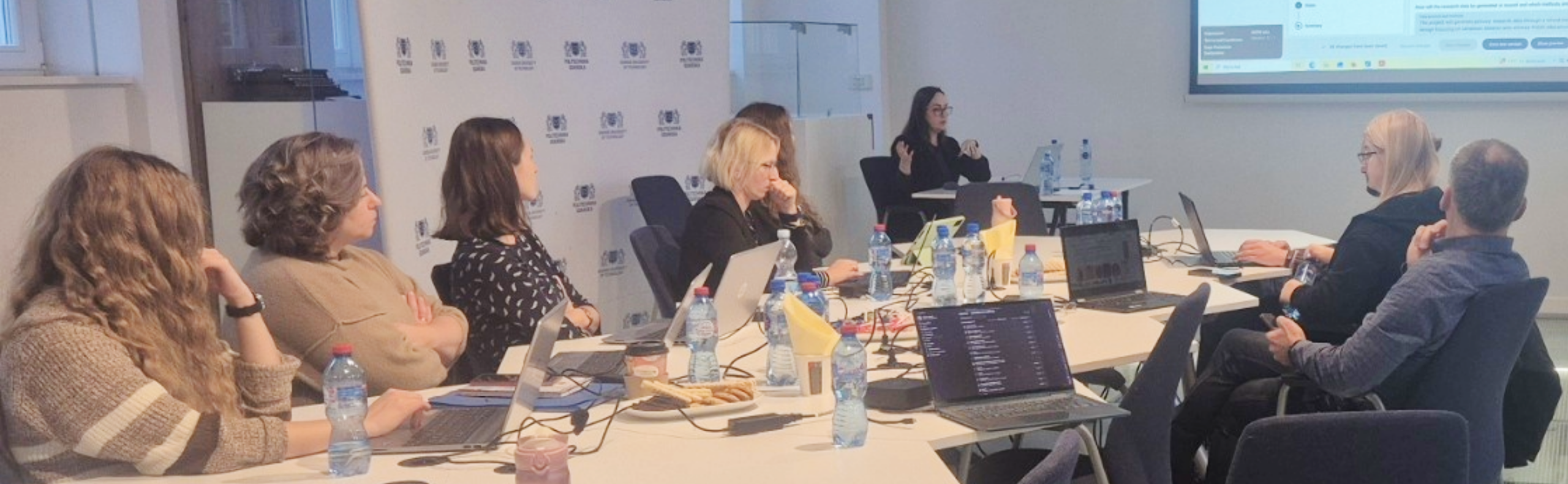
The first workshop was organised online for participants from outside Gdańsk. The institutions represented included AGH University of Kraków, Adam Mickiewicz University in Poznań, Nicolaus Copernicus University in Toruń, Warsaw University of Technology, and Lublin University of Technology. The second workshop was held on-site in Gdańsk for DAMAP users from the University of Gdańsk and the Medical University of Gdańsk. Altogether, 25 data stewards and technical administrators were trained on how to effectively customise the tool for institutional requirements and support its use in research data management.
Workshops tailored to institutional needs
Both workshops followed the same structure. The first session was dedicated to technical staff responsible for the implementation, administration, and customisation of the tool within their institutions. The second session focused on data stewards and research support staff who assist researchers in preparing Data Management Plans. As practical, hands-on sessions, both workshops emphasised real-world application of the tool and its adaptation to support DMP preparation for projects funded by Poland’s National Science Centre.
The final session of each workshop provided an opportunity for participants to share their first impressions of the tool. Participants highlighted DAMAP’s intuitive design, user-friendly interface, and logical workflow, which help researchers structure information and ensure that key elements are not overlooked. They also appreciated the ability to generate DMPs tailored to the requirements of different funding agencies, saving time when updating or preparing subsequent versions of a plan.
Participants noted that the tool promotes greater consistency and quality in DMP preparation across projects and has strong potential for broader use in research support processes. They particularly valued features such as version control, change tracking, and the dedicated sections for files, access rights, and licences, which provide a clear overview of primary and secondary data and their conditions of use.
Opportunities for further development
When discussing limitations, participants most frequently pointed to the lack of integration with the Polish grant application platform, which requires users to manually transfer information between systems. Another challenge is the absence of a dedicated review and verification workflow to support collaboration between researchers and data stewards. While data stewards can access plans, they cannot provide comments or structured feedback directly within the tool.
Overall, the workshops concluded with a very positive assessment of the tool and its potential usefulness in everyday research support activities. Participants recognized DAMAP as a valuable solution for improving the quality and consistency of Data Management Plans. They also emphasized that its usefulness could be further enhanced through integration with other institutional systems and the national grant application platform, reducing the need for manual data transfer and streamlining researchers’ workflows.