BRUSSELS — The EOSC Association has released the second major edition of the EOSC Strategic Research and Innovation Agenda (SRIA 2.0), following its approval by the EOSC-A membership at its 14th General Assembly meeting and subsequent adoption by the EOSC Partnership Board.
The document sets out a shared vision for the next phase of EOSC and provides a strategic framework for research, development and innovation activities under the EOSC Partnership for the period 2026–2030. The overarching purpose is to systematically guide the transition of EOSC into a mature, sustainable, user-centric and technically robust data space for European research and innovation.
“Recent geopolitical, commercial, and regulatory disruptions have highlighted Europe’s dependence on foreign platforms, which EOSC addresses by ensuring long-term, secure, and trustworthy access to research data in compliance with EU regulations,” writes EOSC-A President Klaus Tochtermann in the foreword to SRIA 2.0.
Five strategic priorities
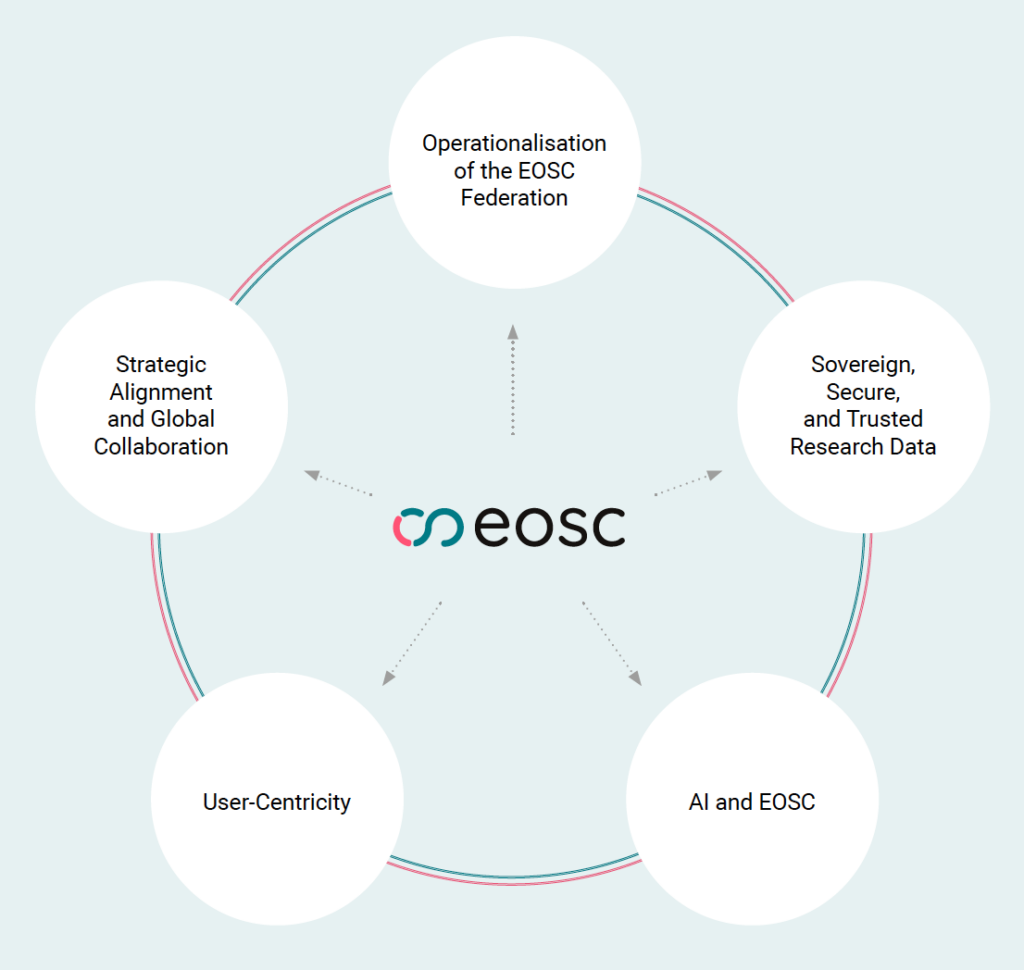
The agenda identifies systemic barriers that continue to limit the full potential of EOSC for Europe’s research and innovation capacity and translates these challenges into five strategic priorities to guide policy development:
- Operationalisation of the EOSC Federation
- Sovereign, Secure and Trusted Research Data
- AI and EOSC
- User-Centricity
- Strategic Alignment and Global Collaboration
At a time when Europe’s competitiveness, digital sovereignty and strategic autonomy face unprecedented external pressures, EOSC is increasingly recognised as an essential strategic priority for the Union.
“…EOSC is not just a technical enabler but a strategic asset serving the research community and contributing to position Europe as a global hub for trusted collaboration, while enhancing competitiveness and attracting talent from around the world.,” concludes Marc Lemaître, Director-General for Research and Innovation, in the opening foreword to SRIA 2.0.
SRIA 2.0 was developed through a collaborative and iterative process involving EOSC Association members, the European Commission’s Directorate-General for Research and Innovation, and the EOSC-A Board of Directors.