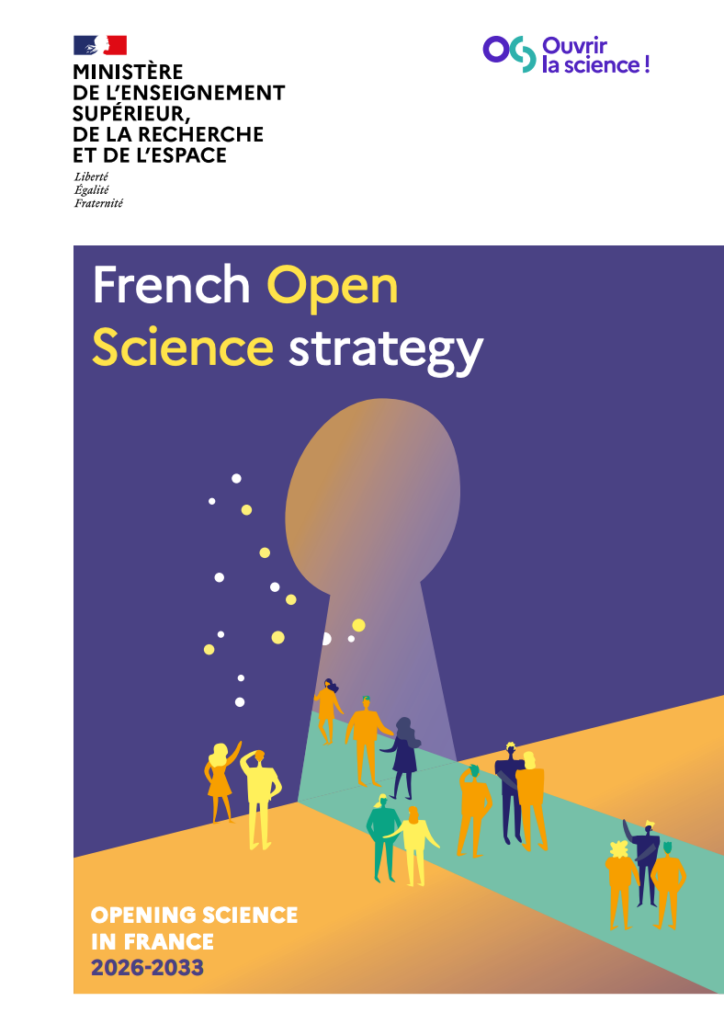
PARIS — France’s Ministry of Higher Education, Research and Space published the French Open Science Strategy for 2026–2033, identifying EOSC as a tool for strengthening France’s position within the European and international Open Science landscape.
The new strategy builds on the progress and sustained efforts made since the launch of the country’s first National Plan for Open Science in 2018, while addressing the challenges that remain. Among the achievements highlighted are the development of major national infrastructures, such as HAL, Recherche Data Gouv and Software Heritage, alongside a substantial increase in open-access publishing.
The document sets out a long-term framework for enabling more transparent, collaborative and sovereign research, and EOSC has a clear role to play in this long-term vision.
Under the section on European and international opportunities, the strategy states “The European Open Science Cloud (EOSC) represents an opportunity for pooling resources, enabling reliable and transparent management of research outputs, and is fully aligned with global research collaborations.”
This ambition is translated into concrete actions in the 2026–2029 action plan. Under the objective of strengthening France’s position in European and international open science initiative, the strategy commits to integrating French open science infrastructures into EOSC and establishing a national EOSC Node. These measures are intended to increase the involvement of French stakeholders in EOSC, improve the services available to research communities in France, and bring together France’s main open science services.
EOSC is therefore positioned not as a standalone initiative, but as an integral part of France’s long-term approach to open science. Through closer alignment of its national open science ecosystem with the ongoing development of EOSC, France aims to join the EOSC Federation and connect its research infrastructures and services with counterparts across Europe.