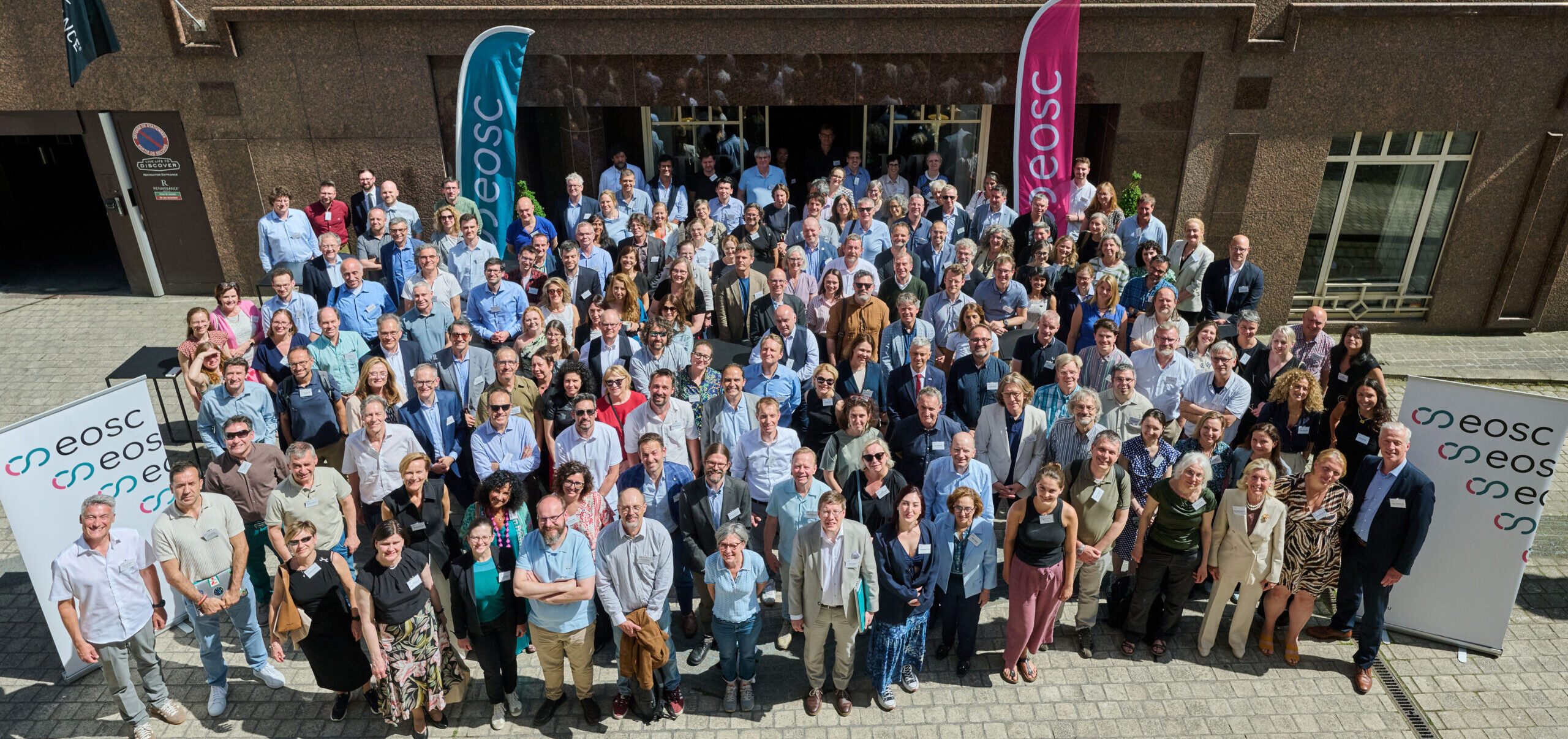
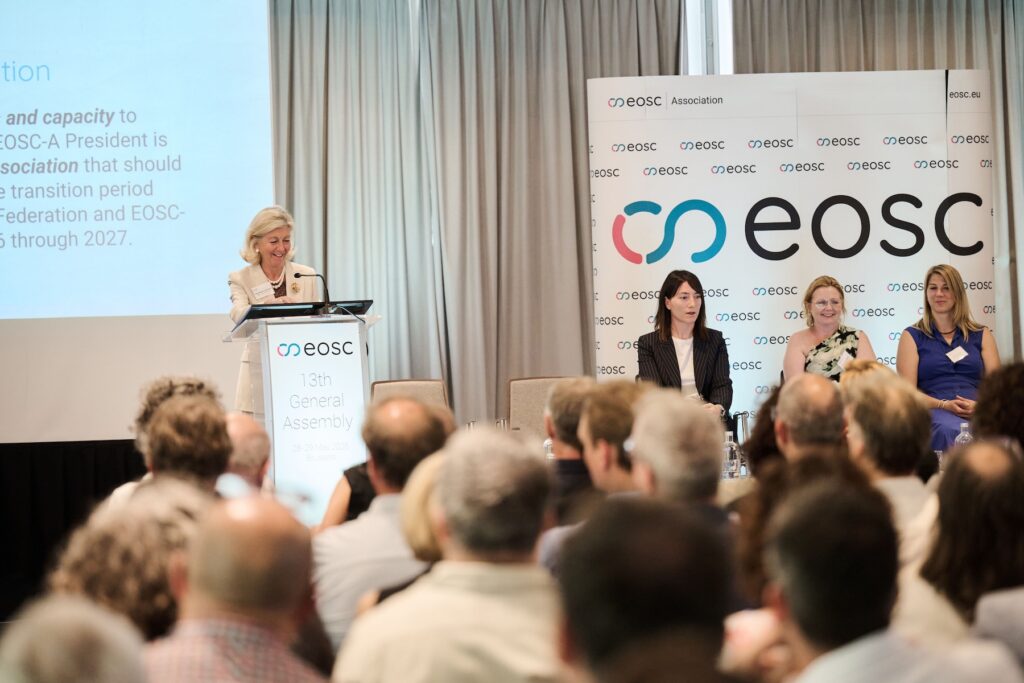
BRUSSELS—The 13th General Assembly of the EOSC Association (EOSC-A) brought the membership together for highly engaged and open discussions on the strategic and operational future of EOSC post-2027.
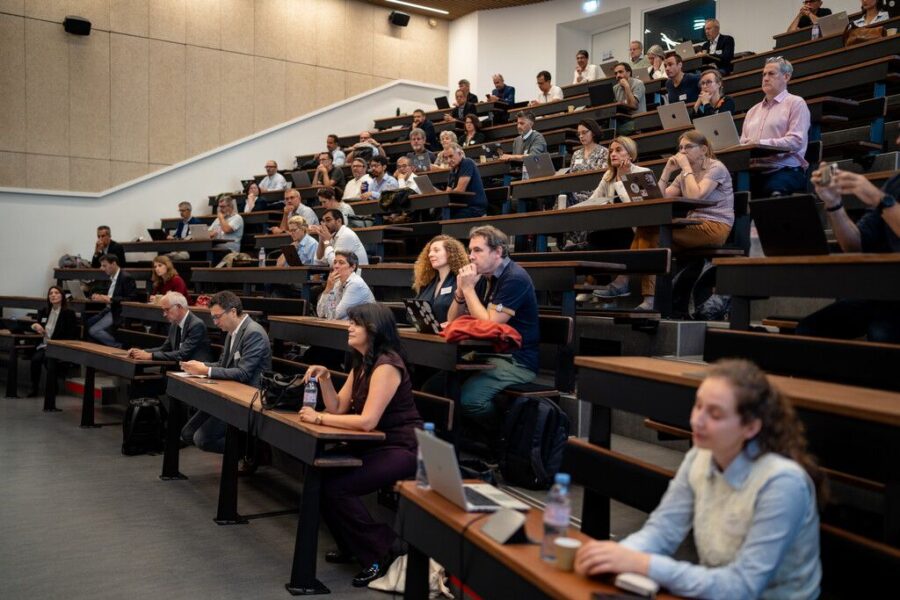
Nearly 200 Members, Observers, Board Directors and European Commission representatives gathered in plenary in Brussels, where the community spoke with clarity and confidence across all major agenda items.
The two-day, in-person meeting took place on 28-29 May 2026. It showed a mature and united EOSC Association ready to lead the community through the next phase of EOSC. The meeting focused on two major developments: the expansion and operationalisation of the EOSC Federation, and the transition from the Co-programmed European Partnership for EOSC towards EOSC’s future position in the EU’s 10th Framework Programme for Research and Innovation (FP10). All decisions at GA#13 were taken unanimously, reflecting the collective commitment of the membership.
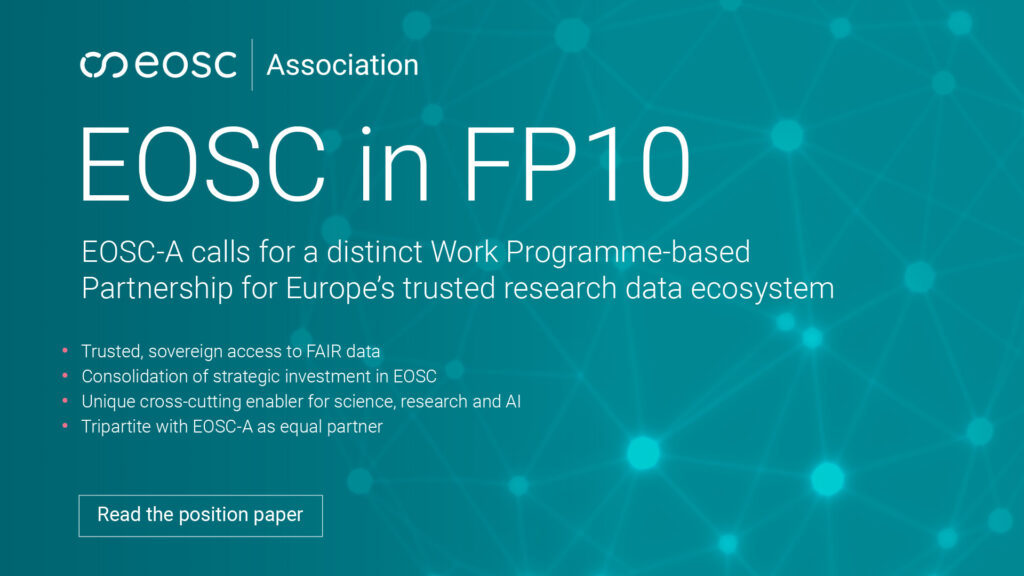
EOSC-A calls for a dedicated Work Programme-based Partnership in FP10
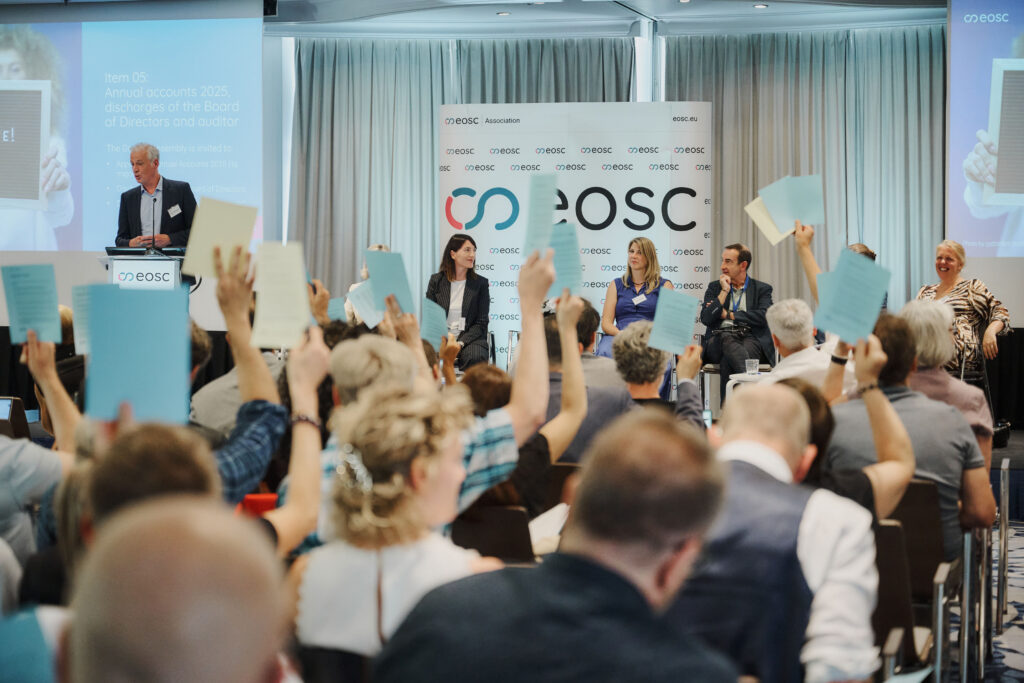
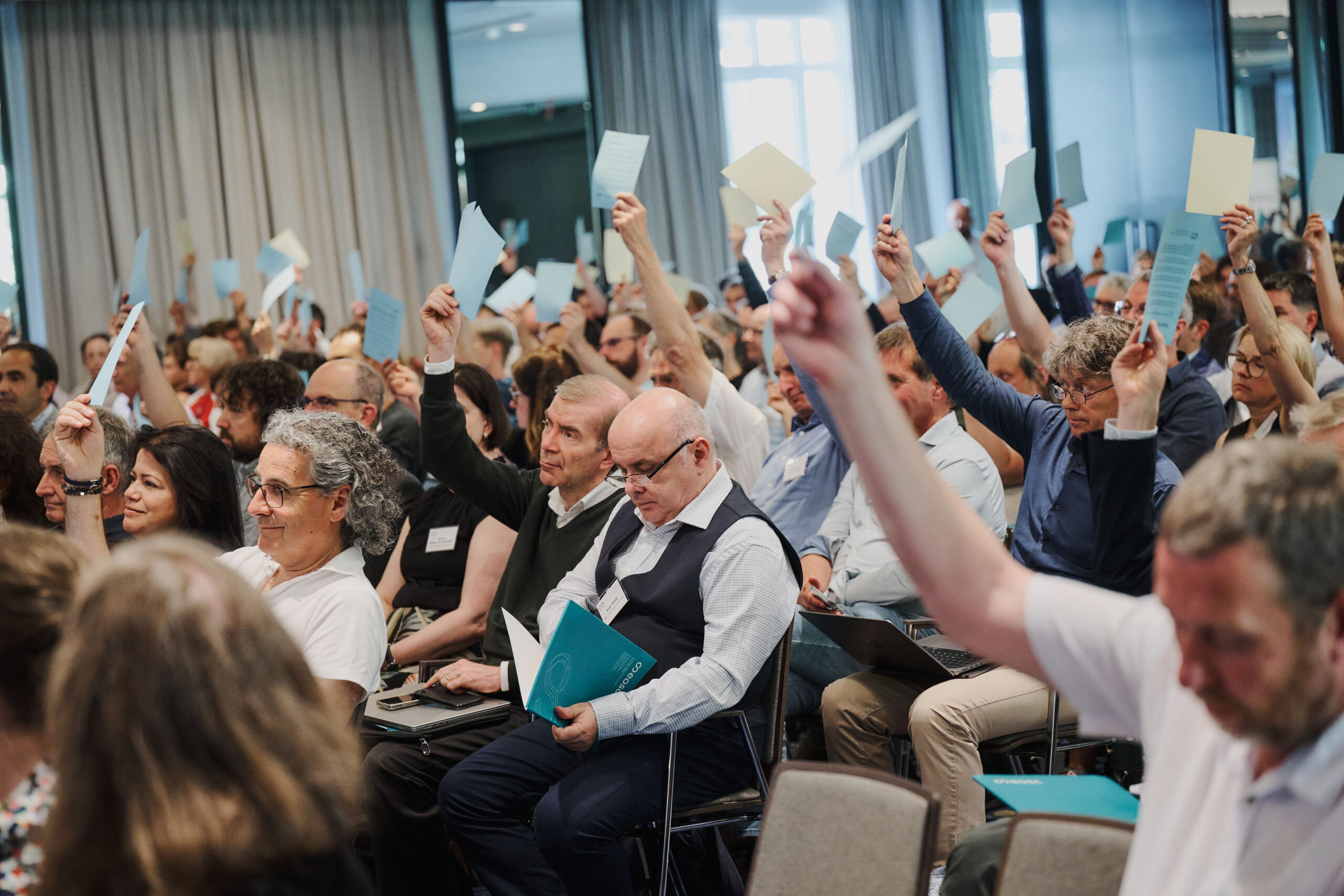
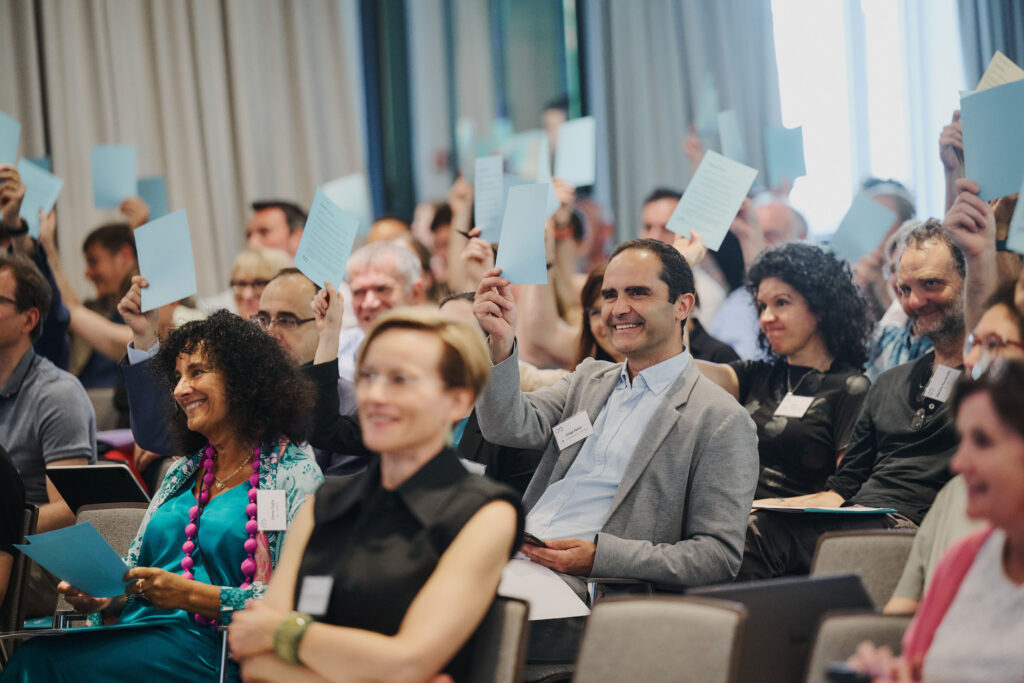
The 13th General Assembly (GA#13) placed the Association’s shared vision for the future governance and funding model for EOSC at the centre of the meeting. EOSC-A developed this common position through a broad co-creation process with the membership between February and April 2026, following the mandate given at GA#12 in November 2025. EOSC-A Director Sara Garavelli presented the paper on behalf of the Association’s Board of Directors. The full EOSC-A membership adopted it unanimously and enthusiastically in an open vote. The paper is available to read and download on EOSC-A’s Zenodo community channel.
The policy paper responds to the EU-wide negotiations on the proposed 10th Framework Programme for Research and Innovation. It calls on decision-makers to establish a distinct Work Programme-based Partnership for EOSC under FP10, with EOSC-A as an equal partner alongside the Member States, Associated Countries, and the European Commission within the Partnership’s tripartite governance. This approach would sustain the momentum of the EOSC Federation and build on the significant investments already made at European, national and organisational levels.
The clear consensus established at this GA, across a variety of fundamental issues for the Association, is an excellent indicator for EOSC-A’s future. The community engaged openly, constructively and showed its commitment to a post-2027 EOSC. Its contributions will ensure EOSC-A and the EOSC Federation move forward on the basis of a shared vision.
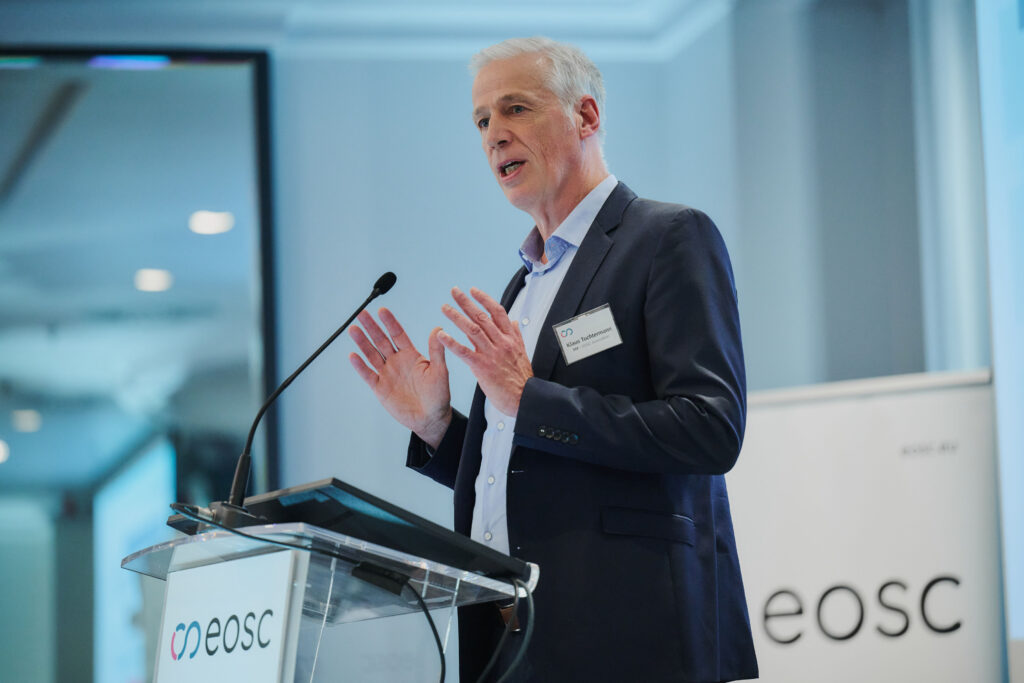
EOSC-A President Klaus Tochtermann
Unity and readiness: aligned on a post-2027 EOSC
EOSC-A President Klaus Tochtermann and Secretary General Ute Gunsenheimer presented the Association’s Interim Annual Report. The report showed strong progress in expanding and operationalising the EOSC Federation, coordinating and supporting the wider EOSC community, and motivating in-kind contributions from the membership. It also underlined the importance of preparing the Association for the next FP10 governance and funding structure.
The Association’s steady membership, established administrative, advisory and statutory structures, robust staffing and coordination, and clear unity across the EOSC-A community confirm its role as the voice of the EOSC community. The membership has played a central role in this progress by contributing actively to consultations, Task Forces, projects, policy work, advocacy, and the growth of the Federation. As EOSC moves into its next phase, EOSC-A will work with the community to shape governance and resourcing models that match the growing maturity of the EOSC Federation.
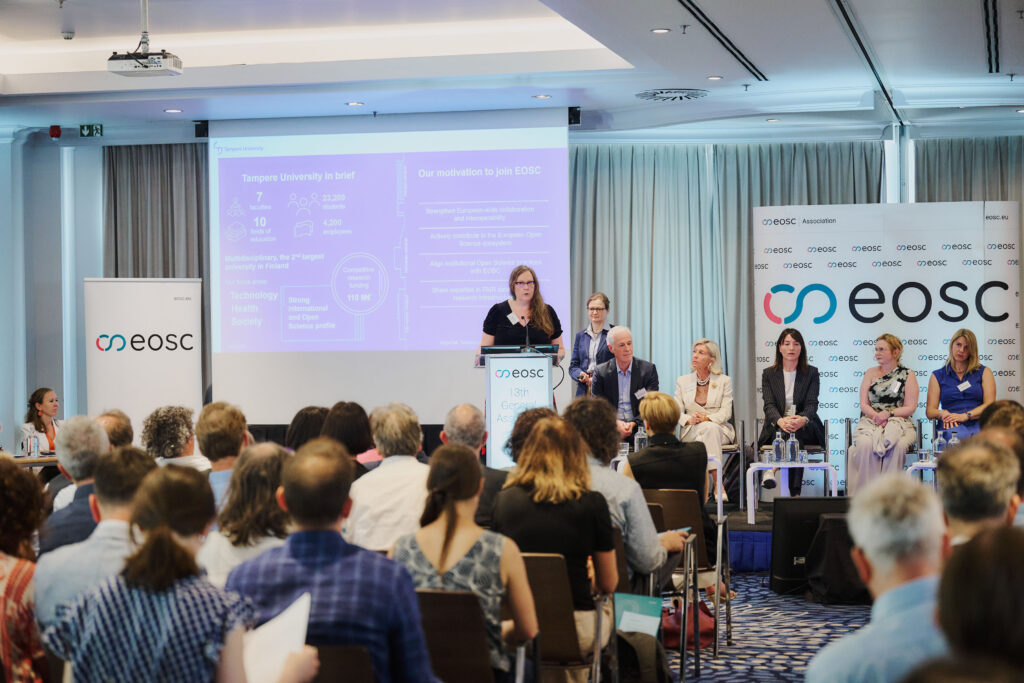
Two highly interactive sessions on the first afternoon gave the membership a direct role in shaping this work. Participants contributed substantial experience and practical feedback on two forward-looking topics: the establishment of a working group to prepare a roadmap for revising the EOSC-A Articles of Association (AoA) by 2028, and the strategic priorities for SRIA 2.0, the update of the EOSC Partnership’s Strategic Research and Innovation Agenda for 2026-2030.
Secretary General Gunsenheimer introduced the proposed terms of reference and membership structure for the AoA Roadmapping Working Group, which will work through November 2026 to develop the revision roadmap. The GA unanimously approved the creation of the working group, after which an open call for expressions of interest to join the group was launched, with a deadline of 10 June 2026. The roadmap, which already benefited from substantial input during the day’s session, will guide a series of consultations in 2027 and will be proposed for adoption by the GA at its December meeting.
President Tochtermann opened the SRIA 2.0 session with a detailed breakdown of the five strategic priorities already developed through consultation with the membership and agreed with the European Commission in the framework of the EOSC Partnership. SRIA 2.0 will pivot significantly from the first SRIA to reflect Europe’s shifting geopolitical and economic environment. These priorities strengthen the case for EOSC in its role as the recognised Common European Data Space for Research and Innovation.
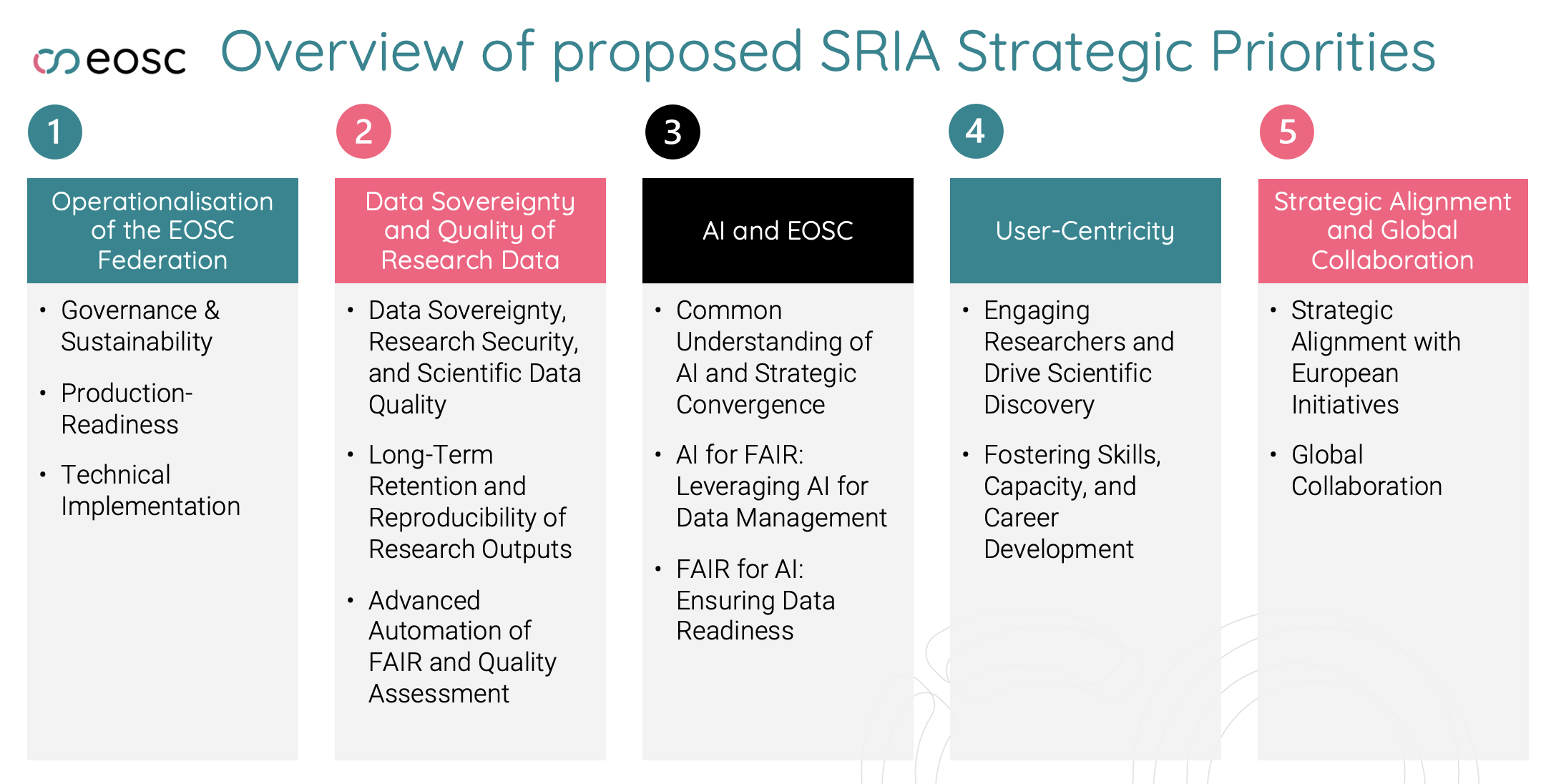
The discussion confirmed that SRIA 2.0 must stay closely aligned with the needs of the research community while remaining focused and realistic. Participants stressed that the document should present a clear and achievable long-term vision for EOSC, setting the strategic framework for the Multi-Annual Roadmap, which will continue to define EOSC’s rolling near-term funding priorities.
Spotlight on the EOSC Federation: strategic considerations and a user forum
Day 2 of the meeting was dedicated entirely to the EOSC Federation, with two interactive sessions split between its highest level strategic considerations and its most user-centric operational tool, a Federation-wide forum serving the users of the EOSC Nodes.
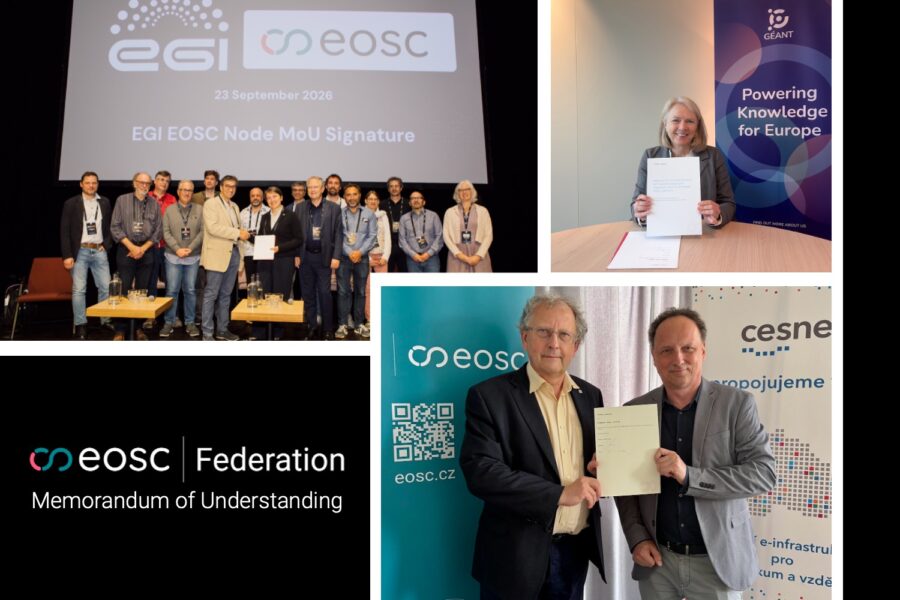
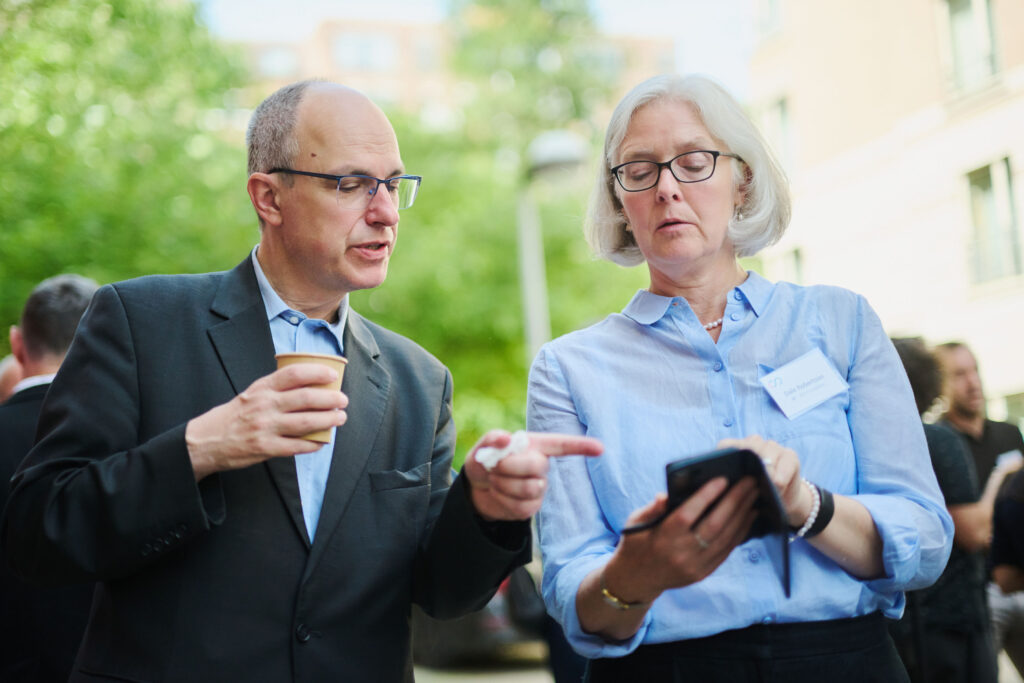
Bob Jones, EOSC-A’s special envoy to the EOSC Federation and co-chair of the Federation’s Node Coordinators Committee, led off the day with a detailed update on an EOSC Federation that is becoming progressively operational while increasing in both thematic and geographic diversity. He updated the GA on the implementation of the Federation’s Memorandum of Understanding, including the newly constituted Working Groups and governance bodies, and the forthcoming second wave Node enrolments. Jones then led the eager audience directly into an open discussion on the strategic relationship between the EOSC Federation and the EOSC Association. Participants explored how the wider EOSC-A membership can help shape the Federation, even where only a minority of member organisations operate or host Nodes directly and many more represent the anticipated user base.
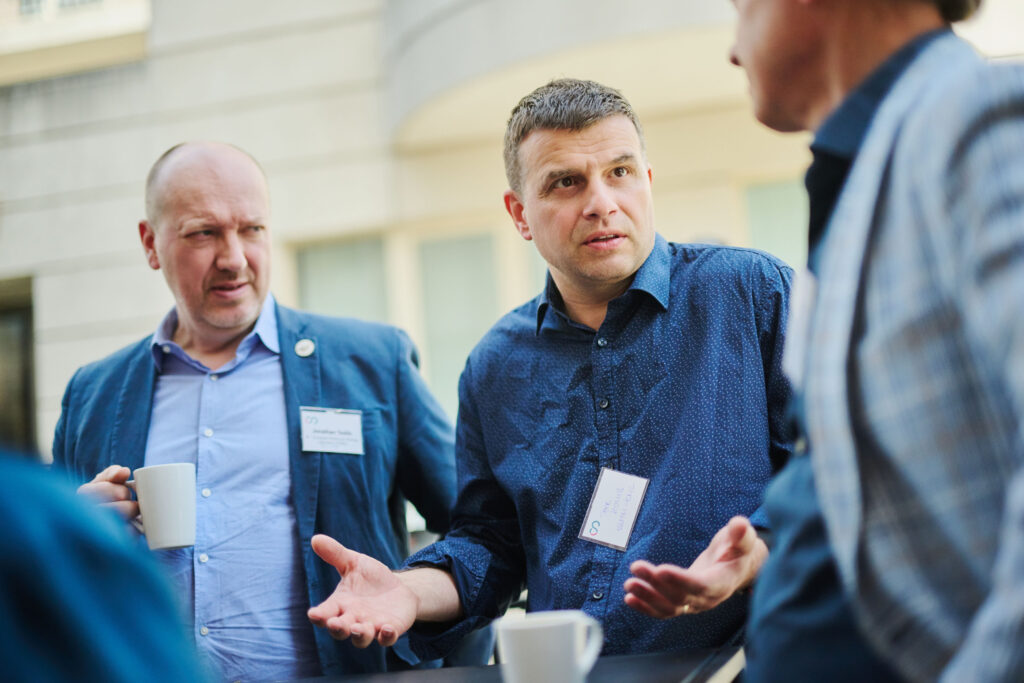
Participants discussed the need for clear governance, sustainable funding, legal clarity, operational coordination, and appropriate representation of EOSC Node operators within the wider Association. They also discussed the future role of the EOSC EU Node, recognising its importance in enabling the Federation build-up while supporting a more distributed and resilient Federation architecture over time.
Between the GA’s many interactive sessions, the scientific impact of the Federation and its Nodes was spotlighted with video presentations of a selection of ongoing cross-node scientific use cases, bringing the research community’s early usage of EOSC front and centre.
This set the tone for the meeting’s final session, where Andy Götz, coordinator of the Photon and Neutron Cloud EOSC Node, and Sally Chambers, Director of the Digital Research Infrastructure for the Arts and Humanities (DARIAH-EU), teamed up to introduce the planned EOSC Federation User Forum and to take notes on the community’s expectations for this emerging online space.
The forum is an initiative of EOSC-A, supported by the EOSC United project, and will provide “a structured voice for the research community within the EOSC Federation”. It is already accessible and will be formally launched once the Federation moves into production later this year. Participants discussed whether the forum should serve as a single entry point for user feedback, how it should connect with existing community and service-specific forums, and how it can reach real Federation end users beyond the existing EOSC stakeholder community. In connection with the user forum, Götz revealed plans for an annual user meeting togradually build a self-sustaining user community.
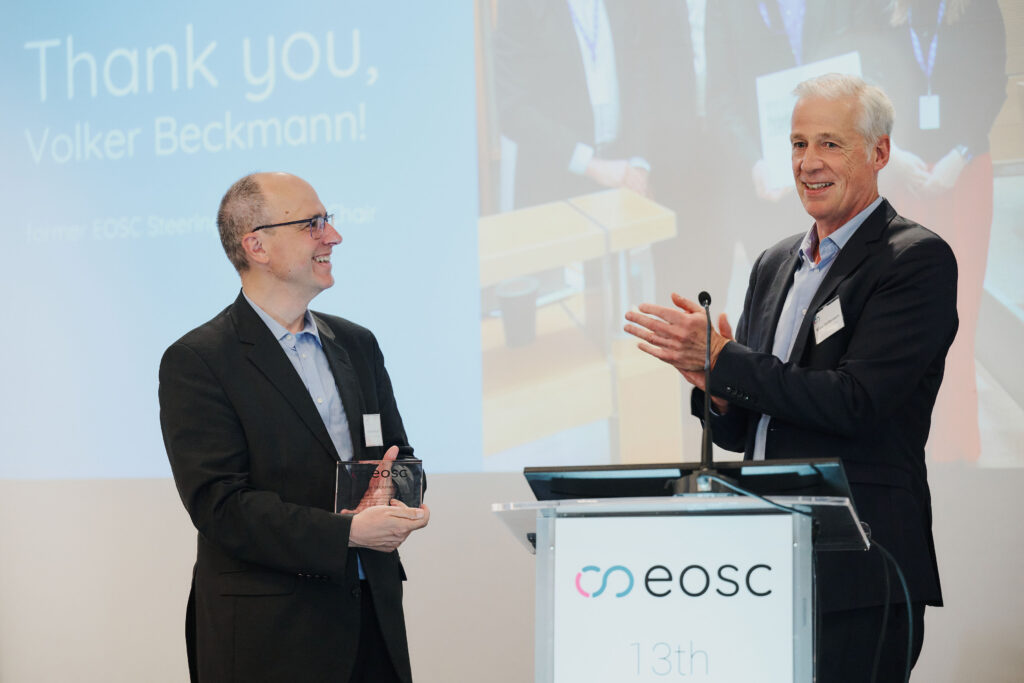
Outgoing Co-Chair of the EOSC Steering Board, Volker Beckmann, was presented with a commemorative plaque in recognition for his years of service to EOSC. Beckmann will continue his involvement with EOSC through his affiliation with CNRS.
Photo galleries
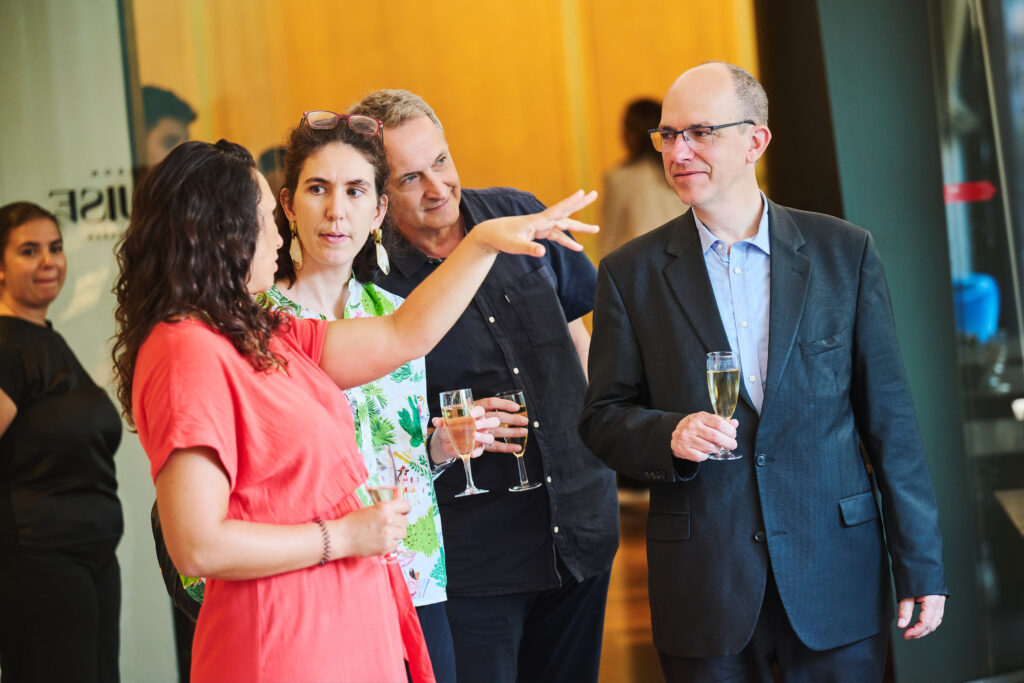
Click the buttons below to browse through photographs from the two days of the 13 General Assembly meeting of the EOSC Association and the networking dinner held on day 1.