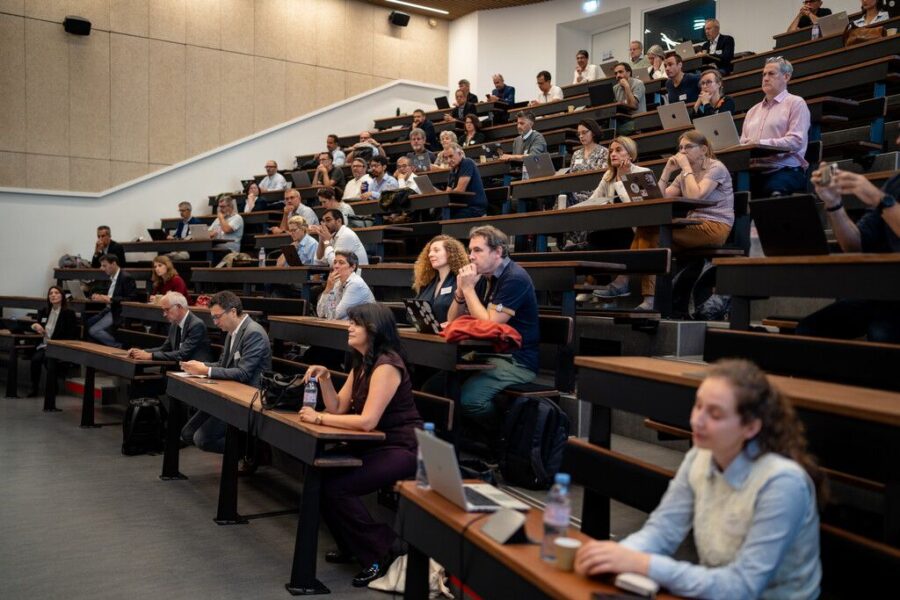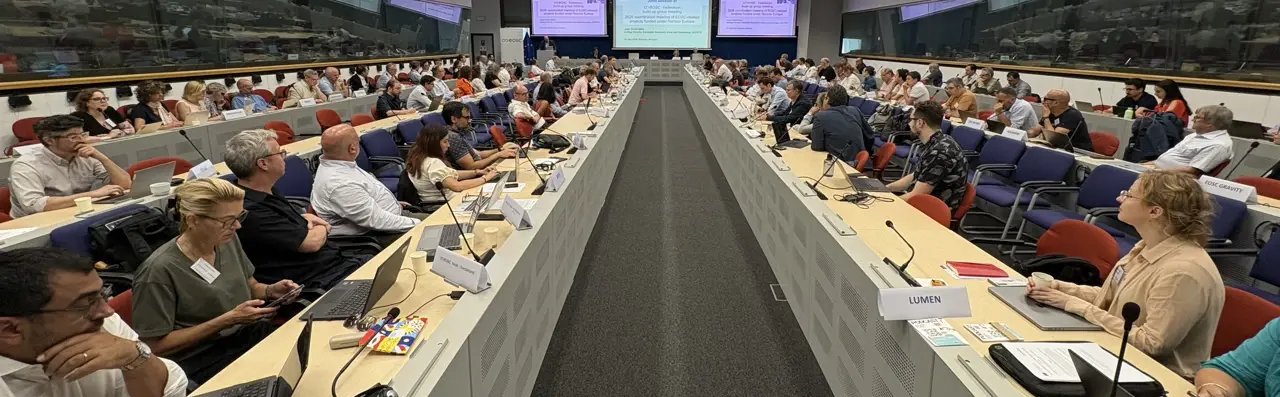
BRUSSELS – Representatives from 34 Horizon Europe-funded projects gathered on 08-09 July 2026 for the fifth annual coordination meeting of the EOSC-related projects. The meeting highlighted the need for collaboration within the evolving EOSC Federation.
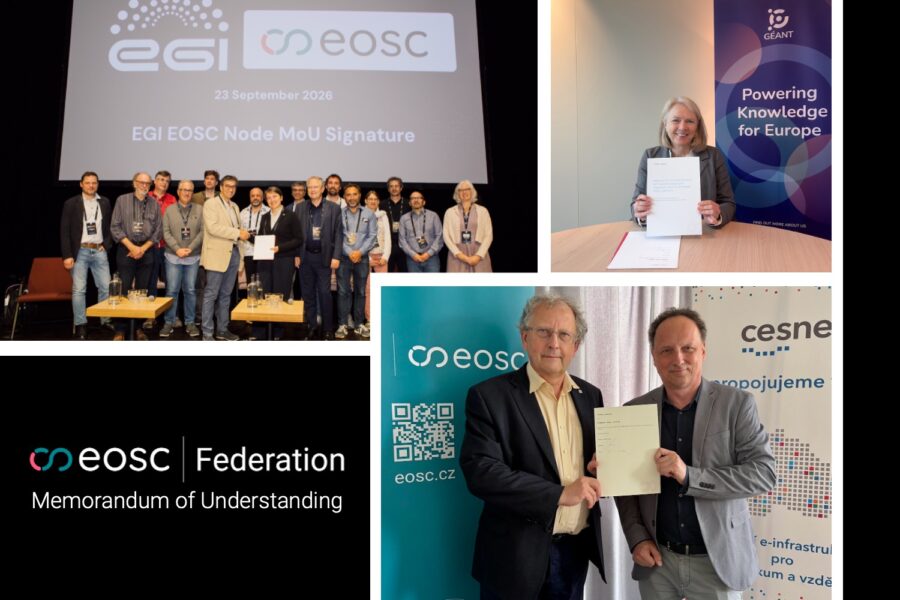
Convened by the European Commission (EC) and EOSC Tripartite Governance representatives from the EOSC Steering Board and the EOSC Association, the meeting was organised back-to-back with the EOSC Federation Build-up Group meeting, attended by representatives of 28 EOSC Nodes, a practical way to strengthen collaboration across the entire EOSC ecosystem, from governance to operational nodes and research communities.
EOSC as a vital asset for European Union’s competitiveness, resilience, and sovereignty
The opening session marked the event as a critical milestone in the development of the EOSC Federation, as it brought together representatives from newly funded INFRAEOSC projects with the first and second wave EOSC Nodes.
Jean-David Malo, Acting Director for the European Research Area and Innovation at the European Commission, highlighted EOSC as a cornerstone of the European Research Area (ERA) policy agenda, designed to overcome fragmentation and build a more coherent research and innovation ecosystem across Europe. Beyond research, EOSC is recognised as a strategic asset vital for the European Union’s competitiveness, resilience, and sovereignty. EOSC’s mandate aligns with several broader EU policy initiatives, including the Strategy for Research and Technology Infrastructure, the Strategy for Artificial Intelligence in Science, the Data Union strategy, the EU Tech Sovereignty package.
This broad ecosystem inevitably introduces complexity: EOSC Nodes emerge through different pathways — national mandates, European projects, or distinct legal frameworks — making deep collaboration across the ecosystem essential, along with the need to create effective mechanisms that allow the most promising project outcomes to be adopted and integrated into the evolving EOSC Federation.
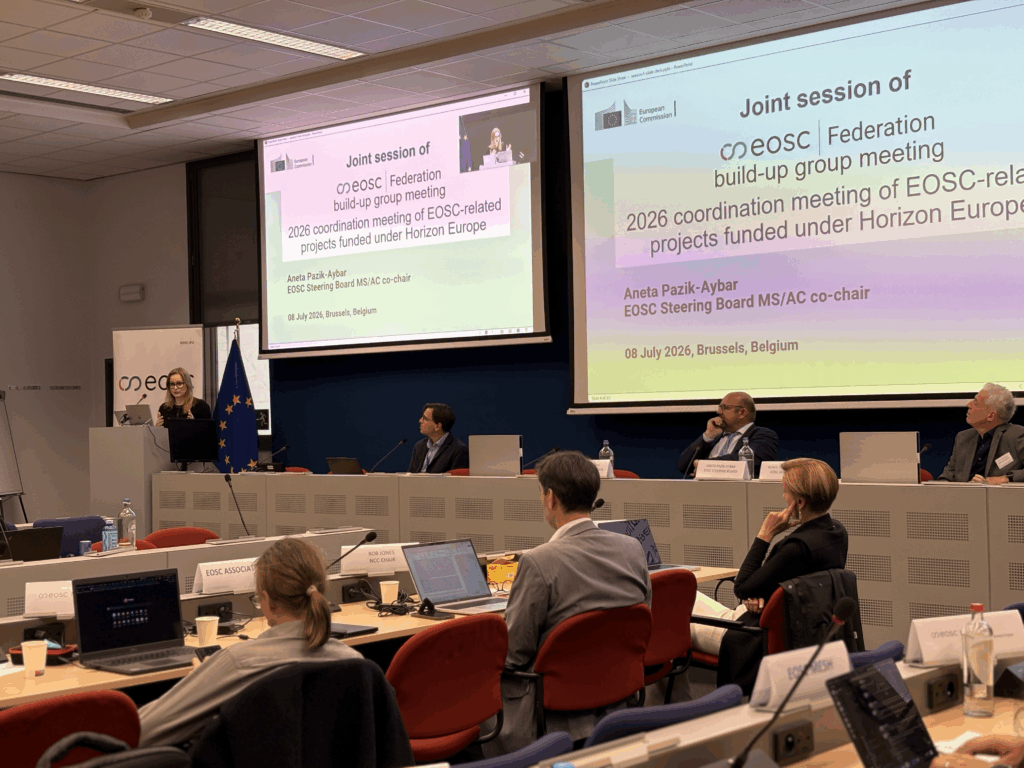
EOSC is one of Europe’s largest horizontal initiatives designed to enable cross-border and cross-disciplinary collaboration. Aneta Pazik-Aybar, EOSC Steering Board, emphasised that the primary challenge facing the community is not a lack of activity but the need to connect these efforts: projects act as the engines of innovation, providing knowledge, tools, interoperability solutions and results, while Nodes provide the real-world testing ground, bringing users and communities to apply these results in practice. The most pressing priority is transitioning the Federation into a production environment: ultimately, EOSC will be judged not by its design on paper but by its practical utility to researchers, whether they can seamlessly find data, access services, and collaborate daily.
Projects as vital resources for maturing the Federation
Following the establishment of the first Nodes, the EOSC Federation is growing with a second wave of enrolment, adding 14 new EOSC Nodes. In this context, Klaus Tochtermann, President of the EOSC Association emphasised that the INFRAEOSC projects provide complementary operational support, developing federation capabilities, interoperability frameworks, AI solutions, and trusted research environments. To maximise impact and avoid fragmentation, projects are encouraged to align their outcomes with the Strategic Research and Innovation Agenda (SRIA) 2.0, ensuring individual achievements contribute to a coherent, sustainable ecosystem. SRIA 2.0 is expected to be published in October of this year.
New projects contributing results to EOSC
Among the 34 projects represented, 13 newly funded projects launching in 2026 and 2027were introduced:
- EOSC Mesh, EOSC-Marine, EOSC-CONNECT, EOSC4ALL, expanding the EOSC Federation by supporting new Nodes and introducing essential federating capabilities,
- RAISE-CONNECT and CDIF4EOSC, advancing FAIR integration for enhanced research data,
- AI4SOCIALPLUS and FLUID-AI, advancing AI-readiness and machine-actionability in the EOSC ecosystem,
- EOSC AISSISTANT, GenAI4Earth, RenAI, EOSC-ARENA focusing on generative AI for scientific research,
- STARDAST, advancing Open Science education through curricula for data stewards.
Success stories of inter-project collaboration were also presented, aimed at maximising results and resources across consortia.
Integrating project results into the EOSC Federation was highlighted as a core component of projects’ sustainability strategy. By linking to EOSC, these resources gain stability and contribute to building a critical mass ecosystem. Tools such as the EOSC Macro Roadmap facilitate sharing, analysis and uptake of these results.
Financial commitment and future funding
The European Commission’s commitment to sustaining EOSC remains robust, with an investment of approximately half a billion euros under Horizon Europe. This funding covers procurement of the EU Node, to be extended later in the year, and supports around 50 projects, with additional funding planned for the 2026-2027 Work Programme.
The proposal for the RI Work Programme 2026-2027 amendment under discussion foresees strategic investments in two domains: Health (Life Sciences) and Environment, Sustainability, and Biodiversity, as highlighted by Michael Arentoft (DG RTD). Looking ahead, the proposed Horizon Europe 2028-2034 framework programme includes dedicated support for the FAIR agenda and the consolidation of the EOSC data space.
Focused discussions: capabilities, AI & Software, FAIR Data
Through three breakout sessions, the projects presented the ways in which they are contributing to the EOSC Federation: Services and capabilities for the EOSC Federation, AI & software, FAIR Data ecosystems and scientific uptake. The outcomes of those discussions can be summarised as follows:
- Services and federating capabilities: EOSC should become an invisible utility for its users, with mandatory federating capabilities kept to a strict minimum and other capabilities left optional for specific communities. Projects can serve as sandboxes to test different aspects of the EOSC Federation — sustainability is already happening, as many resources now operating within the Nodes were built by previously funded projects, though not all outcomes will suit the EOSC Federation.
- AI & software: key questions raised included how to keep “human in the loop” while ensuring reproducibility, openness and transparency, and how the ecosystem will train future developers if entry-level roles are displaced by AI. As AI quality depends on the quality of the underlying data, both should be treated as FAIR objects, with strong incentives favoured over regulation alone, clear provenance, and shared guidelines for researchers and AI developers.
- FAIR data ecosystems and scientific uptake: this breakout examined what has worked in driving FAIR uptake and how community-driven solutions can be sustained and integrated into the Federation. FAIR by Design, community engagement and research evaluation were highlighted as key levers for cultural change, alongside a proposed “market model” or matchmaking tools across solutions to boost sustainability, coupled with post-project joint ventures (EIC or similar).
Applying AI to science
The meeting made it clear the contribution of Horizon Europe projects to fostering European leadership in AI within the EOSC Federation. By unlocking large, diverse, machine‑actionable FAIR datasets, EOSC directly supports AI development and reduces data scarcity, and HE project expected results will contribute to this.
This is also aligned with the European Commission’s strategy for AI in Science, aimed at accelerating the uptake of artificial intelligence by scientists across all disciplines. Its cornerstone is RAISE (Resource for AI Science in Europe), a virtual institute designed to pool European resources for developing and applying AI to science, presented by David Arranz (DG RTD).
A core objective will be establishing stronger connections with EOSC to get the most out of the project “fatigue” to meet the growing need for “AI-ready data”. The EOSC Symposium 2026 will run an AI dedicated session in parallel to the upcoming AI in Science Summit, scheduled for 15-16 October 2026, and the two organising teams are working closely to ensure clear interactions and links between the events.