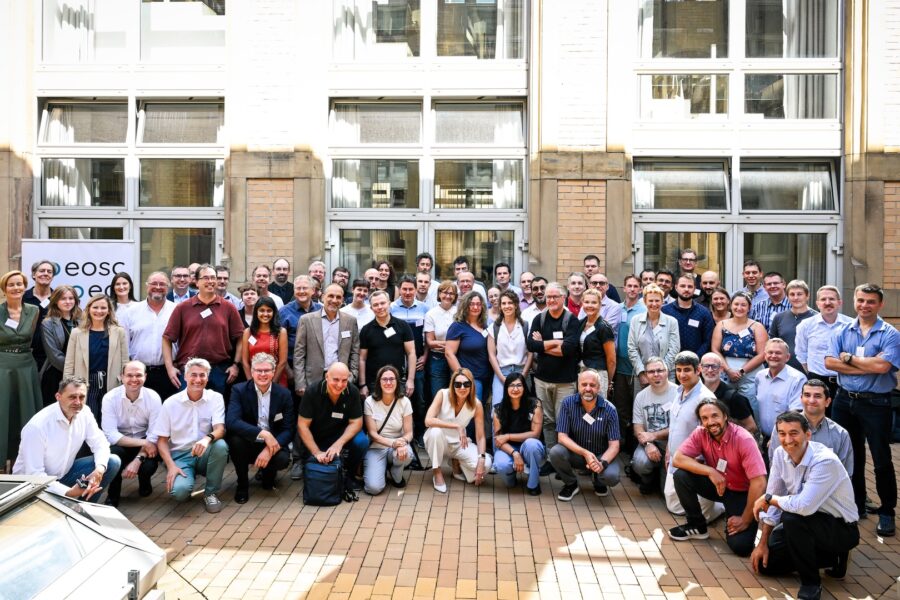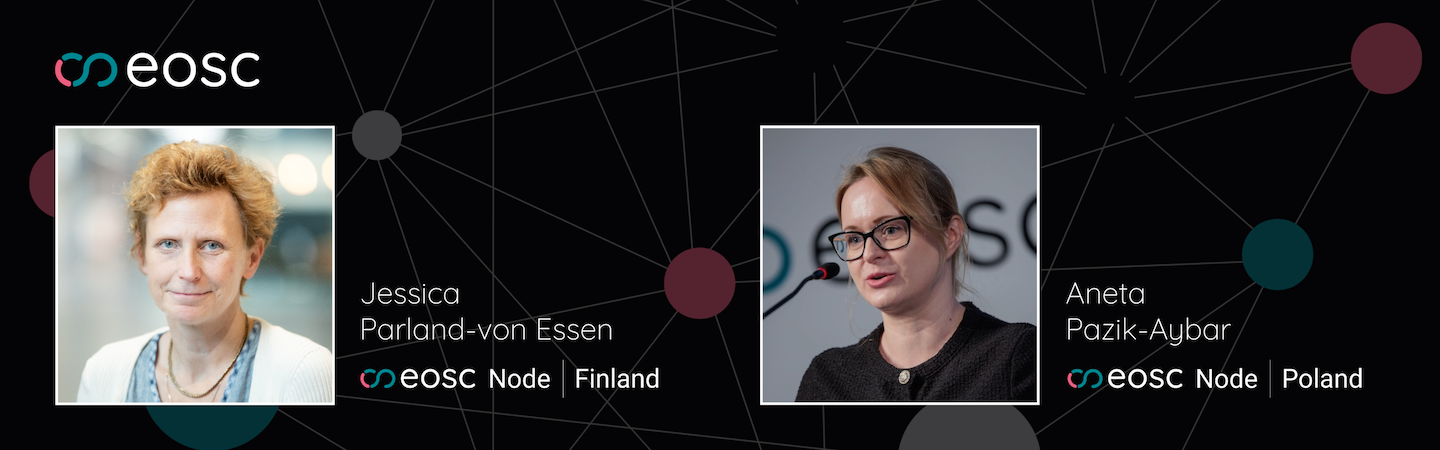
On the International Day of Women and Girls in Science, we celebrate the women actively contributing to the build-up and deployment of the EOSC Federation, Europe’s network of data repositories and services designed to enable Open Science. Among them are Jessica Parland-von Essen and Aneta Pazik-Aybar, coordinators of the Finnish and Polish EOSC Nodes, which represent key building blocks of the Federation.
Jessica and Aneta’s work illustrates how women contribute to shaping the infrastructures that underpin European science and innovation, demonstrating that gender equality and scientific excellence go hand in hand. Alongside other women in the EOSC Federation Build-up Group and their male colleagues, they play a key role in advancing its work.
Fostering research through collaboration and openness
The EOSC Federation is being built through the collective effort of 13 candidate EOSC Nodes and the EOSC EU Node, with services and resources designed to support researchers across borders, genders, and disciplines. By catering to a broad spectrum of scientific fields, the EOSC Federation will also advance STEM research, which has traditionally been highlighted on this day.
Early examples of the Federation’s impact in STEM include collaborative scientific use cases linking the Finnish and Polish Nodes with other EOSC Nodes. These feature for example near-data computation by federating CERN’s REANA pipelines, and the multi-centric validation of AI models for prostate-cancer screening.
This is where the work of Jessica and Aneta as Node coordinators comes into focus.
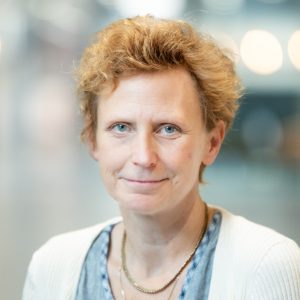
Jessica Parland-von Essen, Development Manager at CSC – IT Center for Science, has been at the forefront of Open Science for over a decade. Under her guidance, the Finnish EOSC Node integrates national FAIR datasets, services and RDM competence into the EOSC Federation. “This [federating work] is a really nice opportunity to promote a user-centric approach,” explains Jessica. By integrating its services, the Finnish EOSC Node aims to “make research easy and efficient.”
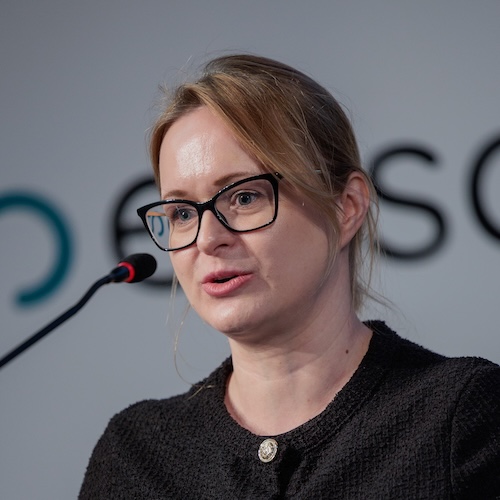
Aneta Pazik-Aybar, Head of the Open Science Department at National Science Centre Poland (NCN), has been involved with EOSC since 2021, representing NCN as a Mandated Organisation and supporting the Polish Ministry of Science and Higher Education through the EOSC Steering Board. Reflecting on the activities of the Polish EOSC Node, Aneta emphasises their strong focus on researchers’ needs: “Our main objective is to create a space where researchers from Poland and researchers from Europe can find data, services, tools that can be reused.”
The passionate work of Jessica and Aneta reflects a deep commitment to inclusion, Open Science, and collaboration. These principles are especially meaningful on the International Day of Women and Girls in Science.
Implementing EOSC-A’s Gender Equality Plan
Beyond supporting FAIR data sharing, EOSC-A is strongly committed to fostering a fair and inclusive research ecosystem. This is reflected in EOSC-A’s Gender Equality Plan released in 2025, which recognises diversity, and particularly gender equality, as a key driver of excellence and progress in science and society.
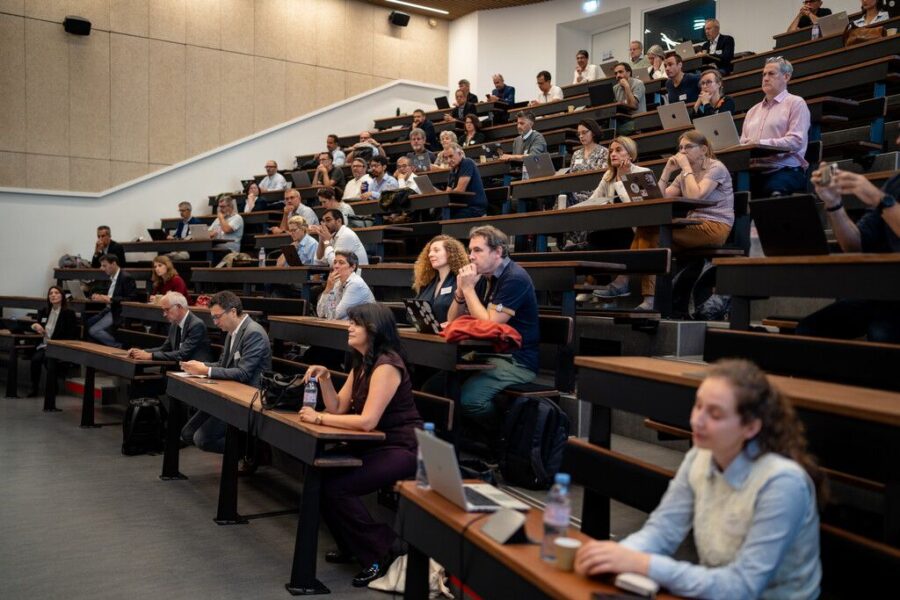
Following the Plan, EOSC-A promotes equality within its own structures and across the wider EOSC ecosystem. Six of the nine Board members elected by the EOSC-A membership are women and women make up around 44% of EOSC-A Member representation, including delegates and deputy delegates. This dedication to inclusion extends to flagship community events. For example, at last year’s EOSC Symposium, women accounted for 38% of the roughly 500 attendees, reflecting a vibrant presence in the heart of the EOSC ecosystem.