Skip to content
  • EOSC Monitoring Tool
  • Calls & Grants
  • Newsletter
  • Forum
EOSC Association Logo
  • EOSC
    • EOSC and FP10
    • EOSC Macro-Roadmap
    • SRIA & MAR
    • Monitoring & Reporting
      • EOSC Monitoring Tool
      • Measuring KPIs
      • Tracking in-kind contributions
        • Additional Activities surveys of 2026
    • Calls & Grants
  • EOSC Federation
    • EOSC Nodes
    • Scientific Use Cases
    • Build-up Group
      • EOSC Node Coordinators Committee
      • EOSC Node Operations Committee
    • EOSC Federation Handbook
    • Documentation & Policies
    • Federation news
  • Collaborations
    • EOSC Partnership
    • Tripartite Collaboration
      • Country pages
      • Albania
      • Armenia
      • Austria
      • Belgium
      • Bosnia-Herzegovina
      • Bulgaria
      • Canada
      • Croatia
      • Cyprus
      • Czech Republic
      • Denmark
      • Estonia
      • Faroe Islands
      • Finland
      • France
      • Georgia
      • Germany
      • Greece
      • Hungary
      • Iceland
      • Ireland
      • Israel
      • Italy
      • Latvia
      • Lithuania
      • Luxembourg
      • Malta
      • Moldova
      • Netherlands
      • Norway
      • Poland
      • Portugal
      • Republic of North Macedonia
      • Romania
      • Serbia
      • Slovakia
      • Slovenia
      • Spain
      • Sweden
      • Switzerland
      • Türkiye
      • Ukraine
      • United Kingdom
    • Horizon Europe Projects
    • EOSC Opportunity Area Expert Groups
      • OA1: Persistent Identifiers
      • OA2: Metadata, Ontologies and Interoperability
      • OA3: FAIR Assessment and Alignment
      • OA4: User and Resource Environments
      • OA5: Skills, Training, Rewards, Recognition & Upscaling
      • OA6: Open Scholarly Communication
      • OA7: Research Software
  • EOSC Academy
    • Course 1: Explaining the EOSC Federation
    • Course 2: Applying the EOSC Federation Handbook
    • Course 3: Use Cases for the EOSC Federation
    • Course 4: Minimum Requirements for a Project Charter
    • Course 5: Developing an Onboarding Services Policy
    • Course 6: How to Onboard Services to EOSC Nodes
    • Course 7: The EOSC AAI Explained
  • EOSC Association
    • Members
      • Nomination of delegates
      • Stakeholder Registry
    • Mandated Organisations
    • General Assembly Meetings
      • GA event pages
    • Task Forces
      • Technical & Semantic Interoperability 
      • FAIR Metrics & Digital Objects
      • Health Data
      • Long-Term Data Retention
      • Task Forces 2021-2023
    • Board of Directors
      • Requirements for Directors of the EOSC Association
    • Secretariat
    • Careers
    • Become a Member
    • Documents & Publications
  • Activities
    • EOSC Symposium 2026
      • EOSC Symposium 2026: Call for programme contributions
    • News
      • Interviews with Mandated Organisations
    • Events
      • EOSC-A GA meetings
      • National Tripartite Events
    • Newsletter
      • Subscribe
    • EOSC Symposium
      • EOSC Symposium 2025
        • Lightning talks & demos
        • Session teasers
        • Programme Committee
      • EOSC Symposium 2024
        • EOSC Symposium 2024: Outcomes
        • Session teasers
        • Poster session
        • Unconference sessions
    • EOSC Winter School
      • EOSC Winter School 2026
      • EOSC Winter School 2025
      • EOSC Winter School 2024
  • EOSC-A Projects
    • EOSC Gravity
      • EOSC Winter School 2026
    • EOSC United
    • EOSC Focus (2022-2025)
      • EOSC Winter School 2025
      • EOSC Winter School 2024

HomeEOSCEOSC Macro-RoadmapGO2: Enable the definition of standards, and the development of tools and services, to allow researchers to find, access, reuse and combine results.
GO2: Enable the definition of standards, and the development of tools and services, to allow researchers to find, access, reuse and combine results.
SRIA General Objective G02: Enable the definition of standards, and the development of tools and services, to allow researchers to find, access, reuse and combine results.
31 March 2026

Gaps, redundancies, and synergies in researchers’ EHDS-EOSC journeys

As Europe advances both the European Open Science Cloud (EOSC) and the European Health Data Space (EHDS), understanding how these... Read more

arrow_forward
26 March 2026

Landscape overview for the EOSC Federation Semantic Interoperability in 2025

This deliverable is essential for realizing the European Open Science Cloud (EOSC) vision by ensuring digital objects are consistently understood... Read more

arrow_forward
Contribution

nQuire

United KingdomUnited Kingdom

Use case nQuire is a community and citizen science platform, developed by the Institute of Educational Technology at The Open... Read more

arrow_forward
Contribution

NOR-CAM

NorwayNorway

Good practice The Norwegian Career Assessment Matrix (NOR-CAM) is an evaluation framework and toolbox developed by Universities Norway to improve... Read more

arrow_forward
Contribution

Virtual Imaging Platform

FranceFrance

Case study The Virtual Imaging Platform (VIP) is a web portal for medical imaging applications. It allows users to access... Read more

arrow_forward
Contribution

FAIR-Checker

FranceFrance

Good practice FAIR-Checker is an online tool supporting scientists in automating FAIR assessments. It assists data stewards in evaluating metadata... Read more

arrow_forward
Contribution

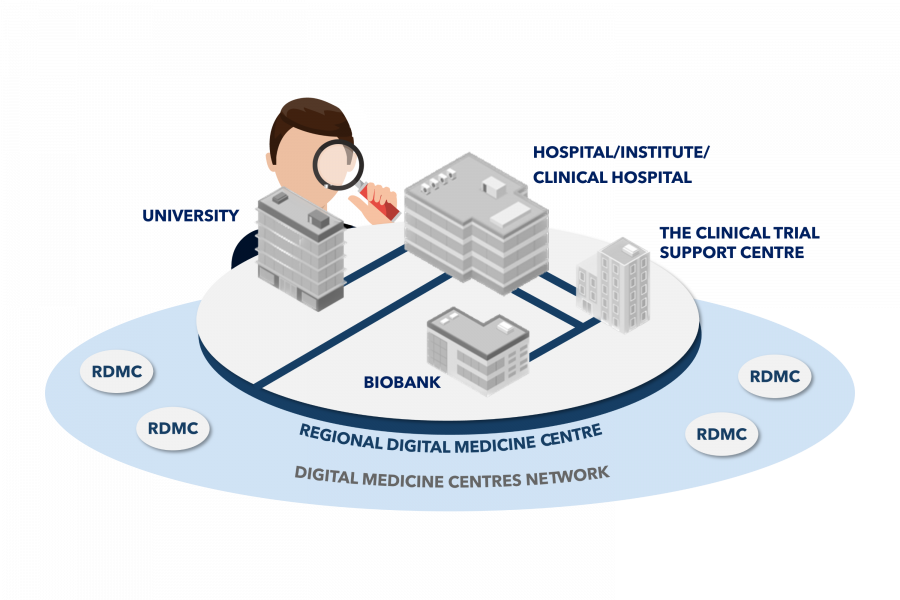
Regional Digital Medicine Centres 

PolandPoland

Use case The Polish Medical Research Agency has invested over €100 million to establish 19 Regional Digital Medicine Centres (RDMCs),... Read more

arrow_forward
Contribution

E-Varamu 

EstoniaEstonia

Good practice The Estonian E-Varamu portal is an e-repository and an integrated e-environment created for the long-term preservation and accessibility... Read more

arrow_forward
Contribution

SSH Open Marketplace

FranceNorwayNetherlands

Case study The Social Sciences and Humanities (SSH) Open Marketplace is a discovery portal supported by DARIAH, CESSDA, and CLARIN. It pools... Read more

arrow_forward
Contribution

Open Research Knowledge Graph

GermanyGermany

Case study The Open Research Knowledge Graph (ORKG) is a platform for creating, curating, publishing, and reusing FAIR scientific knowledge,... Read more

arrow_forward
Contribution

Open Science Lab

GermanyGermany

Use case The Open Science Lab at the Leibniz Information Centre for Science and Technology supports cultural heritage institutions and... Read more

arrow_forward
Contribution

ParlaMint

NetherlandsNetherlands

ParlaMint, a CLARIN ERIC flagship project on comparable and interoperable parliamentary corpora, developed uniformly annotated corpora of parliamentary debates of 29 European countries and autonomous regions. ParlaMint I...

arrow_forward
  • EOSC
    • EOSC and FP10
    • EOSC Macro-Roadmap
    • SRIA & MAR
    • Monitoring & Reporting
    • Calls & Grants
  • EOSC Federation
    • EOSC Nodes
    • Scientific Use Cases
    • Build-up Group
    • EOSC Federation Handbook
    • Documentation & Policies
    • Federation news
  • Collaborations
    • EOSC Partnership
    • Tripartite Collaboration
    • Horizon Europe Projects
    • EOSC Opportunity Area Expert Groups
  • EOSC Academy
    • Course 1: Explaining the EOSC Federation
    • Course 2: Applying the EOSC Federation Handbook
    • Course 3: Use Cases for the EOSC Federation
    • Course 4: Minimum Requirements for a Project Charter
    • Course 5: Developing an Onboarding Services Policy
    • Course 6: How to Onboard Services to EOSC Nodes
    • Course 7: The EOSC AAI Explained
  • EOSC Association
    • Members
    • Mandated Organisations
    • General Assembly Meetings
    • Task Forces
    • Board of Directors
    • Secretariat
    • Careers
    • Become a Member
    • Documents & Publications
  • Activities
    • EOSC Symposium 2026
    • News
    • Events
    • Newsletter
    • EOSC Symposium
    • EOSC Winter School
  • EOSC-A Projects
    • EOSC Gravity
    • EOSC United
    • EOSC Focus (2022-2025)
Manage preferences
  • Privacy Policy
  • Cookie Policy
  • Contact