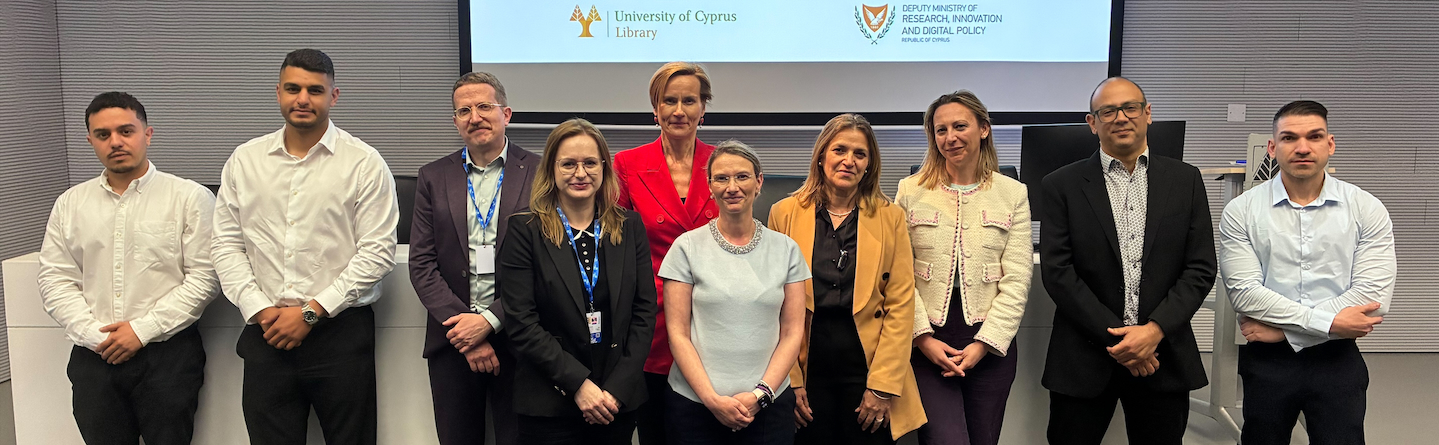
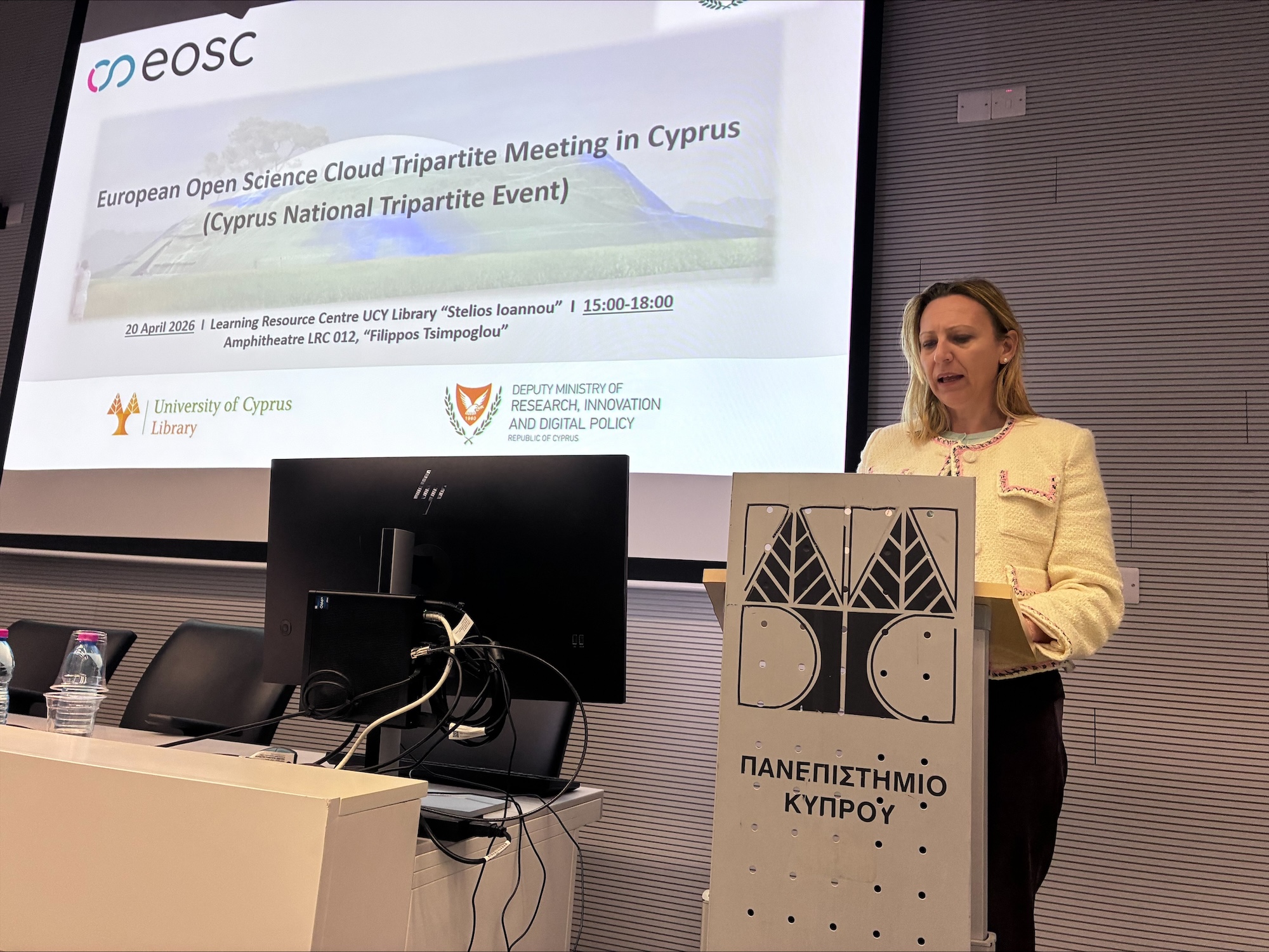
NICOSIA — The first National Tripartite Event (NTE) in Cyprus, held on 20 April 2026, brought together local and European stakeholders to align priorities, take stock of progress, and define the country’s evolving role in EOSC and the broader Open Science agenda. The discussions highlighted both growing momentum and the clear need for continued investment in policy coherence, research infrastructure, and skills development.
The NTE was organised by the Deputy Ministry of Research, Innovation and Digital Policy (DMRID), in collaboration with the University of Cyprus Library, acting as the national OpenAIRE NOAD and event host. It provided a structured space for dialogue between the national community and representatives of the Tripartite, including the European Commission, the EOSC Steering Board and EOSC-A.
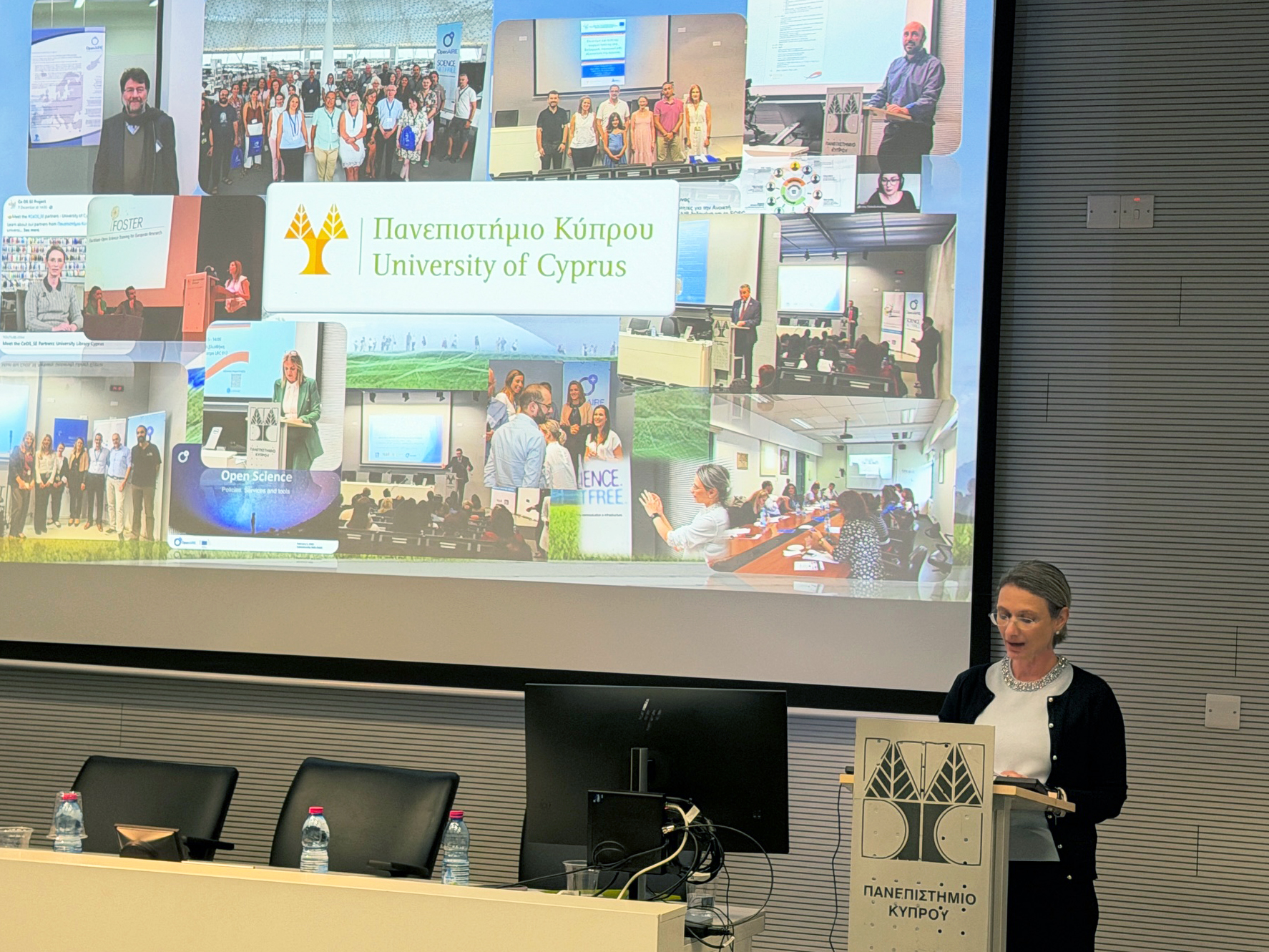
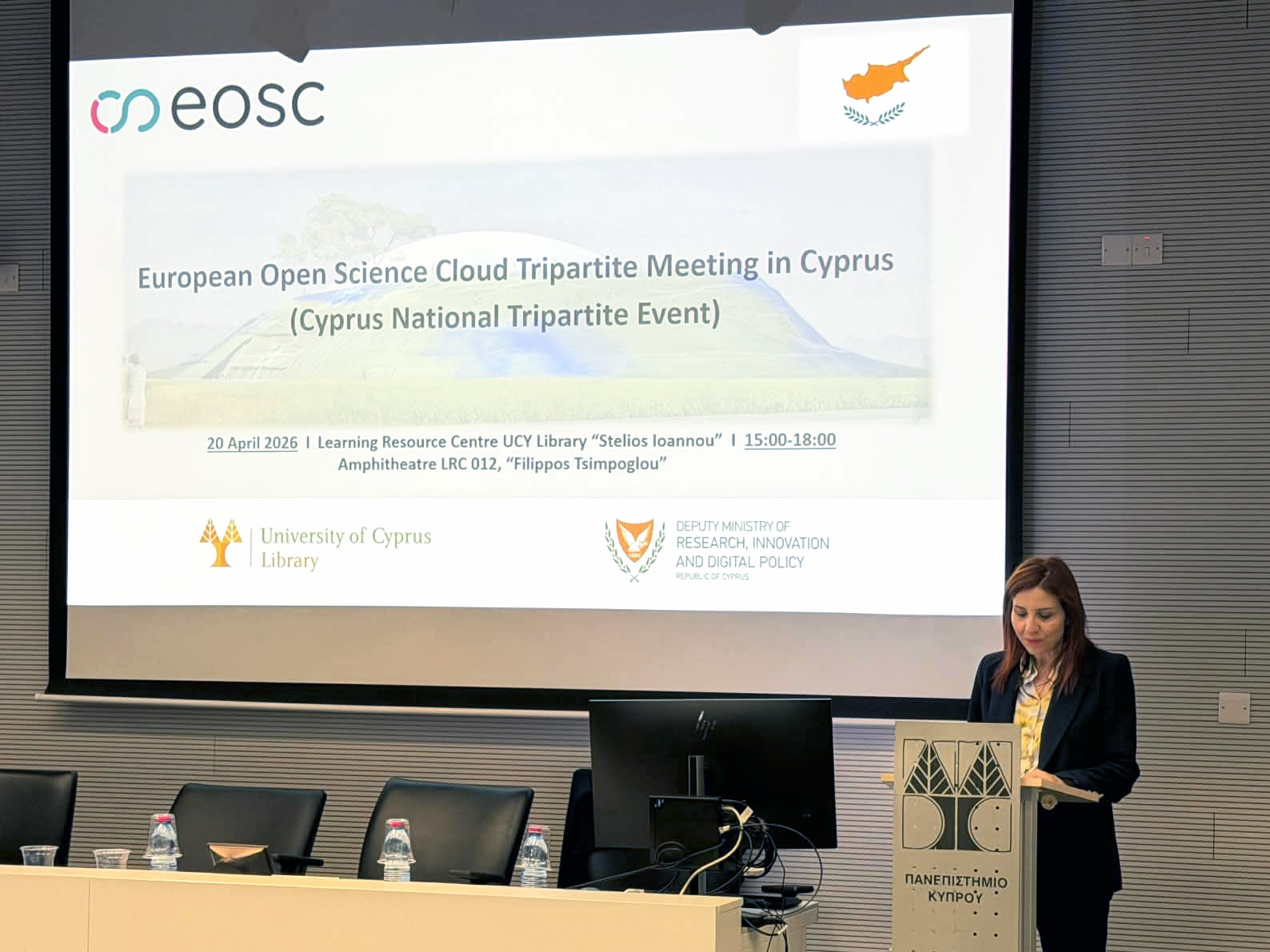
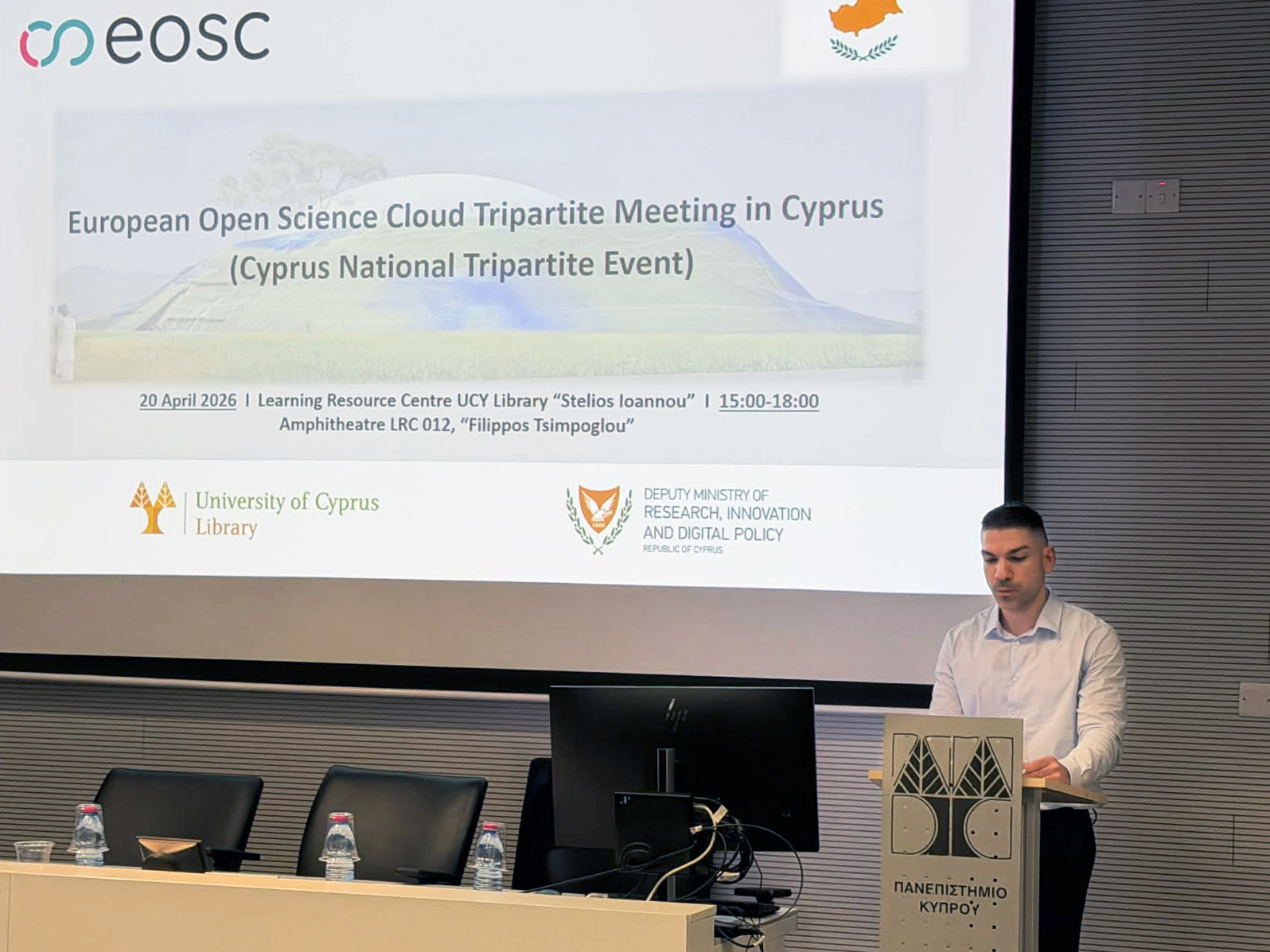
Welcoming remarks by the Vice Rector for Academic Affairs of the University of Cyprus, Tatiana-Eleni Synodinou, and Demetris Apostolides from DMRID set the scene for a discussion that deliberately bridged strategic ambition with implementation realities.
EOSC’s strategic importance for Europe’s research ecosystem
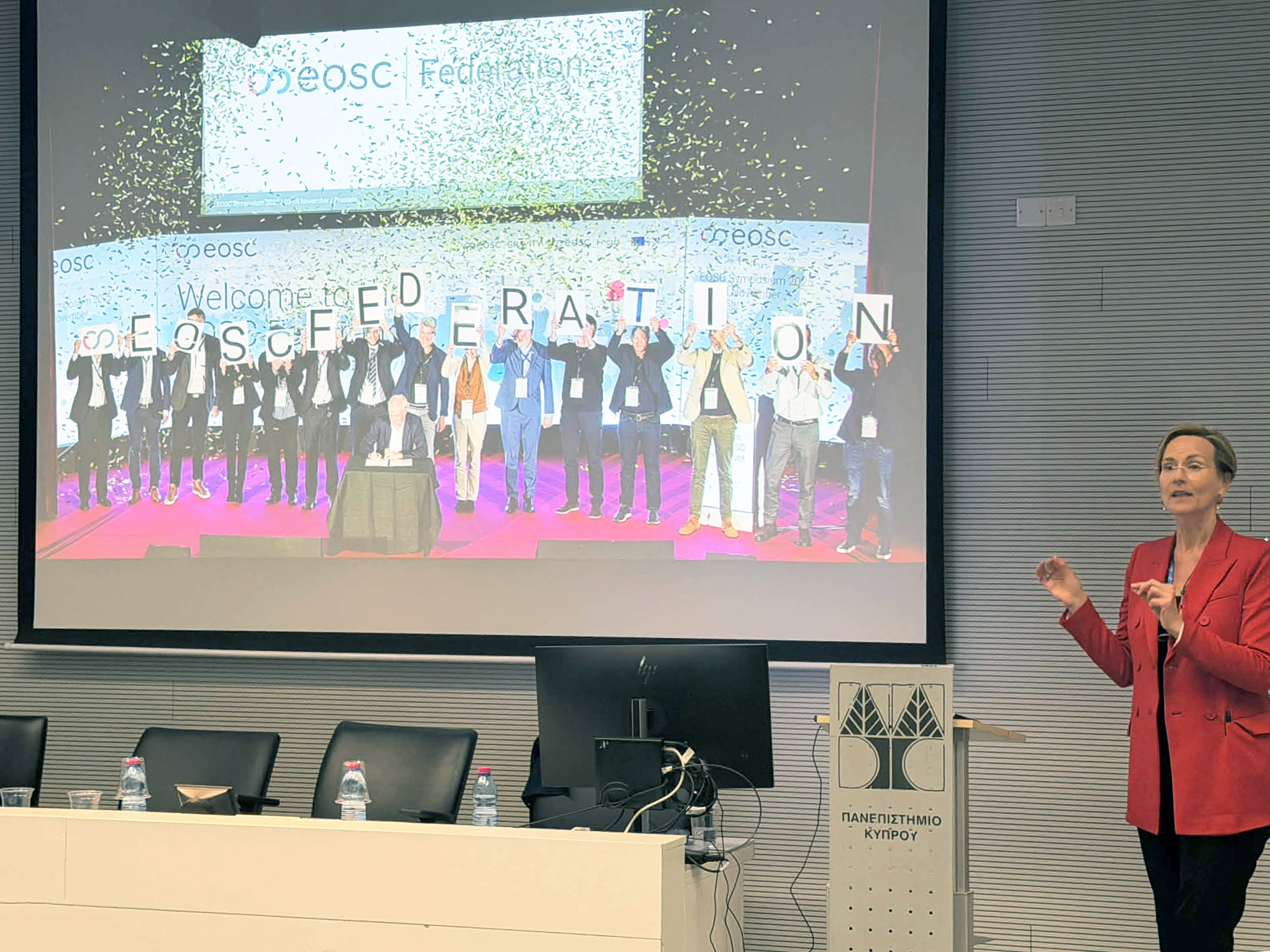
The European dimension was introduced by EOSC-A Secretary General Ute Gunsenheimer, who outlined EOSC’s vision, governance framework, and its growing role as a strategic instrument for Europe’s research and innovation ecosystem.
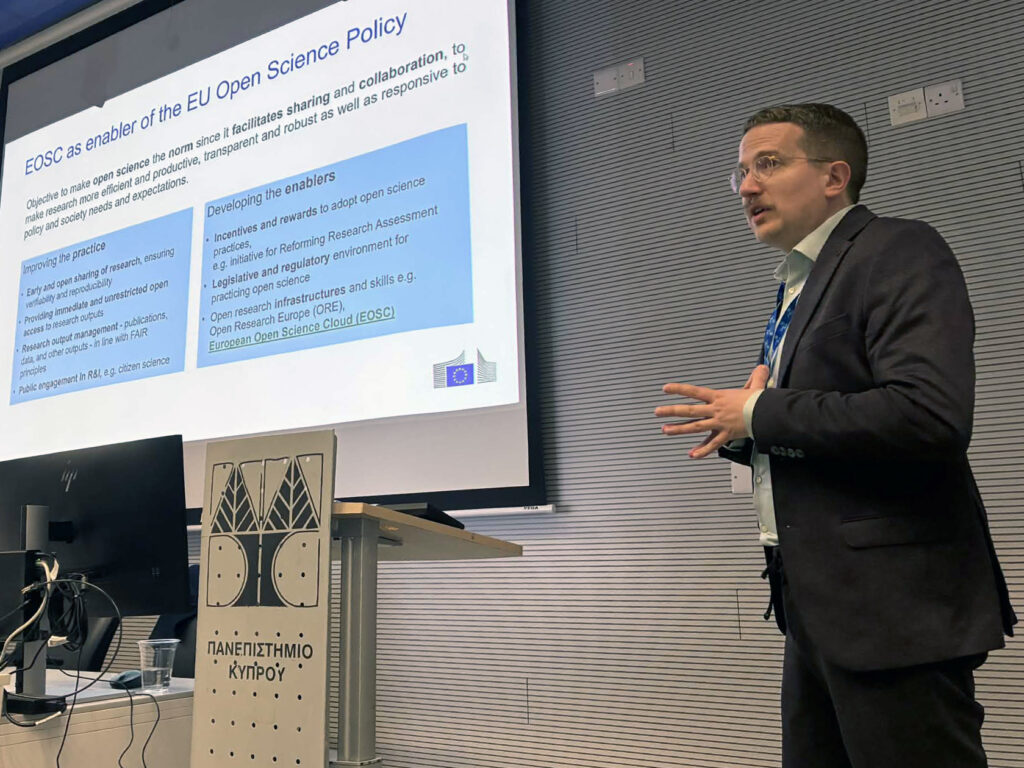
Next, Stefan Liebler, Policy Officer of European Commission’s Directorate-General for Research and Innovation (DG RTD), positioned EOSC as a key enabler of the EU’s Open Science policy agenda. He emphasised its embedding within wider European strategies and highlighted the EOSC EU Node’s portfolio of services designed to support researchers in practice, not just in principle.
Looking to the future, Aneta Pazik-Aybar, Co-Chair of the EOSC Steering Board, connected these developments to the forthcoming EU Framework Programme for Research and Innovation (FP10), highlighing the need for long-term strategic alignment, partnership building, and coordinated actions in shaping the next phase of EOSC.
Cyprus in focus: Strengthening capacity and connectivity
Against this European backdrop, the local participants presented a picture of steady and increasingly coordinated progress. Sylvia Koukounidou, representing the University of Cyprus and OpenAIRE Cyprus NOAD, outlined national advances in Open Science, highlighting the former as a key driver supporting both national and institutional alignment.
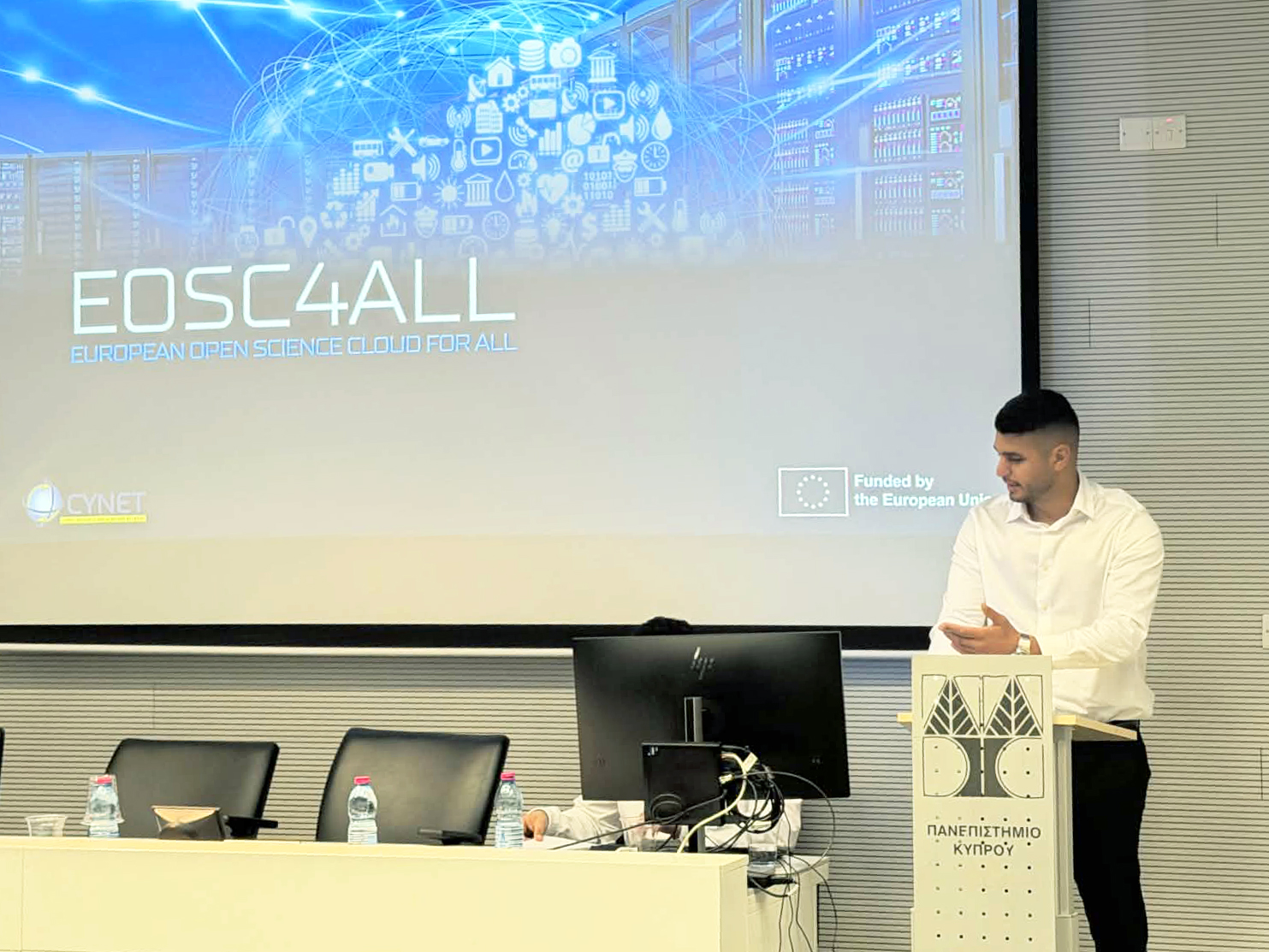
The technical and infrastructural dimension was addressed by Panagiotis Koliaros, Cybersecurity Analyst, and George Leonidou, Software Developer at the Cyprus Research and Academic Network. Their contribution illustrated ongoing efforts to ensure robust connectivity and participation in the broader EOSC ecosystem.
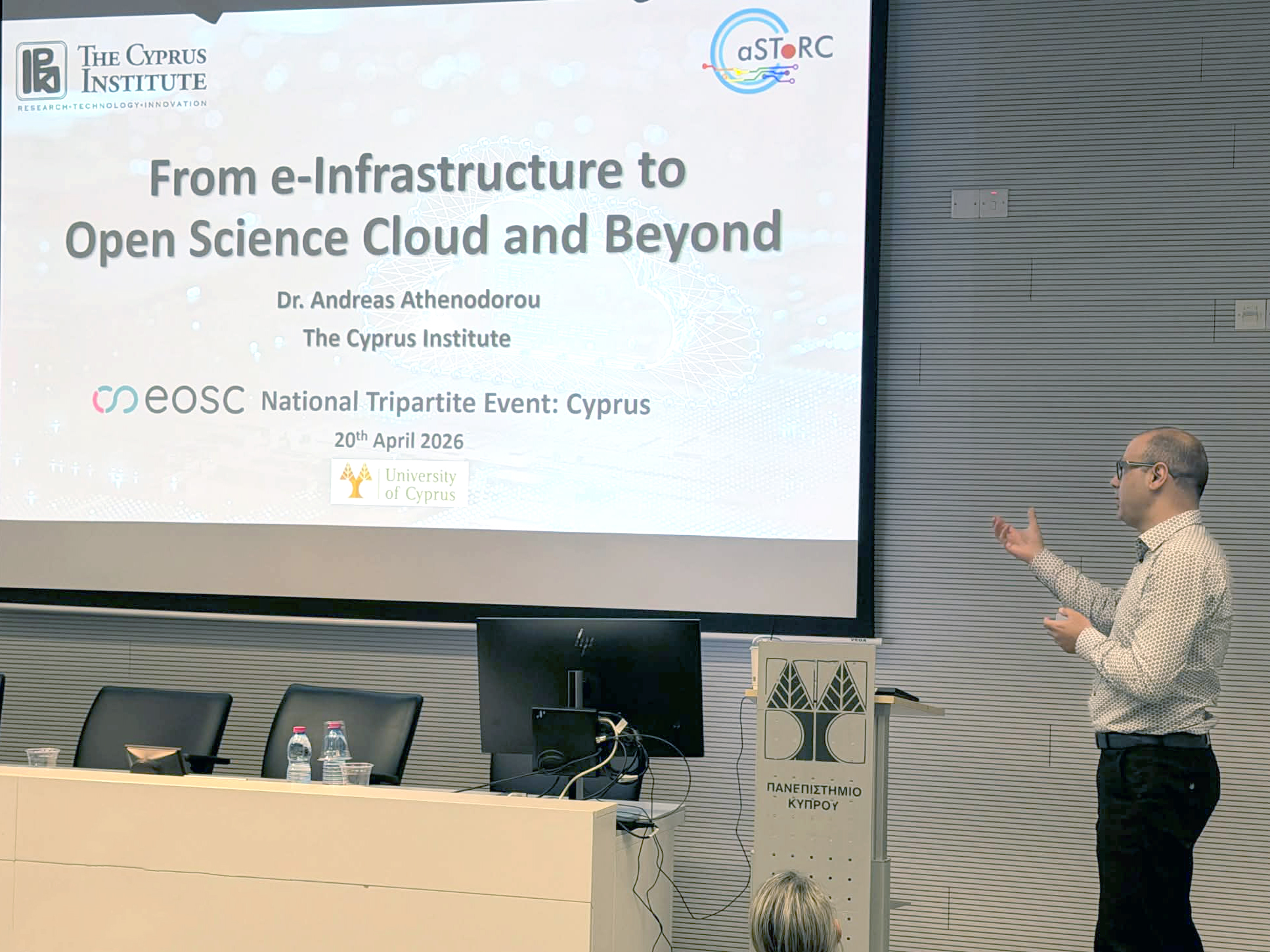
From a research perspective, Andreas Athenodorou, Associate Research Scientist at The Cyprus Institute, an Observer organisation of EOSC-A, reflected on the institute’s engagement in EU-funded projects and e-infrastructures. He described a gradual shift towards more integrated and open research environments, while also pointing to new opportunities emerging within the EOSC ecosystem.
Collectively, these interventions painted a multi-layered view of Cyprus’s progress towards Open Science and involvment in EOSC—from strategic and policy dimensions to institutional, technical, and infrastructural realities—helping to clarify both the opportunities and the challenges ahead.
From discussion to direction: Next steps for Cyprus
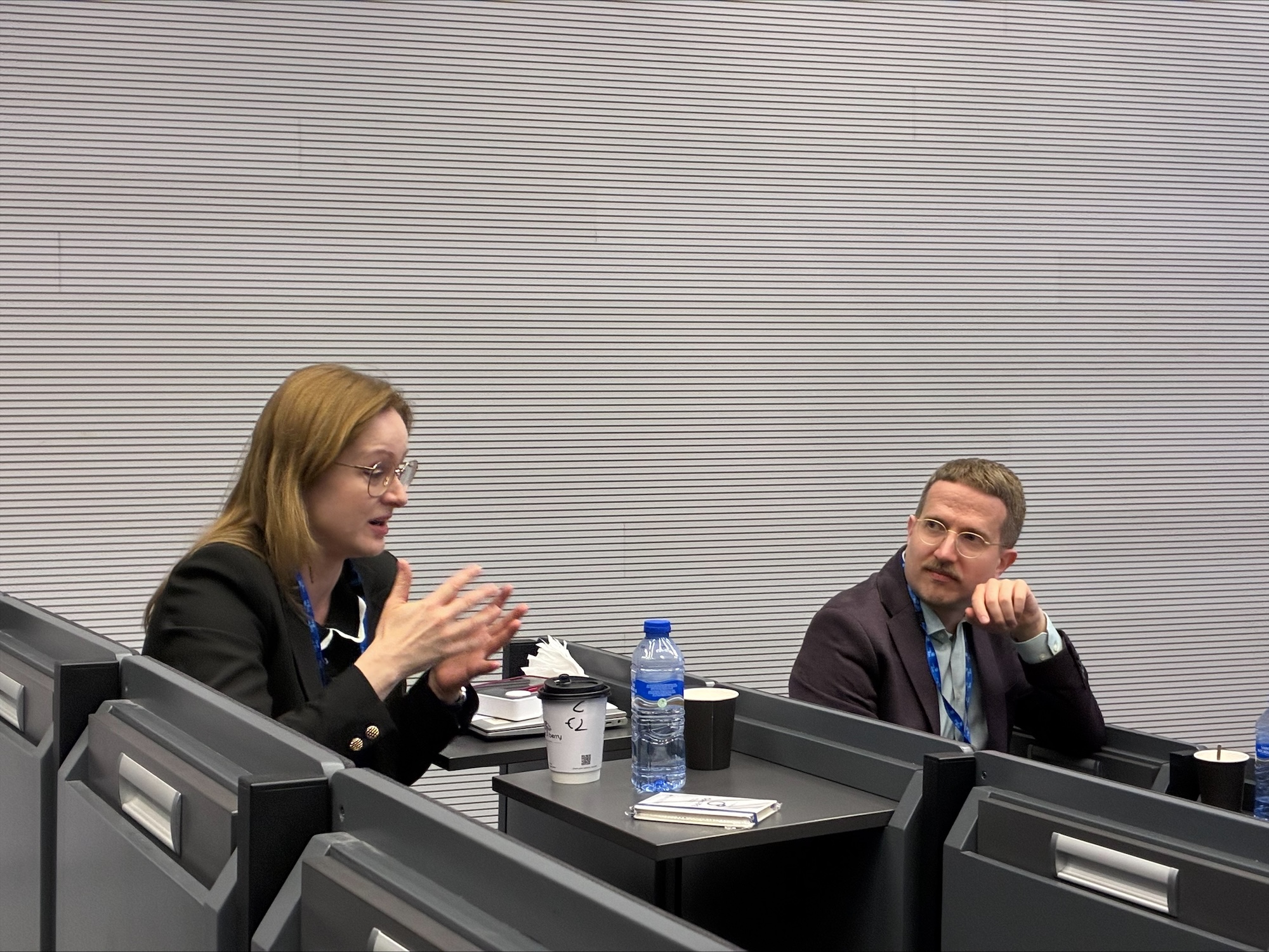
The event concluded with a constructive discussion moderated by Lina Tsoumpanou, Head of Administration at the Cyprus Academy of Sciences, Letters and Arts. Speakers, institutional representatives, and members of the research community exchanged perspectives on Open Science implementation, national readiness, policy alignment, and future engagement with EOSC.
The first Cypriot NTE reaffirmed the country’s commitment to EOSC, and highlighted the importance of sustained investment in policy development, strong institutional coordination, capacity building, and further strengthening of the national digital infrastructure.