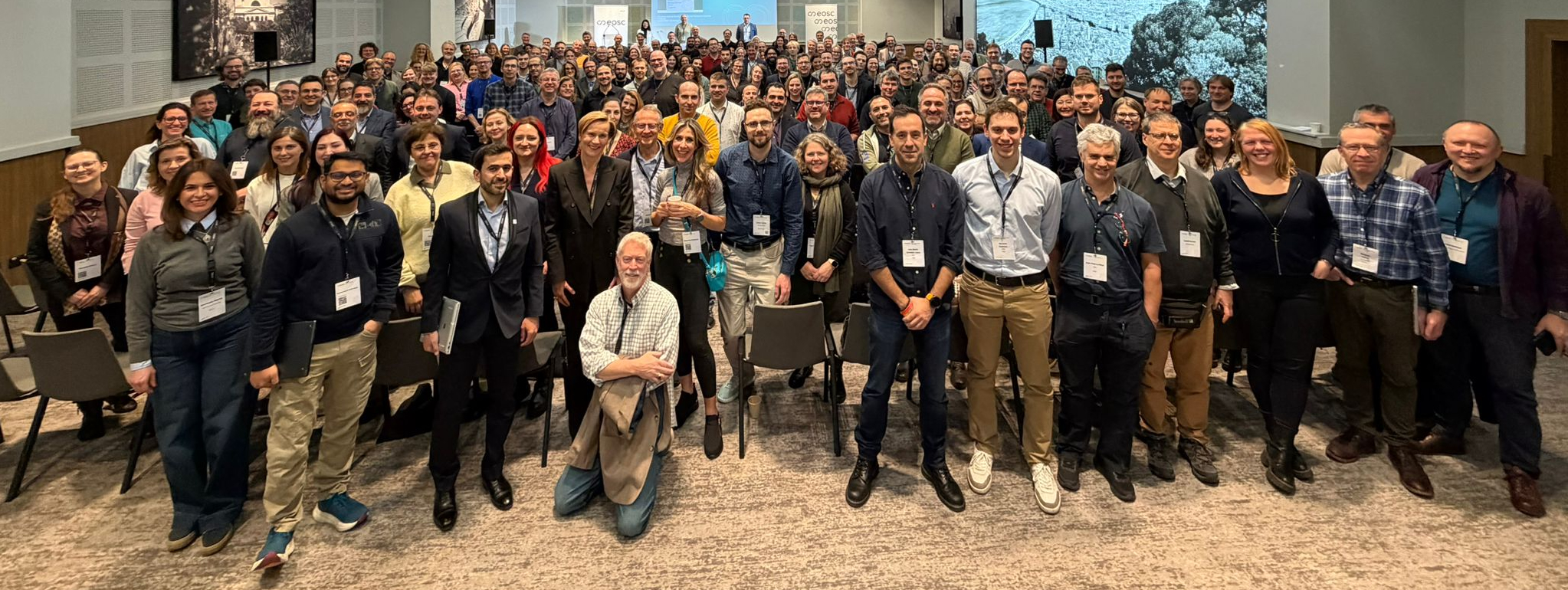
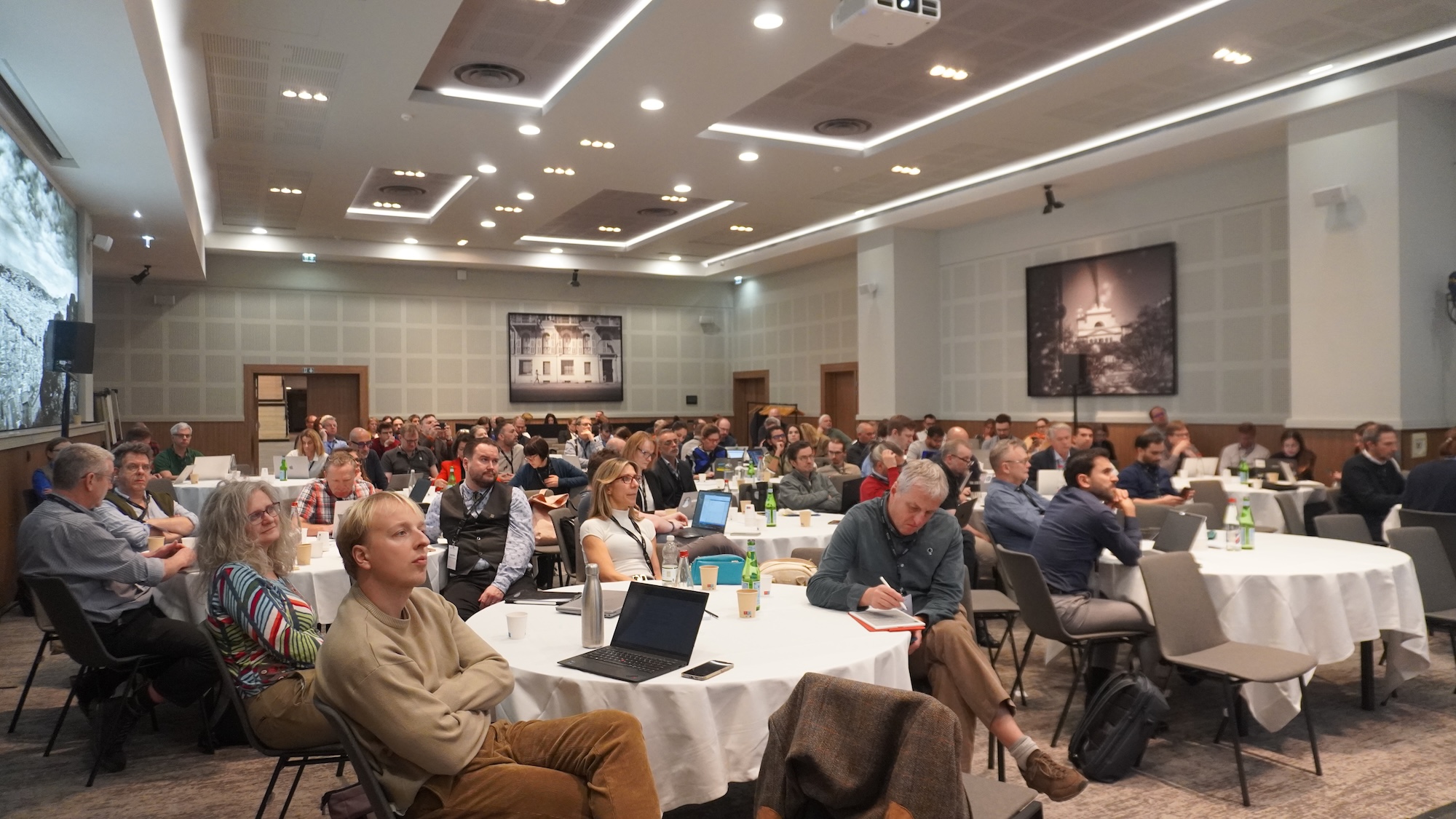
NICE – The EOSC Winter School 2026 in Nice brought together more than 180 participants to drive the momentum for the EOSC Federation’s expansion forward. A three-day programme of hands-on learning derived from the experiences of the first-wave of EOSC Nodes served to strengthen engagement across the community’s key actors working to advance the pan-European initiative.
The build-up of the EOSC Federation has become a destination for the work of the INFRAEOSC projects, and the gathering of “doers” held on 27–29 January marked an important step in the EOSC community’s further convergence on transitioning the Federation from prototype to production over the coming months. In an increasingly competitive international landscape, EOSC and the EOSC Federation aim to strengthen the security and sovereignty of European research data and to advance Europe’s research and digital agenda by fully exploiting its public investments in fostering an open and trusted scientific landscape
Organised by the EOSC Association with support from EOSC Gravity, the event provided a platform for representatives from EOSC-related Horizon Europe projects, EOSC Opportunity Area Expert Groups, and the EOSC-A Task Forces to align their perspectives with the work of the EOSC Federation Build-up Group. Representatives of the European Commission, along with members of the EOSC-A Board of Directors and Secretariat, also took part. This was the first time all these groups and stakeholders came together to share perspectives and discuss key topics.
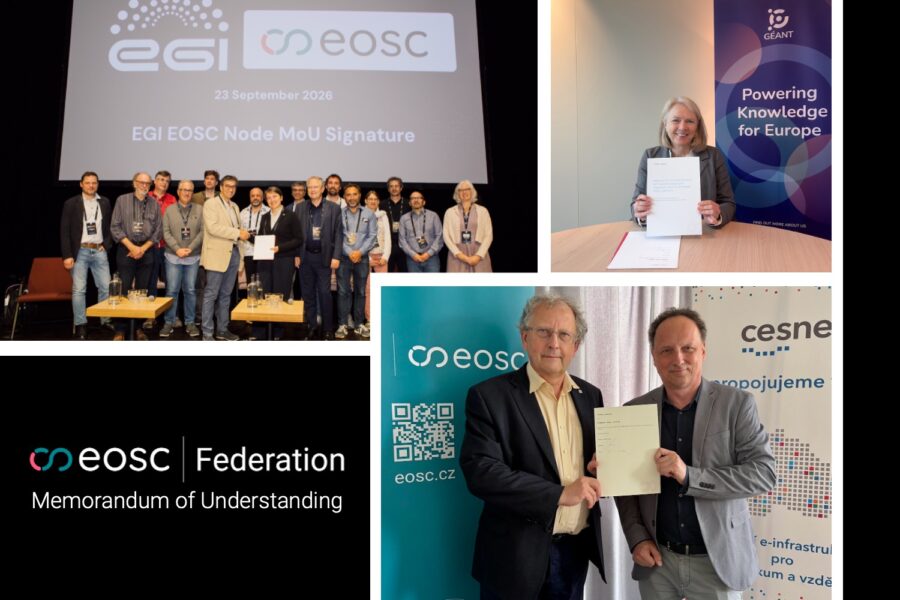
Opening the event, EOSC-A President Klaus Tochtermann highlighted the significance of the moment, which followed closely on the November signing of the EOSC Federation’s Memorandum of Understanding (MoU). The MoU establishes the interim organisational structure designed to take the Federation into operations by the end of 2026, and its implementation began at the Federation Build-up Group meeting co-located with the Winter School.
The Winter School programme was structured around two main activities: a brokerage event designed to facilitate interaction between candidate EOSC Nodes and potential resource and service providers, and a series of sessions organised along three thematic tracks—federating capabilities and interoperability; resources; and competences and training needs. Alongside the focused sessions, the EOSC community gathered to collectively debate and clarify key aspects related to the future functioning of the Federation.
Brokerage event: the Federation comes alive
A major novelty of this year’s Winter School was the introduction of a brokerage event, organised in a speed-dating format on the event’s first day. Participants were able to schedule one-to-one meetings with EOSC Nodes and other stakeholders, resulting in more than 280 in-person meetings of 10 minutes each. The broad participation and lively atmosphere reflected a strong interest in identifying concrete collaborations around the Nodes and other implementation opportunities.
Discussions frequently centred on the onboarding of services onto existing EOSC Nodes, technical requirements for compliance with the EOSC Federation, and a shared understanding of scope, working mechanisms and collaboration models. Participants also explored how services could be integrated into scientific and technological use cases, while existing Nodes gathered valuable feedback on their service offerings and better understood community expectations.
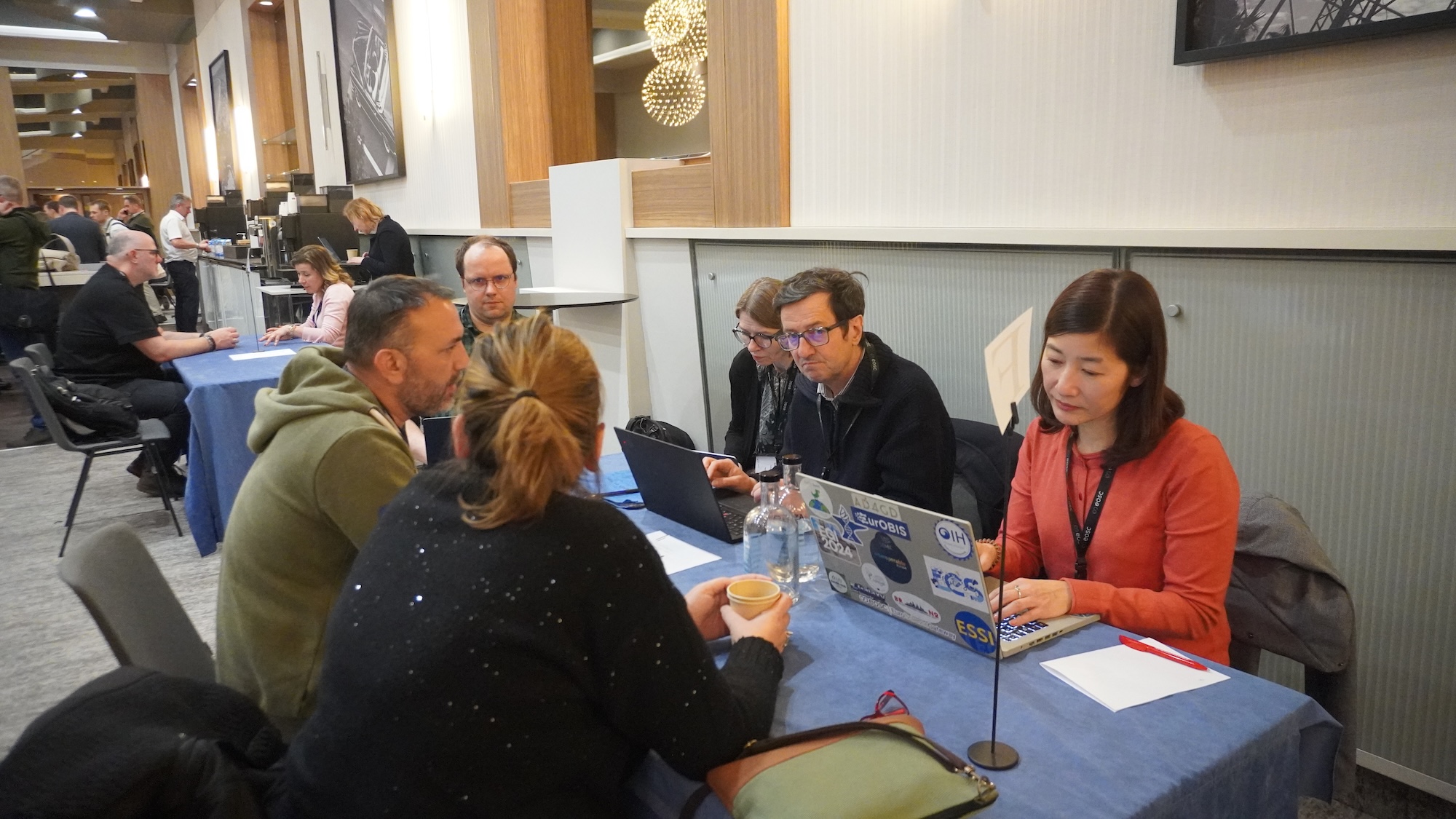
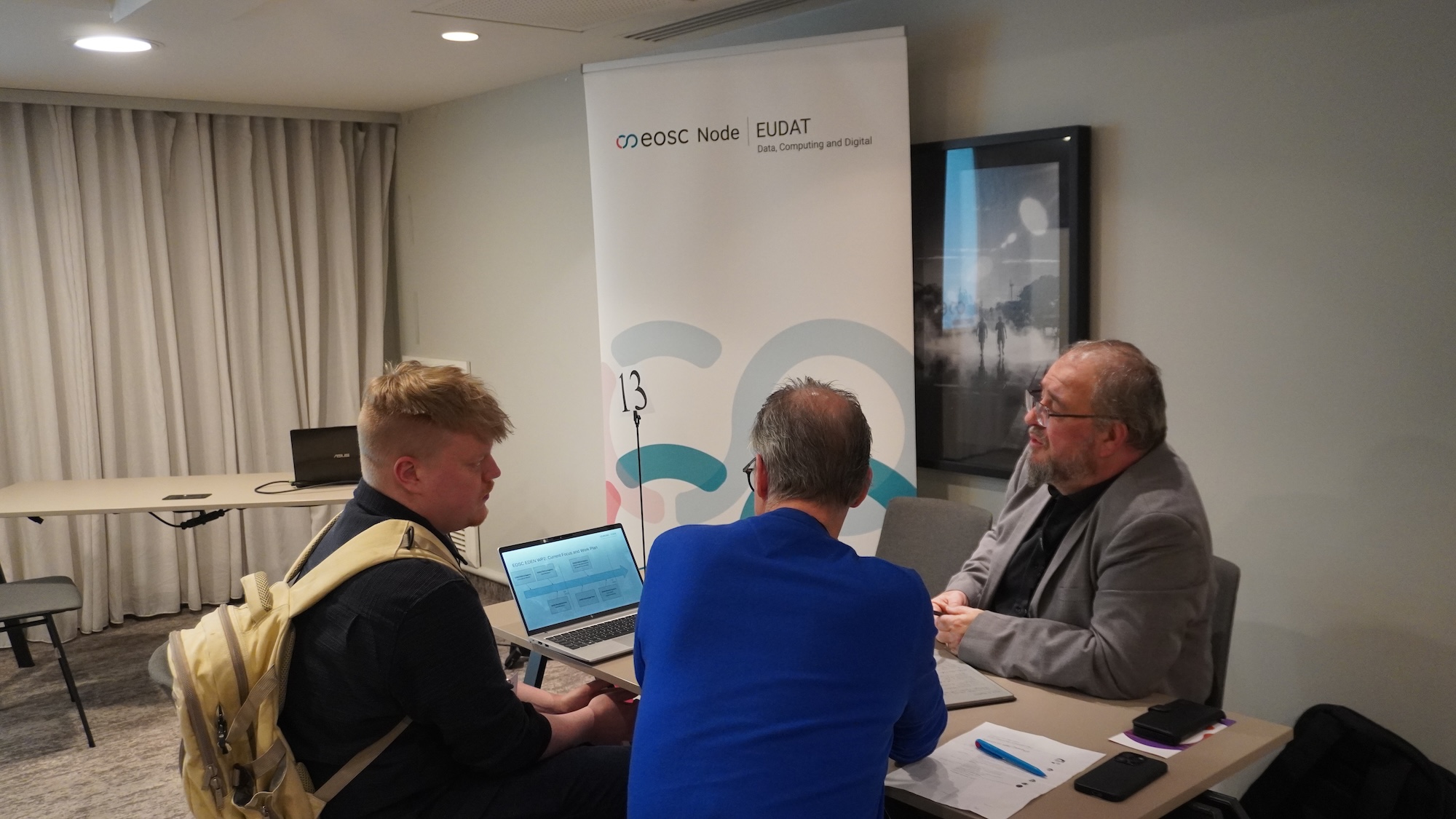
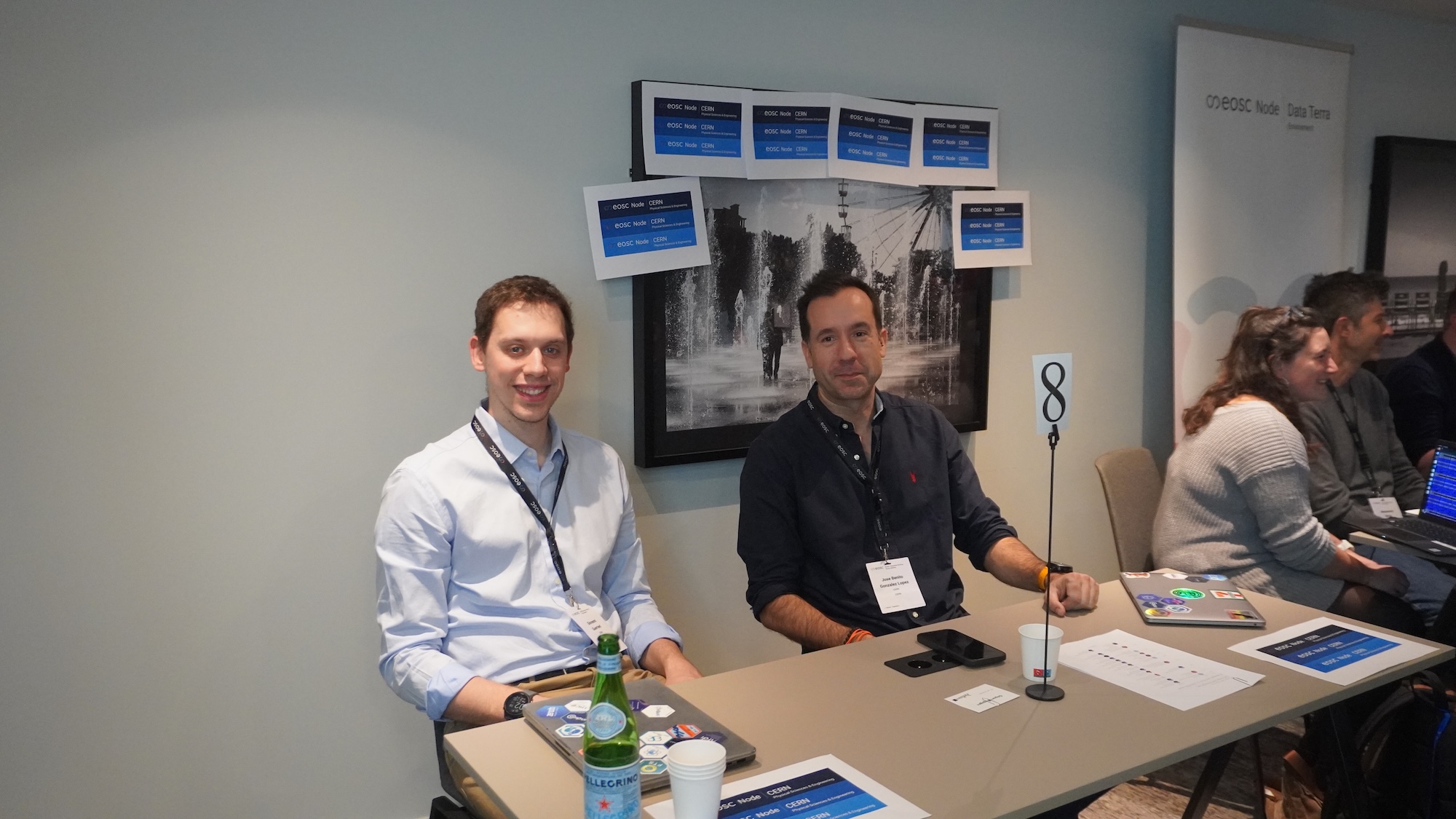
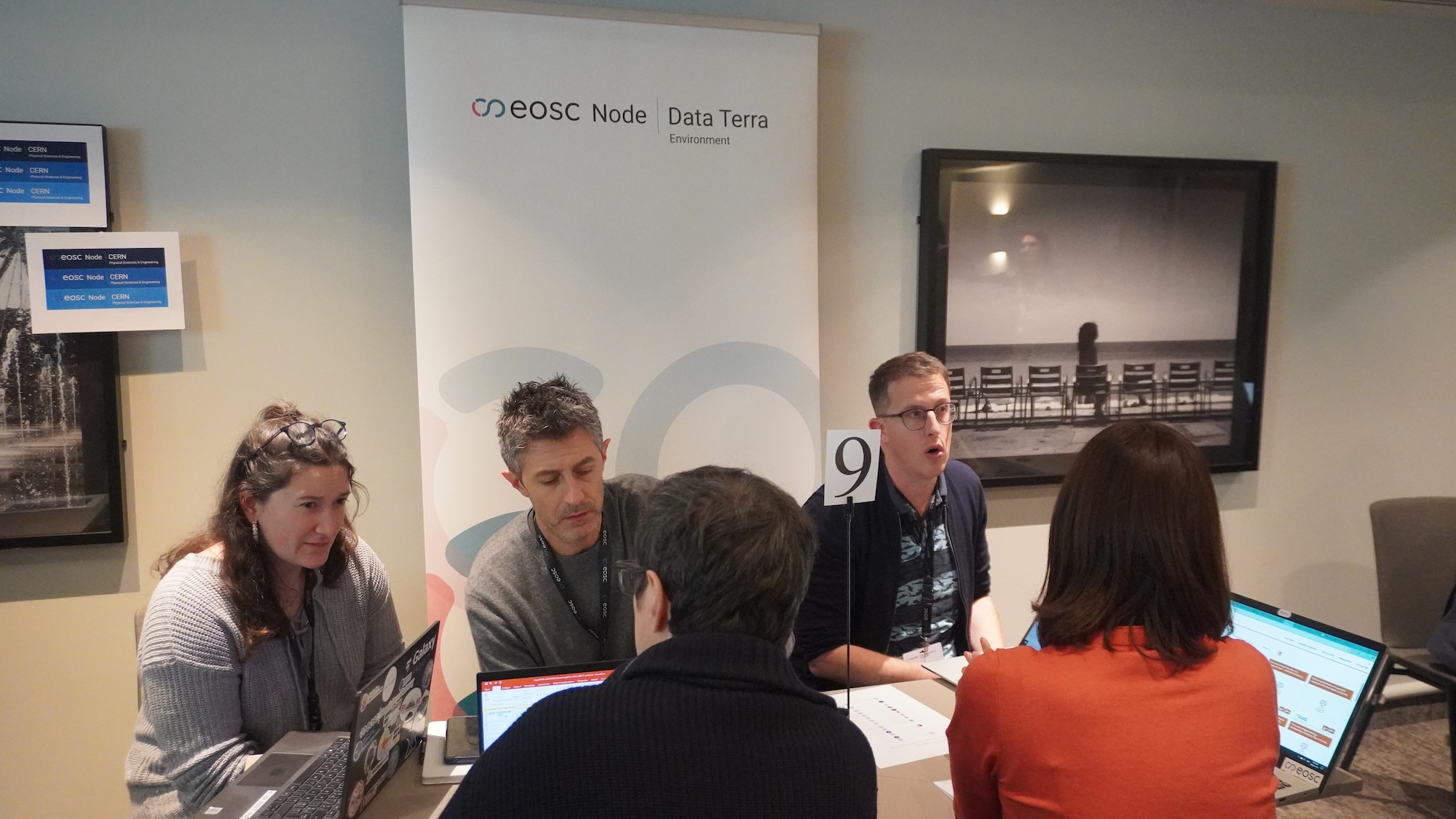
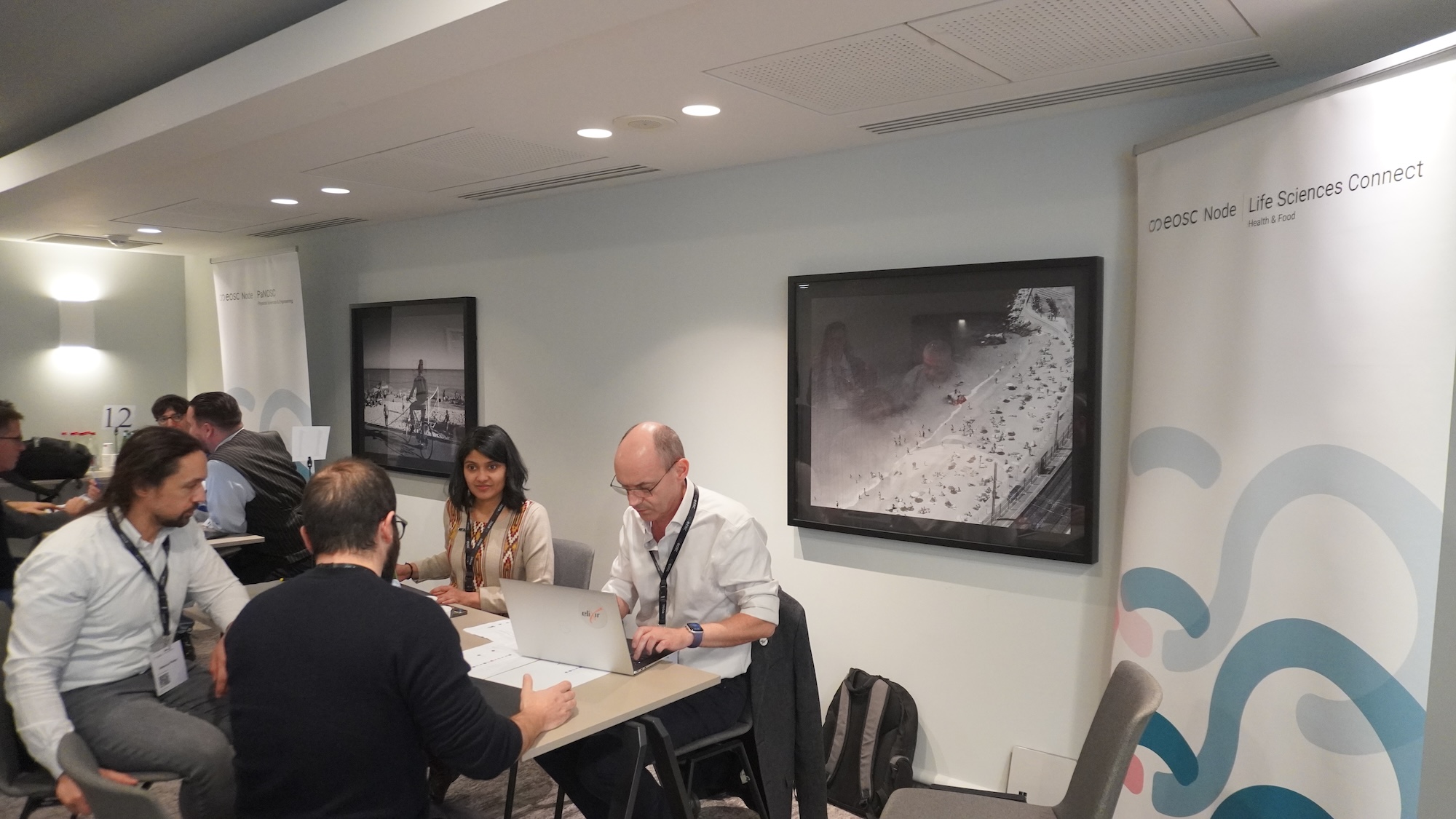
Training and upskilling emerged as another recurring theme. The EOSC Academy concept was debuted as a collaborative initiative for mutual learning under development within the EOSC Gravity project. The matchmaking sessions also gave rise to prospective new cooperations on Horizon Europe proposals and fostered broader networking across the EOSC ecosystem.
When participants were asked to evaluate the brokerage event, feedback highlighted a widespread convergence of priorities and the value of connecting as individuals, making the format particularly relevant and valuable for increased collaboration between the Nodes and the projects.
Towards an operational Federation by 2026
The main programme opened on the event’s second day with a keynote by Ana Teresa Mota, Policy Officer at the Directorate General for Research and Innovation (DG RTD), who recalled the European Commission’s €490 million investment under the EOSC Partnership in the current Horizon Europe Work Programme.
Bob Jones, EOSC-A’s Special Envoy for the EOSC Federation, then provided an update on the evolution of the Federation and shared insights from the co-located Build-up Group meeting. These perspectives were complemented by contributions from Spiros Athanasiou (EOSC EU Node) and Rudolf Dimper (EOSC-A), including updates on the EOSC EU Node and the second version of the EOSC Federation Handbook, which the participants had a unique opportunity to preview and provide feedback on before its imminent release.
Key outcomes from the thematic sessions
Across the three thematic tracks—federating capabilities and interoperability; resources; and competences and training—a shared picture emerged of an EOSC Federation that, by design, increasingly depends on alignment, trust and collaboration across diverse actors.
The sessions on federating capabilities and interoperability resulted in discussions on the importance of seamless interaction between services and Nodes, with attention given to how users might navigate a distributed yet coherent ecosystem.
Reflecting on quality, sustainability and long-term stewardship, participants in the resources track exchanged perspectives on how trust in data and services can be strengthened, how preservation and retention might be approached across contexts, and how wider considerations such as sovereignty and sustainability shape the Federation’s ambitions.
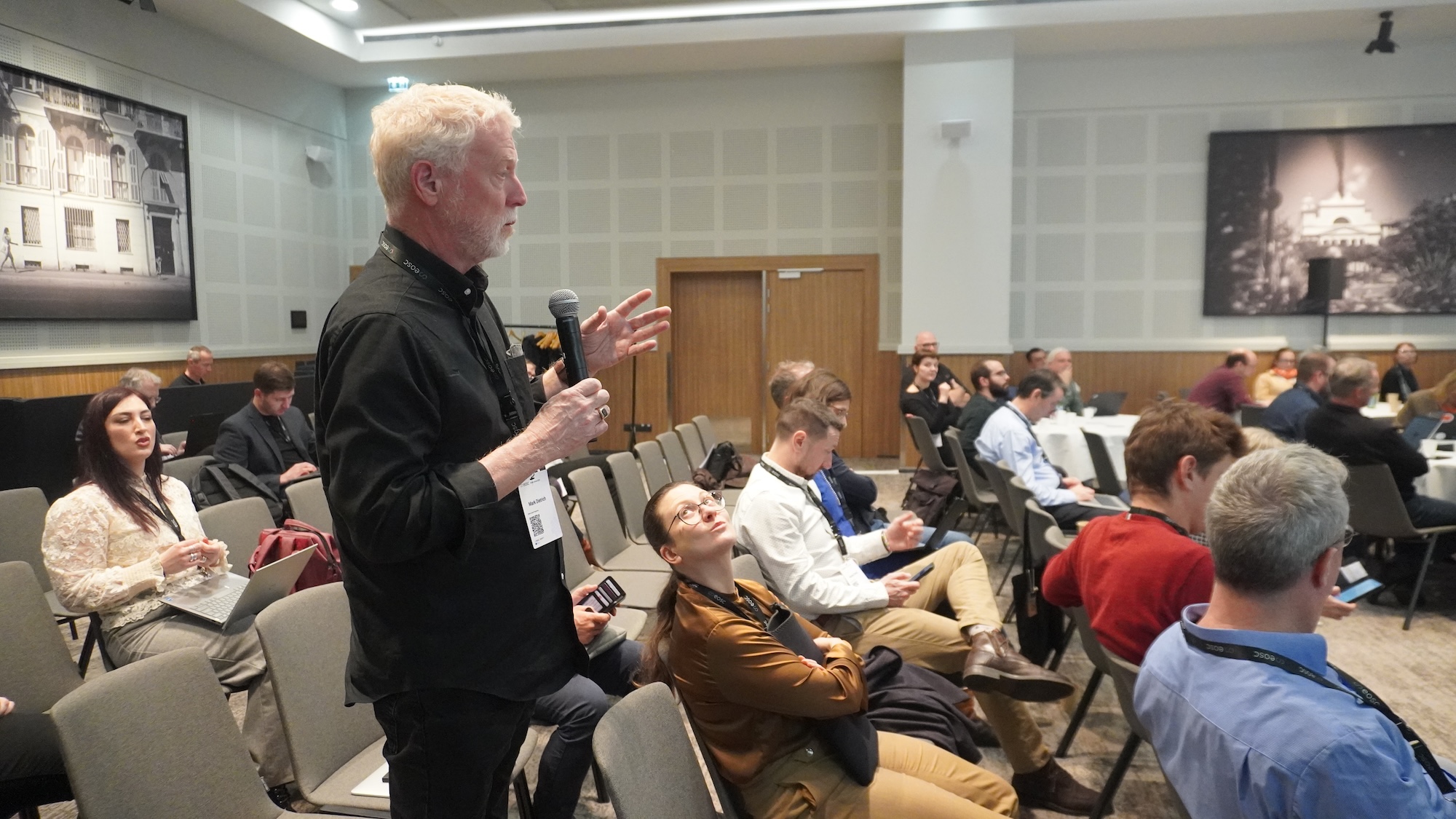
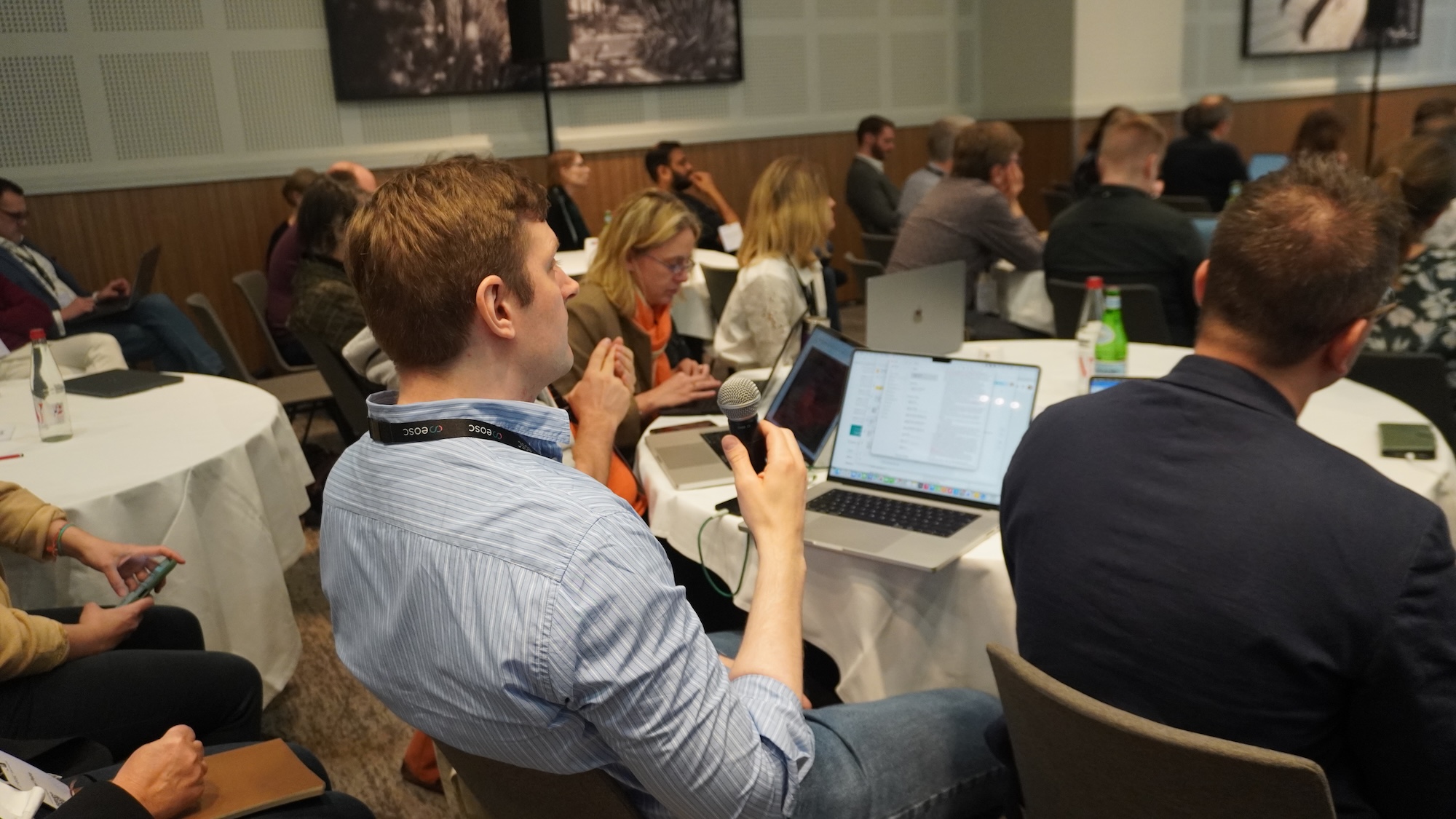
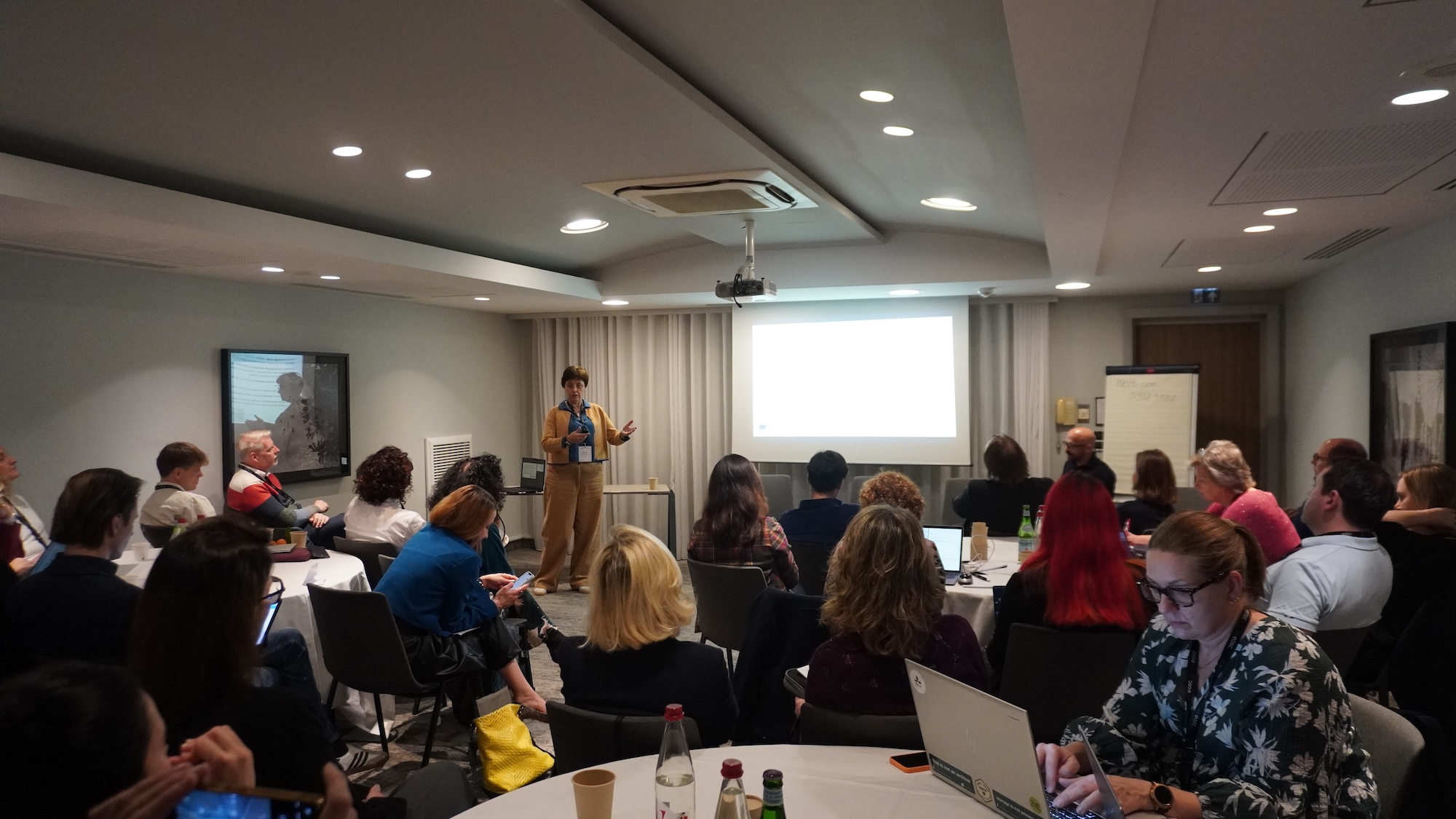
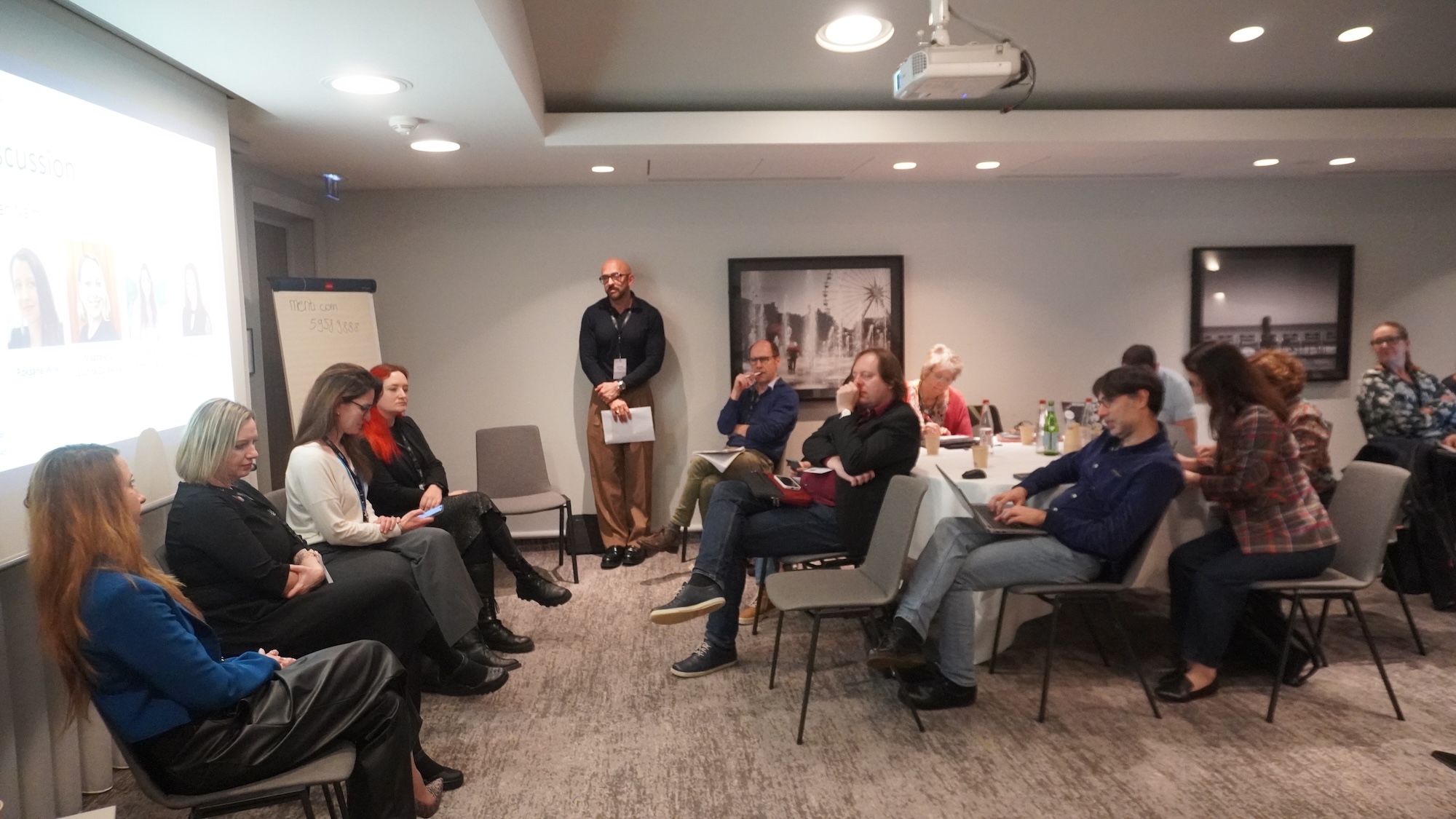
The sessions on competences and training underscored the many individual skilled contributions that will be required to make the EOSC Federation work in practice. Training was widely recognised as a key enabler, with reflections on how shared learning, mentoring and support structures could evolve alongside the Federation itself. In this context it was agreed that defining and kick-starting the EOSC Academy is one of the Federation’s driving objectives for 2026.
The Winter School concluded with a call for continued engagement in order to capitalise on the diverse perspectives and open exchange that will ensure the EOSC Federation delivers on its promise to elevate not only the European research community, but European strength and competitiveness generally.