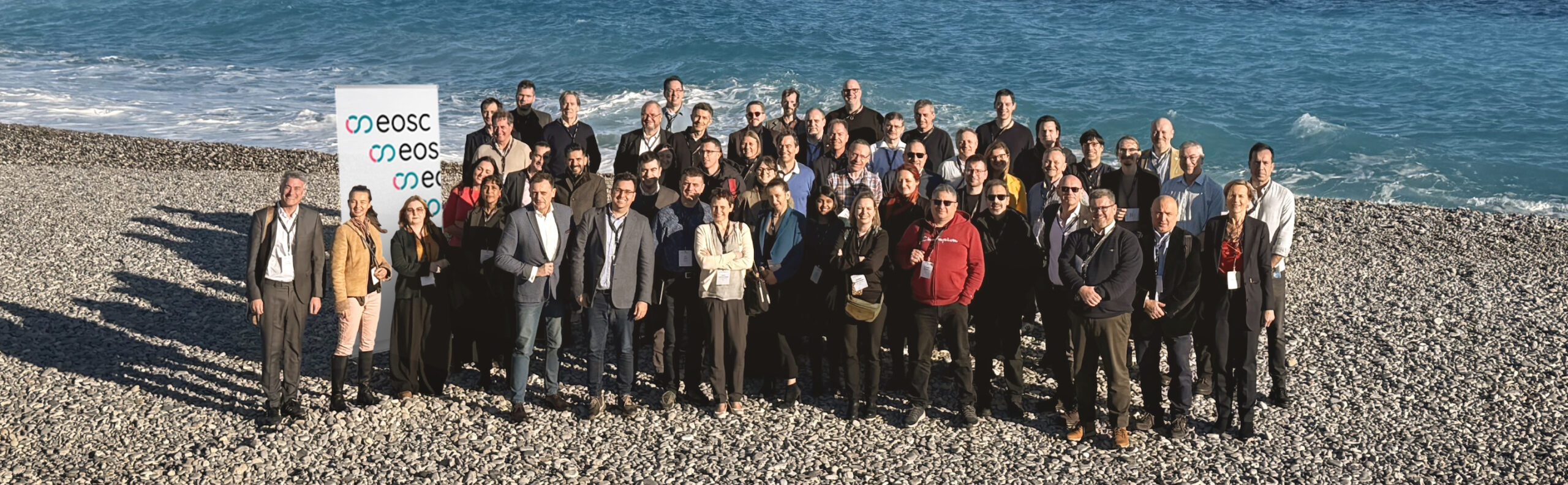
NICE — The EOSC Federation formally consolidated its new operational structure at the Build-up Group’s face-to-face meeting on 26-27 January 2026 in Nice, France.
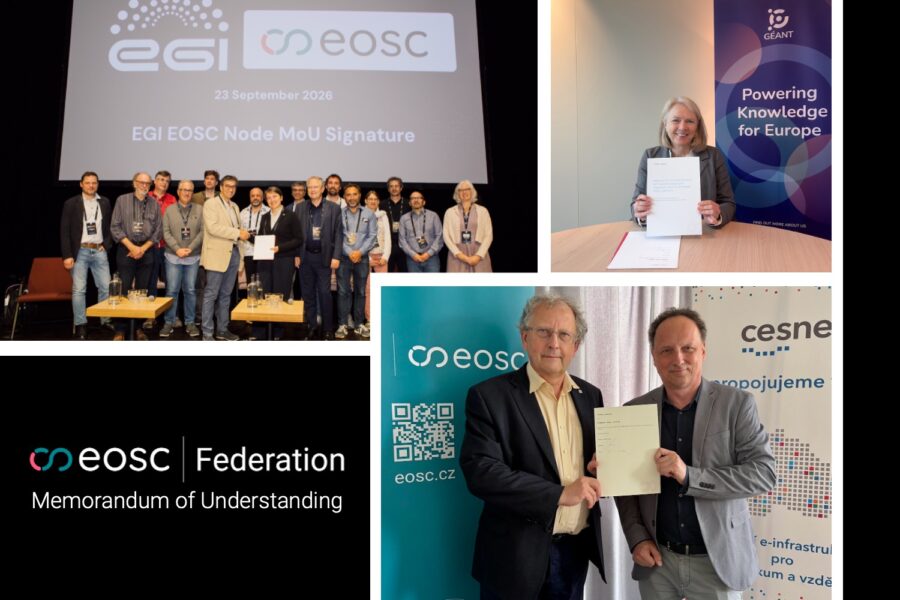
The new EOSC Node Coordinator and Operations Committees, together with the newly mandated working groups, represent an interim structure designed to bridge the Federation from prototype to production by the end of the year. The new structure is defined by the Memorandum of Understanding that served to launch the Federation in November 2025, and which has been signed by the 13 candidate EOSC Nodes and the EOSC Association (EOSC-A).
“This is an exciting moment,” said EOSC-A President Klaus Tochtermann. “The EOSC Federation is at a turning point and the Association is fully committed to supporting the Memorandum’s implementation. A fully operational Federation will help to secure Europe’s sovereignty over research data and enable a thriving AI and innovation ecosystem.”
Advancing in unity
The lunch-to-lunch meeting brought together roughly 60 participants and was held adjacent with the EOSC Winter School 2026. More than 40 representatives of the 13 candidate EOSC Nodes and the EOSC EU Node convened with representatives of the EOSC Tripartite Governance — the European Commission, the EOSC Steering Board representing the participating Member States and associated countries, and the EOSC Association.
“The strong commitment towards the establishment of the EOSC Federation reflects the deep culture of cooperation that defines Europe and European values,” said Stefan Liebler, Policy Officer at the European Commission’s Directorate-General for Research and Innovation (DG RTD), when addressing the participants. “What you are building is not only a technical infrastructure, but the embodiment of our shared responsibility for Europe’s research data. With the new Memorandum in place, you are one significant step closer to making EOSC the backbone of Europe’s digital research and innovation ecosystem.”
As Europe seeks to secure long-term sovereignty over its research data and other digital assets, the EOSC Federation is rapidly establishing itself as the backbone on which this can be realised. In this context, the establishment of an interim organisational framework to fuel a successful deployment of the EOSC Federation is a decisive step forward.
Key elements of the new organisational structure
At the heart of the new organisational structure is the Interim EOSC Node Coordinator Committee, established as the main forum for strategic alignment. Alongside it, the Interim EOSC Node Operations Committee serves as the technical engine onboarding services and resources.
To drive progress on the ground, several thematic and technical Interim Working Groups have been established, with some of their mandates endorsed in Nice by the EOSC Node Coordinator Committee, and additional mandates expected in the near future. Focused on hands-on delivery, these groups are structured across three streams — Governance, Resources, and Operational. The Interim Secretariat, provided by EOSC-A, will underpin the entire framework and ensure smooth coordination.
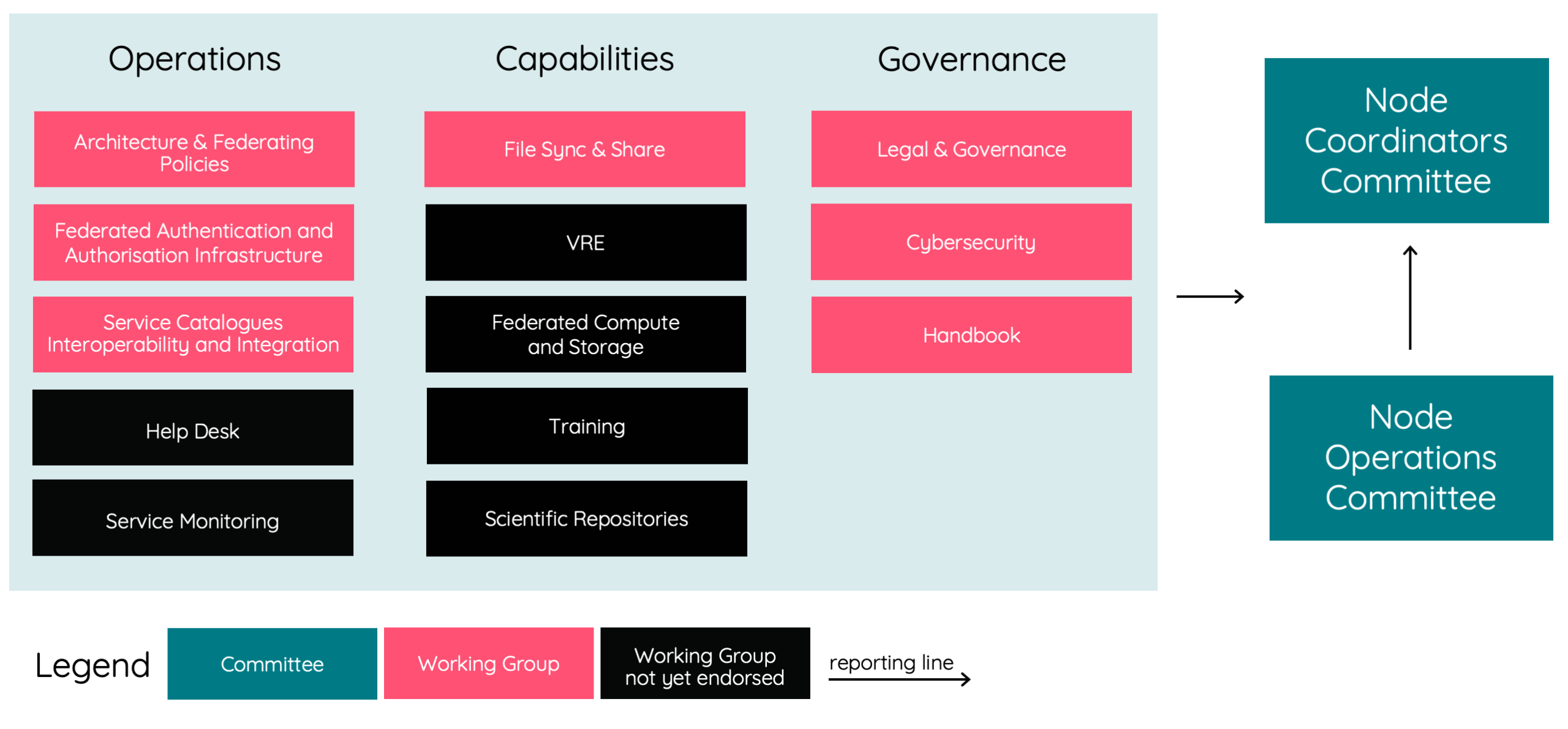
A roadmap toward production
Over two intensive days, the participants defined roles and reporting lines within the new structure, and agreed on an actionable roadmap for 2026. The year’s central ambition is clear: to transition the Federation and its Nodes from prototype to production, demonstrating added value for both contributors and users.
“There is still much to accomplish, but the clarity we gained on responsibilities and decision-making gives us confidence to advance together toward a formal, legally binding framework by 2027,” said Bob Jones, EOSC-A’s Special Envoy for the EOSC Federation.
Progress through 2026 will be fuelled not only by the dynamic organisational setup, but also by the enrolment of new Nodes and the engagement of the broader community. This collaborative potential was on full display at the brokerage event of the EOSC Winter School on 27 January 2026, where Node representatives, INFRAEOSC projects, EOSC Opportunity Area Expert Groups, and EOSC-A Task Forces explored concrete ways to contribute to and expand the Federation’s resources and services.
The brokerage event also gave them the opportunity to sharpen ideas as several of them were finalising their applications for the EOSC Gravity cascading grants, closing on 18 February. These calls aim to support the piloting of new service onboarding and the development of project charters for future enrolment in the EOSC Federation. In parallel, the Tripartite call, also closing on 18 February, will kick-off the second wave of the Federation’s expansion, bringing new services and resources to the future offering.
“The efforts in building up and shaping the EOSC Federation shows how important coordinating national efforts is, how this can strengthen Europe’s research ecosystem by reducing the fragmentation of research resources,” said Sumithra Velupillai, Senior Advisor at the Swedish Research Council and member of the EOSC Steering Board, highlighting the unity and shared purpose of the Tripartite that prevailed in Nice.
With the principles of the Federation’s MoU now activated and the Working Group’s mandates in place, participants left the Build-up Group meeting positioned to advance the EOSC Federation into operations.