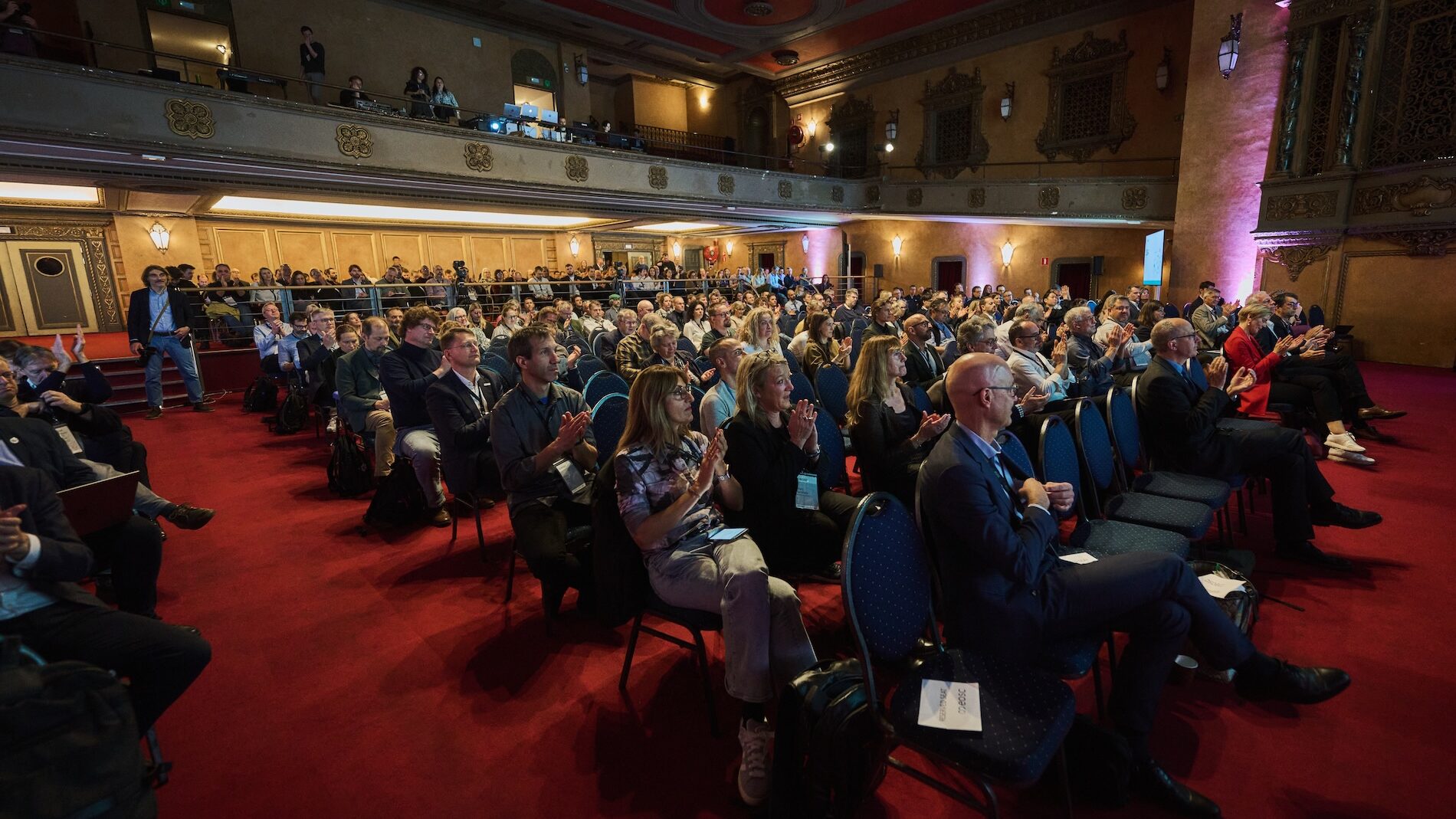
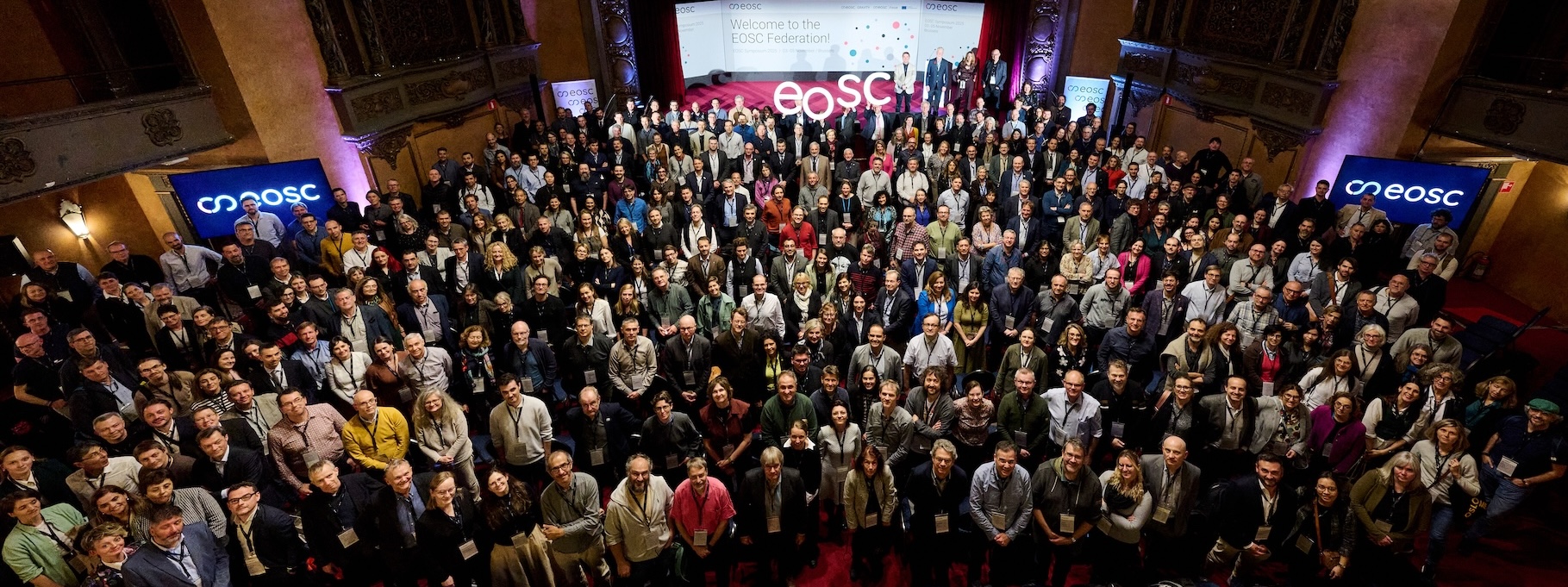
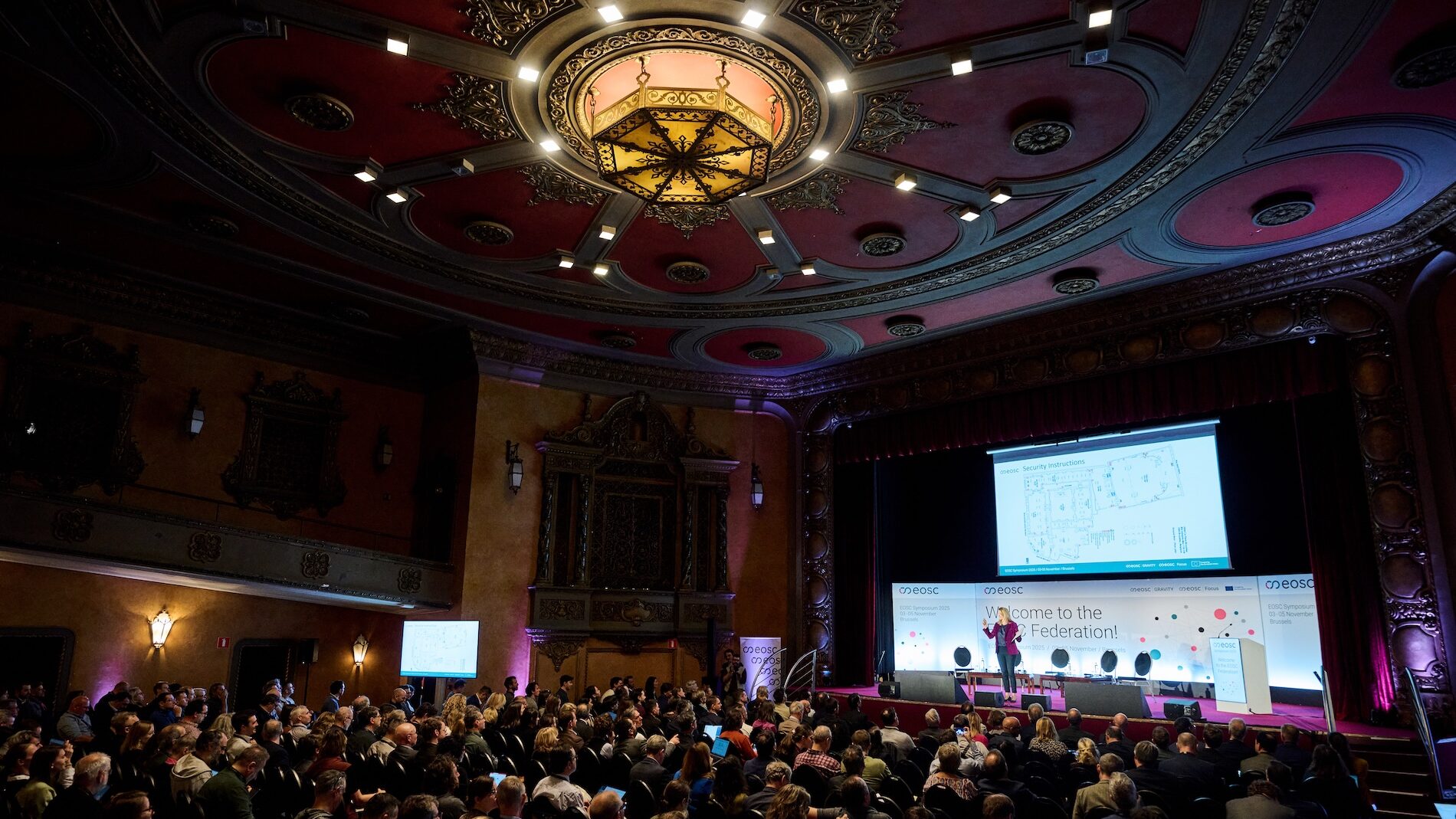
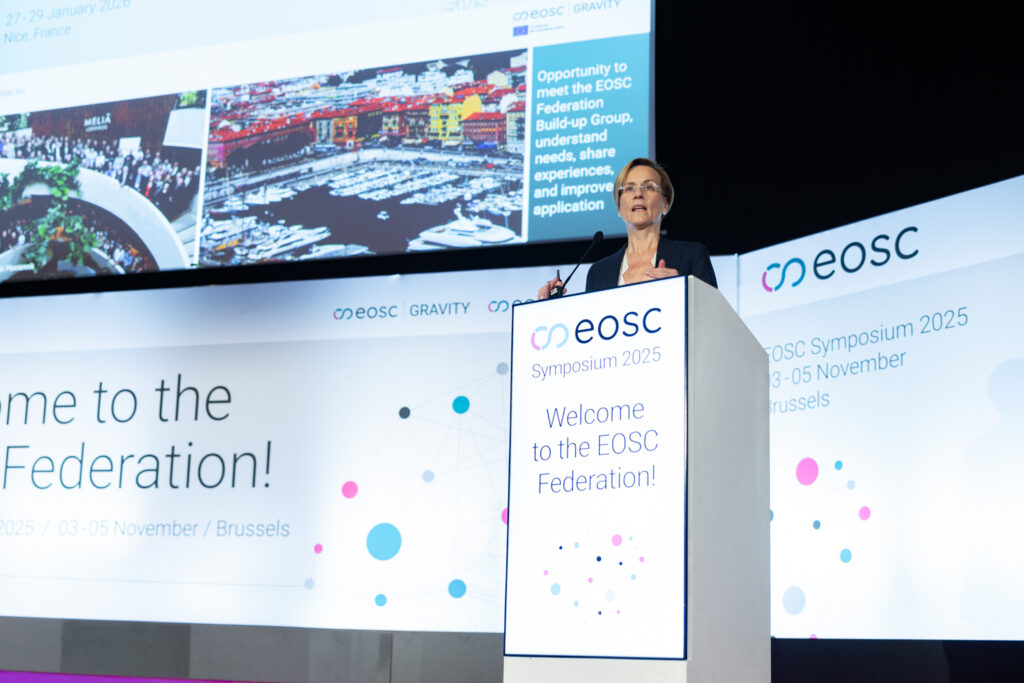
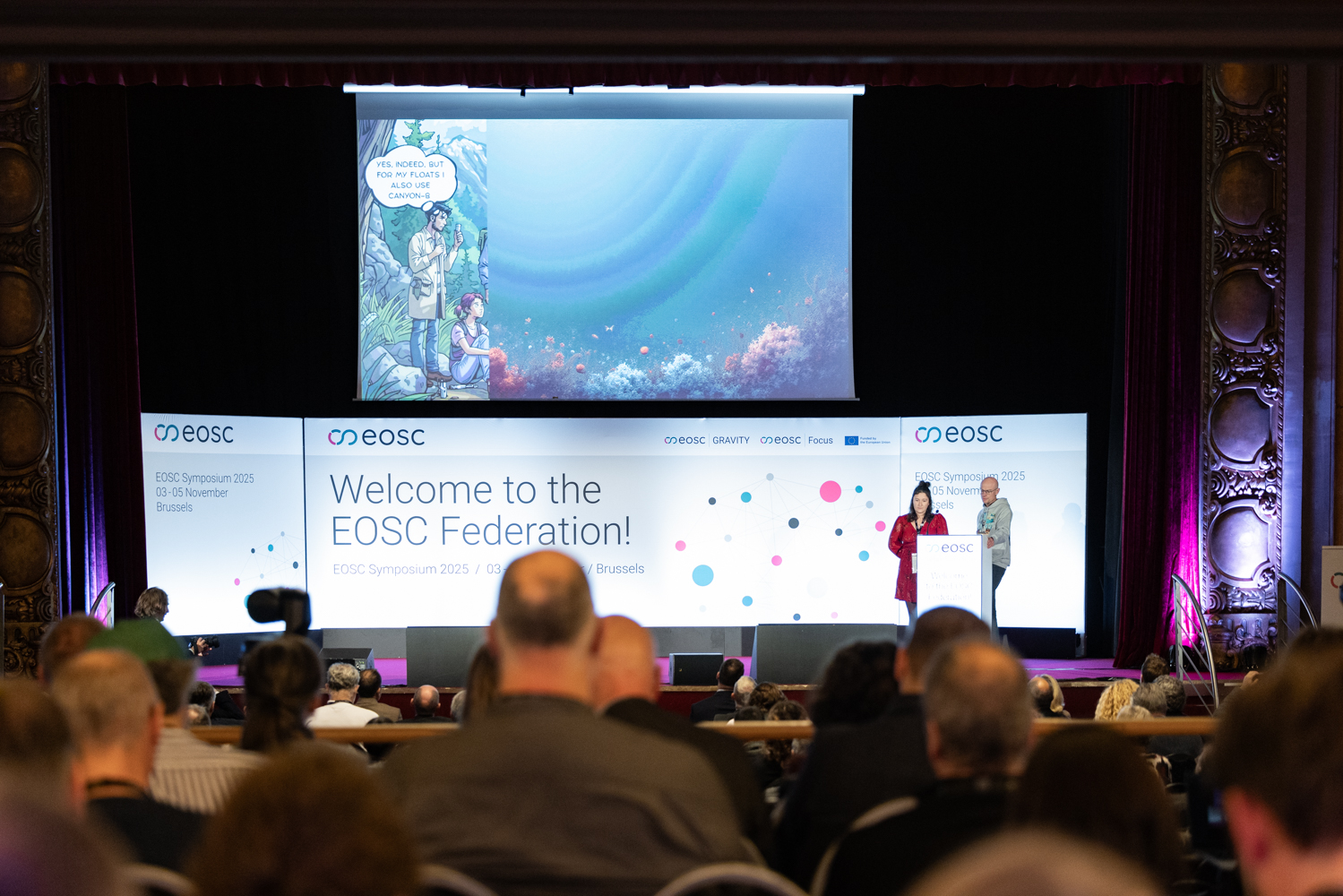
BRUSSELS — The EOSC Symposium 2025 opened with a bang last Monday afternoon in a series of dazzling sonic interventions that preceded by several hours the explosive shower of confetti that brought the first day to a close.
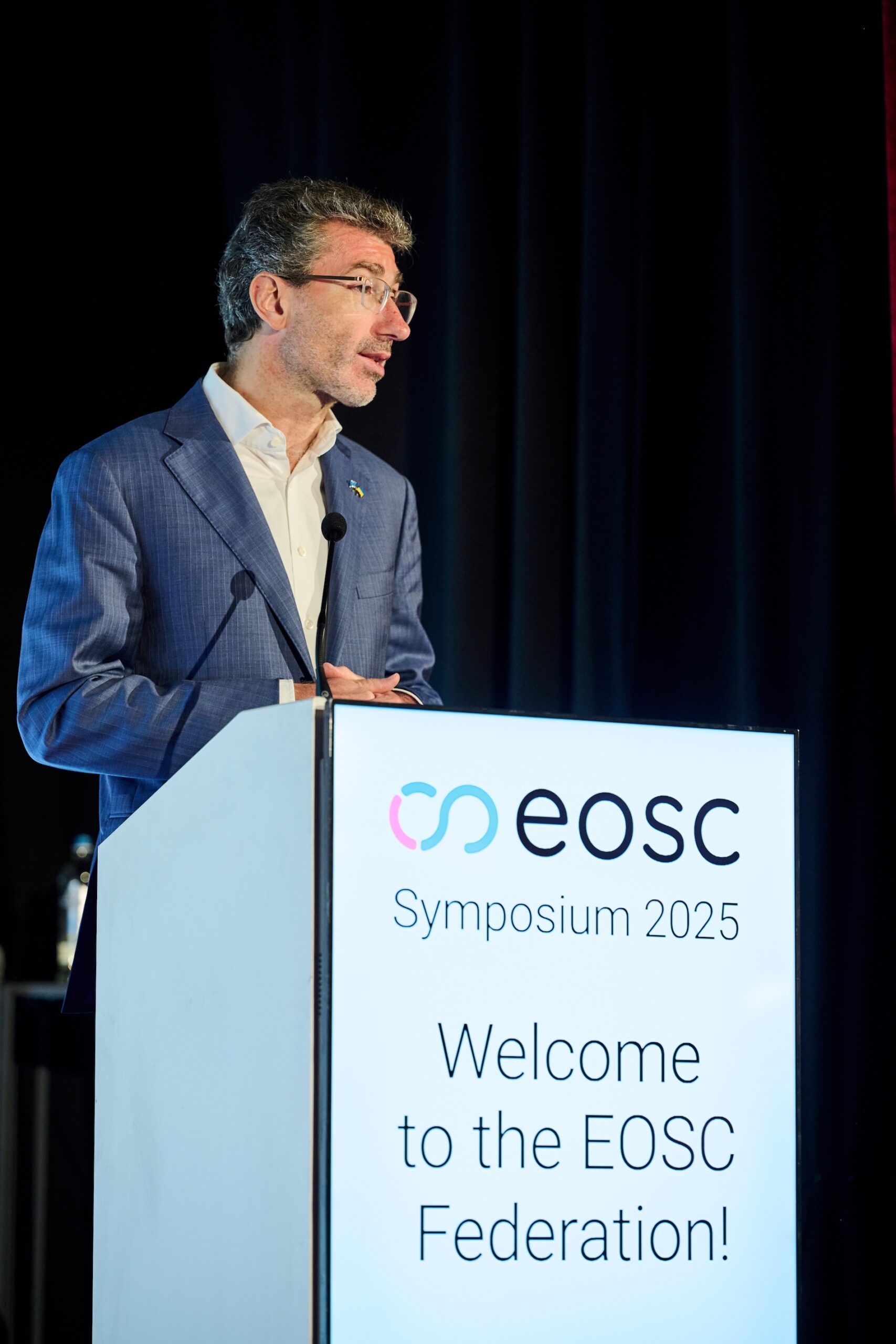
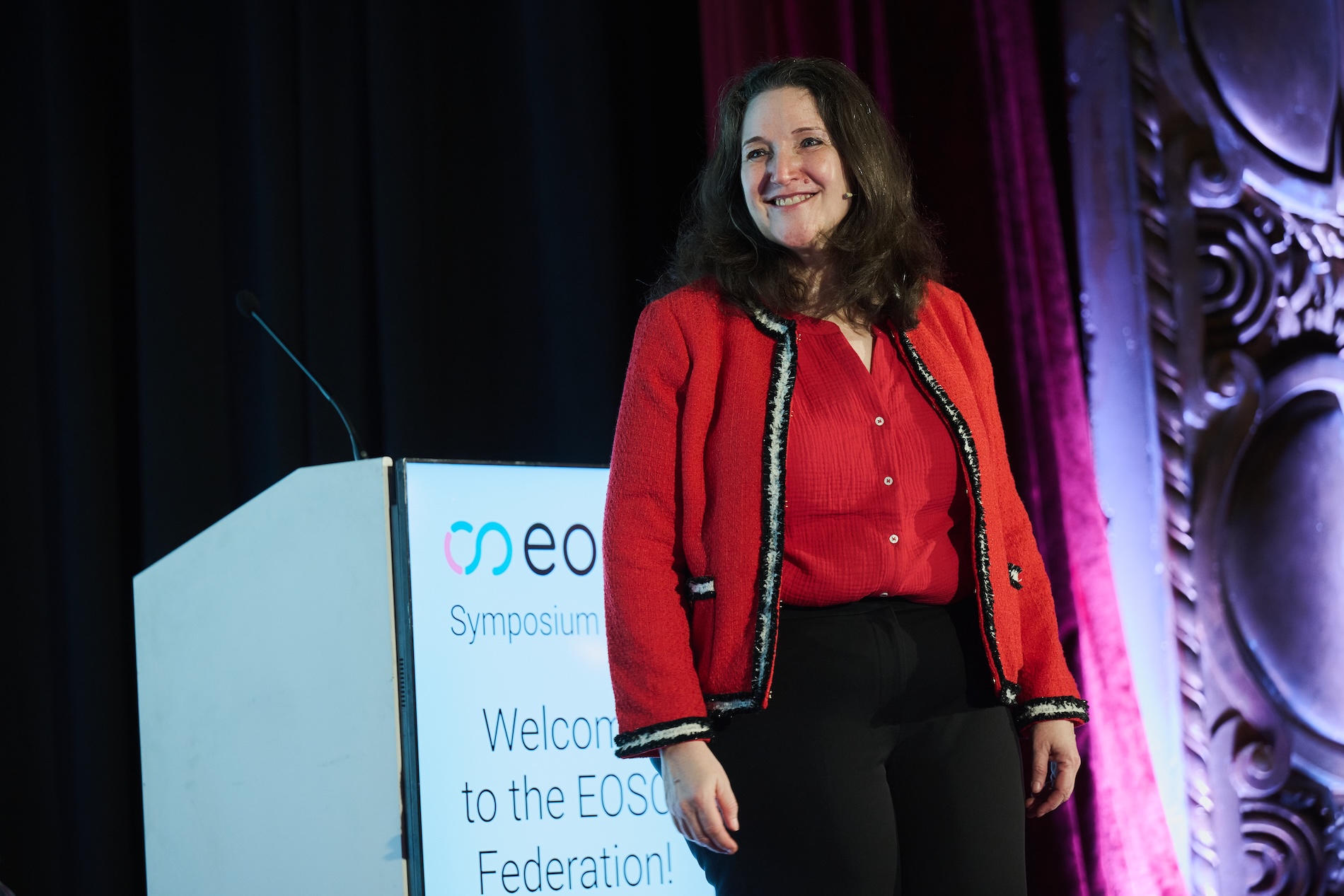
”What matters most is to keep the momentum, the ambition and the shared purpose that have brought us this far,” declared Marc Lemaître, Director-General of the European Commission’s Directorate General for Research and Innovation, in the EOSC Symposium’s opening speech to the nearly 500 assembled participants. “So let’s seize this moment. Let’s act together to complete [the EOSC Federation] fast and make it the backbone of Europe’s digital research and innovation ecosystem. You can count on the full support of the European Commission in this vital and transformative endeavour. Let’s make it happen!”
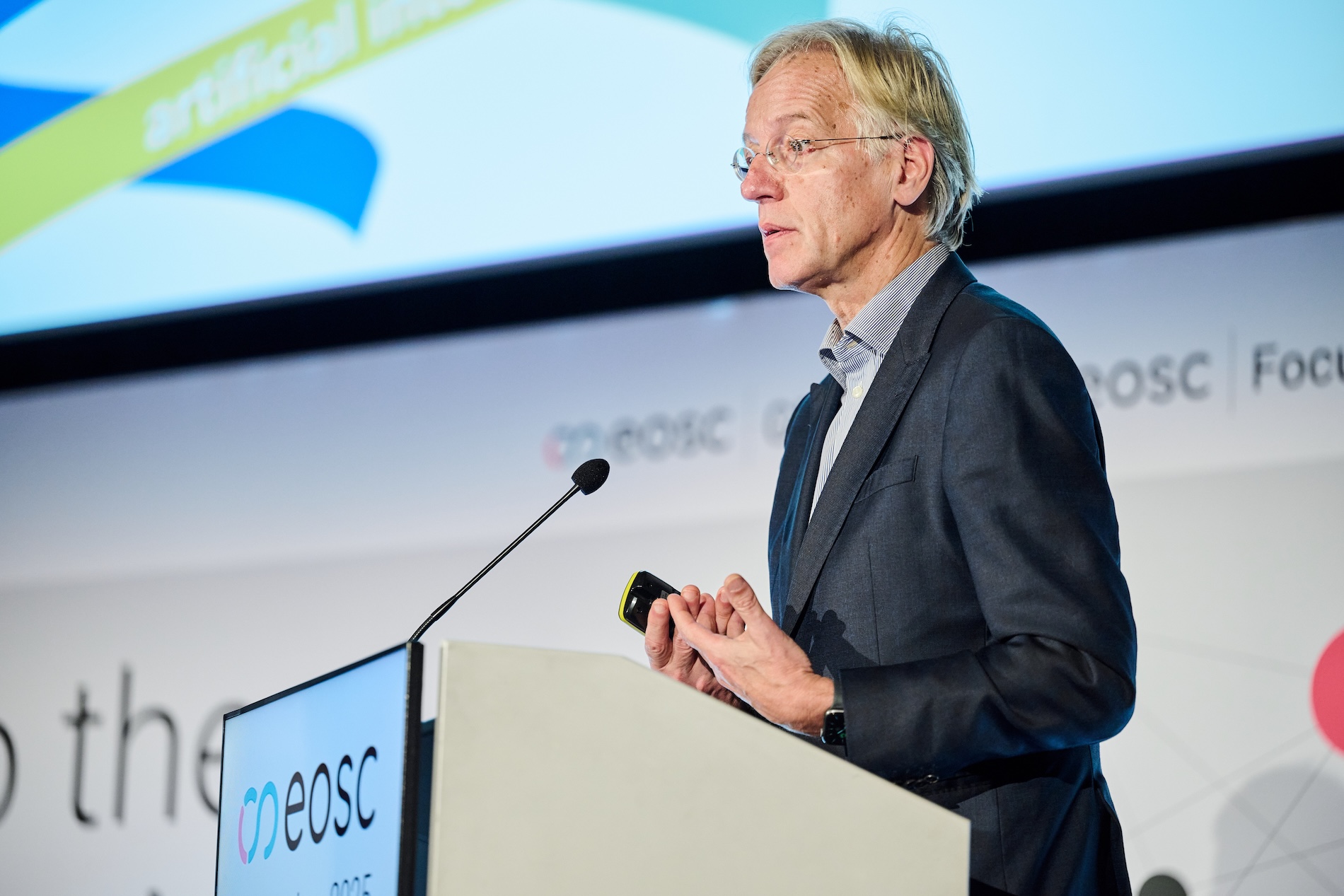
Immediately following Lemaître’s energising policy mandate [see video], and amplifying the substance behind the European Commission’s enthusiasm, was the day’s keynote speaker, Robbert Dijkgraaf, President-elect of the International Science Council. Dijkgraaf treated the global audience, coming together from across 36 countries, to a tantalizing peek [see video] into the leading edge of globalised scientific discovery.
EOSC as central enabler
“We are more aware than ever of the importance of global cooperation, in vaccines, climate monitoring, and other areas,” said Dijkgraaf. “The global data infrastructure is at risk, and Europe has to step up. It is stepping up: EOSC is putting the Grand Challenges into practice. How data flows through this ecosystem is crucial. Politics is downstream from culture, and scientific collaboration can lead to political and economic collaboration. I hope EOSC has in its ambition to grow larger.”
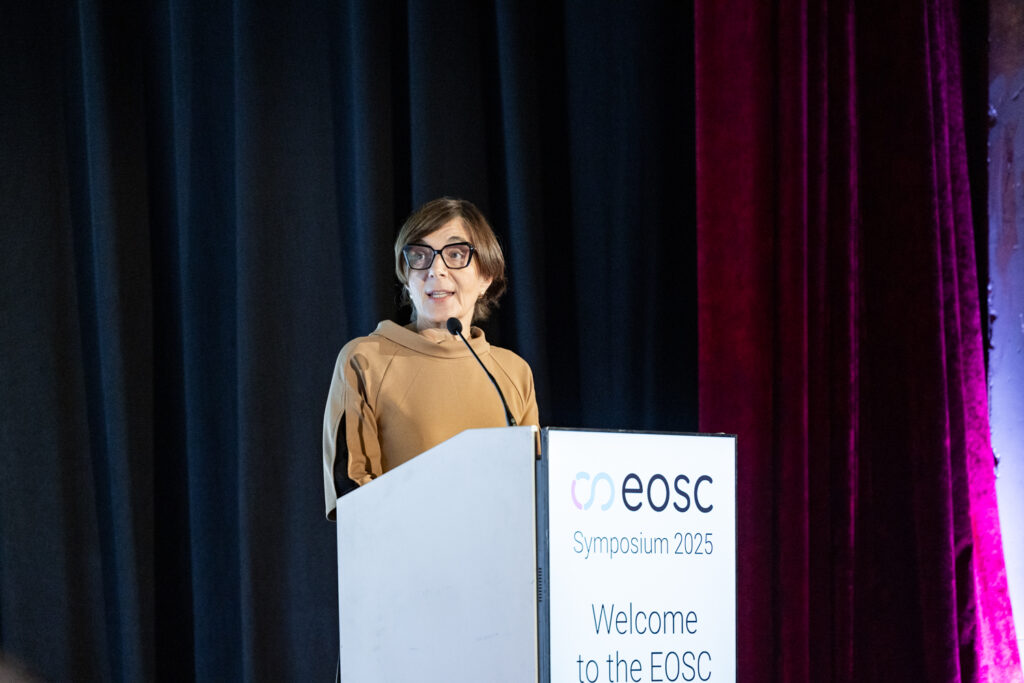
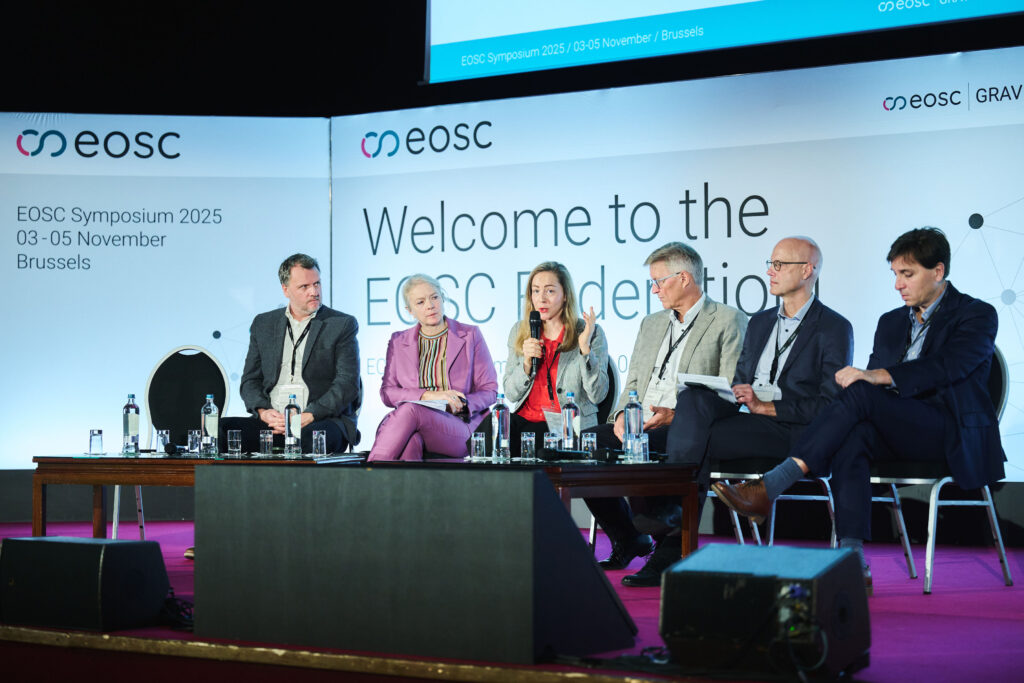
Dijkgraaf concluded by calling for a political and technical “Research and Innovation Union” in Europe that would align the national-level policies, strategies, instruments and networks of EU countries in a direct challenge to the supremacy of the US and China. He was then joined for a panel discussion by Maria Leptin, President of the European Research Council, Mattias Björnmalm, Secretary General of EOSC-A founding member CESAER, DG RTD’s ERA & Innovation Acting Director Jean-David Malo, EOSC Steering Board Co-Chair Volker Beckmann from the French ministry of higher education, research and space, and EOSC Association President Klaus Tochtermann. The EOSC Association served as organiser of the Symposium, with the support of its partners in the EU projects EOSC Gravity and EOSC Focus.
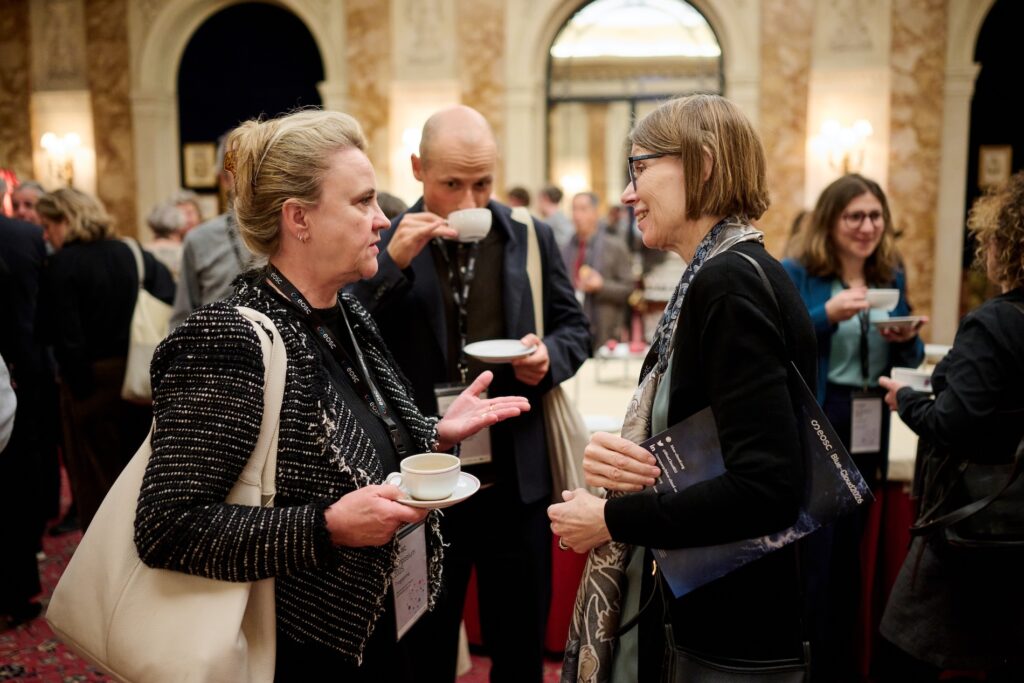
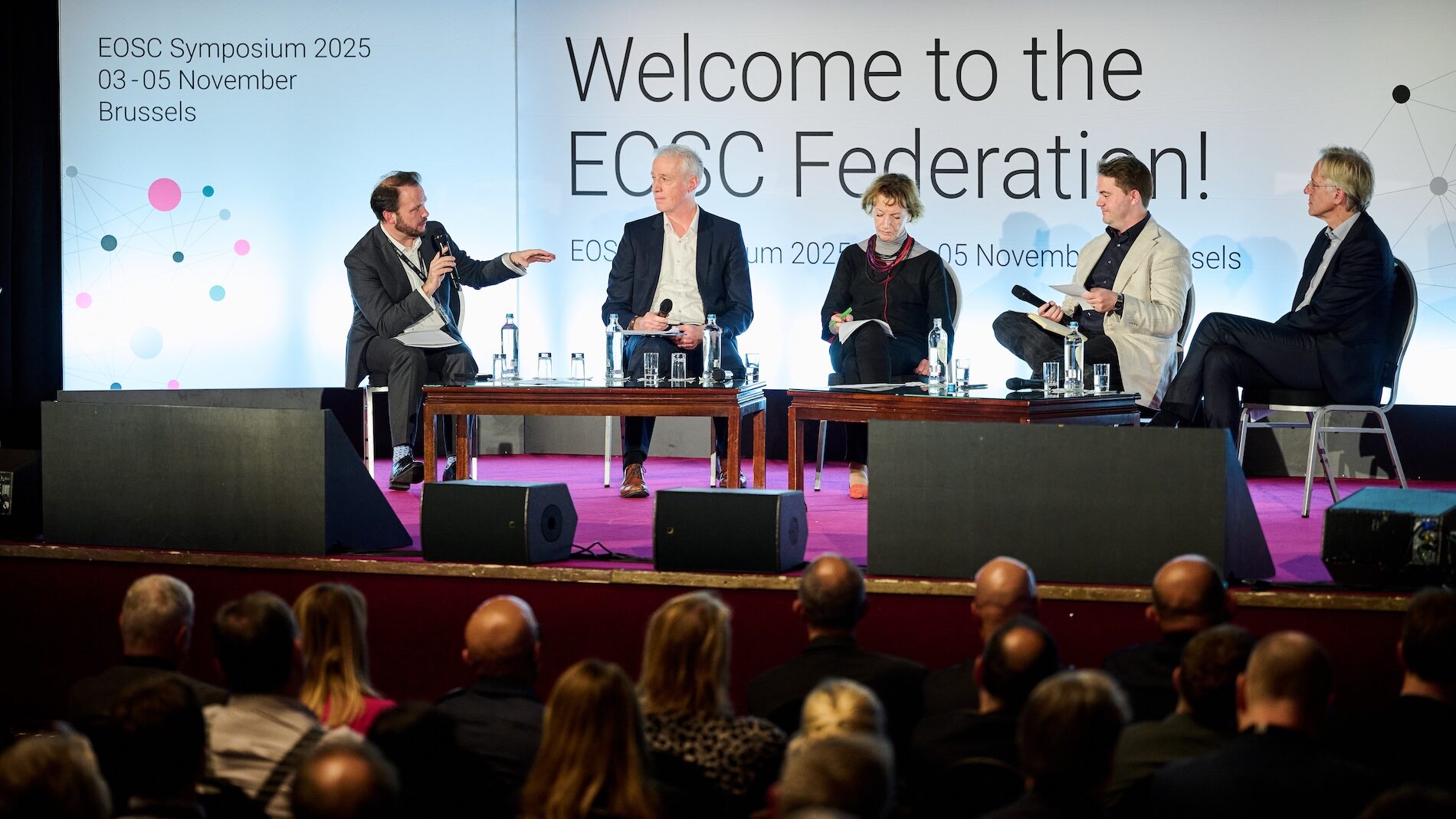
The high-level discussion continually circled back to the fundamental place of EOSC in the European digital strategies for competitiveness, AI and data sovereignty, and as the enabler for cross-disciplinary, cross-border global scientific collaboration in the service of Europe’s research and innovation agenda. Tochtermann turned the discussion from the general to the specific by praising what had already been achieved in the EOSC Federation through voluntary, in-kind work, and called out the necessity to connect researchers’ needs and wants with the technology. This set the stage nicely for a showcase of the EOSC Federation in practice.
“Putting the Grand Challenges into practice”
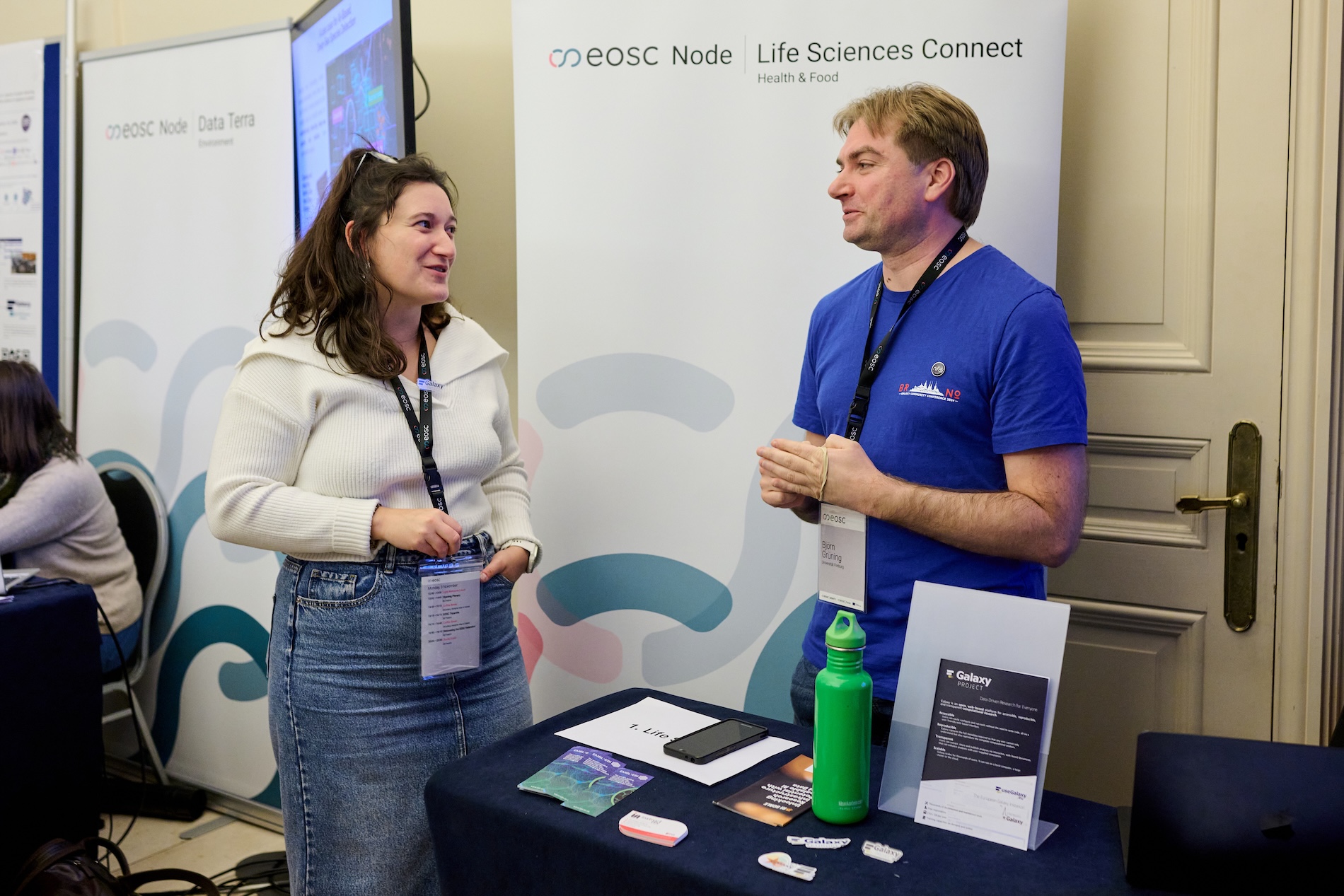
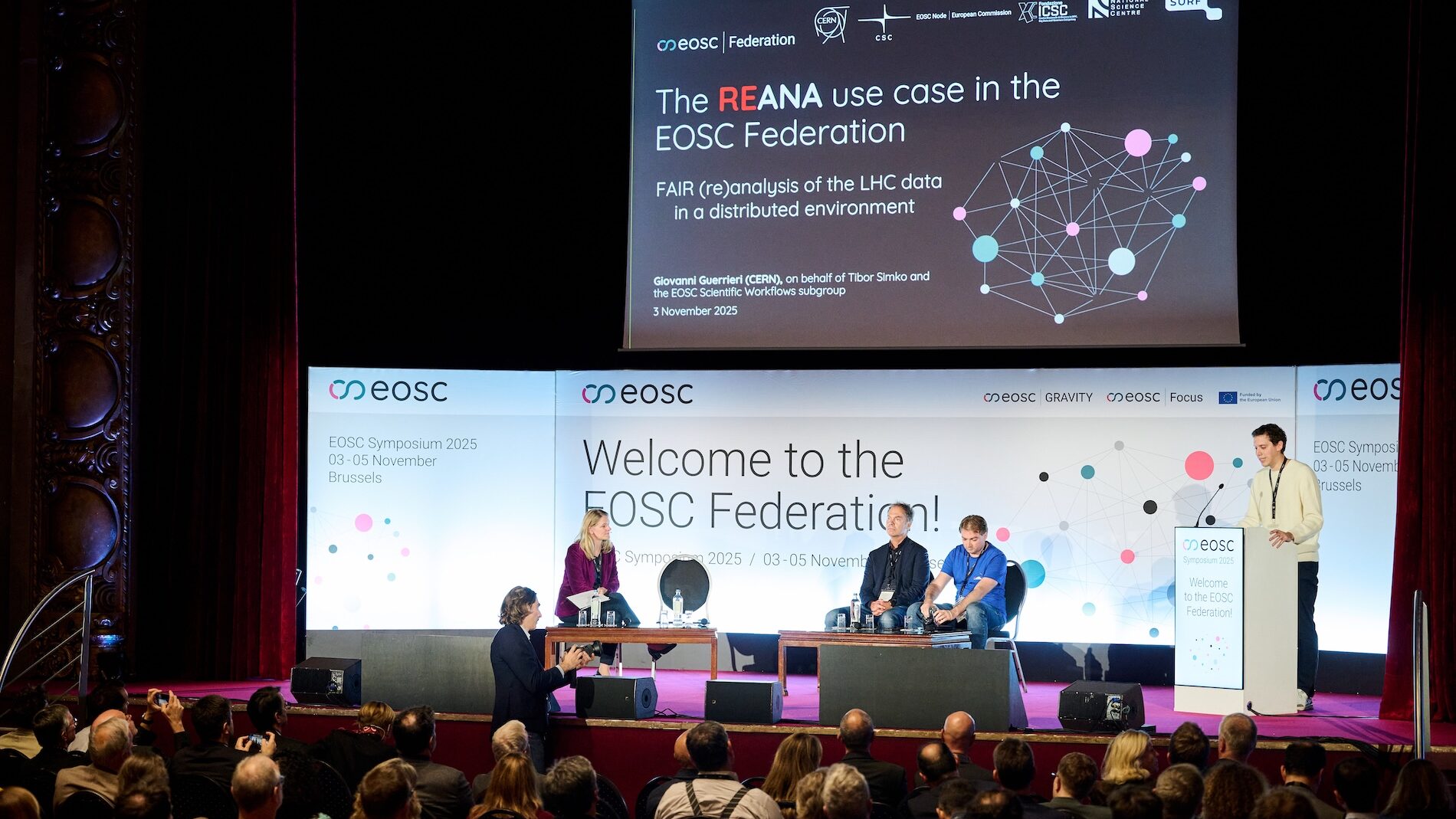
The coordinators of three of the EOSC Federation’s cross-node scientific use cases took to the stage to give the EOSC community its first look at an operational web of FAIR data and services, and the ways in which it can transform scientific research in Europe. Giovanni Guerrieri of CERN, Björn Grüning of Galaxy Europe/University of Freiburg, and Andreas Türk of Europe’s biobanking research infrastructure, BBMRI-ERIC each demonstrated in real time how a researcher will use the EOSC Federation. Beginning at the initial EOSC Node access points, using EOSC’s own federated authentication and authorization infrastructure, and then venturing into the Nodes’ data repositories, making use of available services—like compute power and AI layers—the researcher workflows highlighted the potential the Federation’s interoperability brings to scientific discovery.
In the case of CERN, Guerrieri demonstrated how an individual researcher could use EOSC to “re-create” the landmark discovery of the Higgs Boson; Grüning showed how massive imaging datasets could be processed using reusable Galaxy workflows to address gaps in knowledge across major scientific disciplines like astrophysics and climate and marine science; and Türk demonstrated how prostate cancer screening can be revolutionised by creating a secure space where AI diagnostic models validated in one hospital can be used to perform real-time diagnoses of tissue images from another.
EOSC Federation Memorandum of Understanding connects Europe’s “digital backbone”
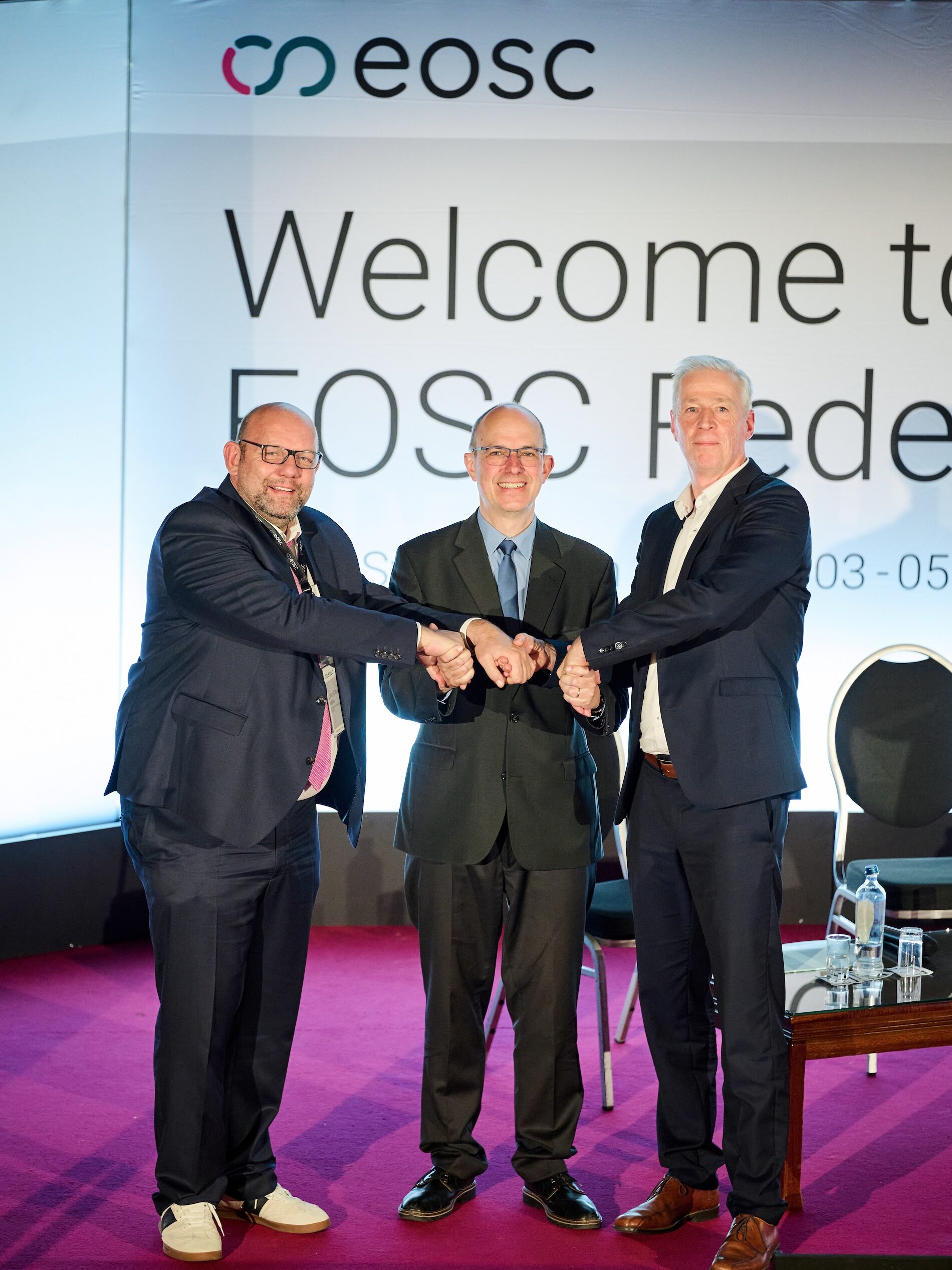
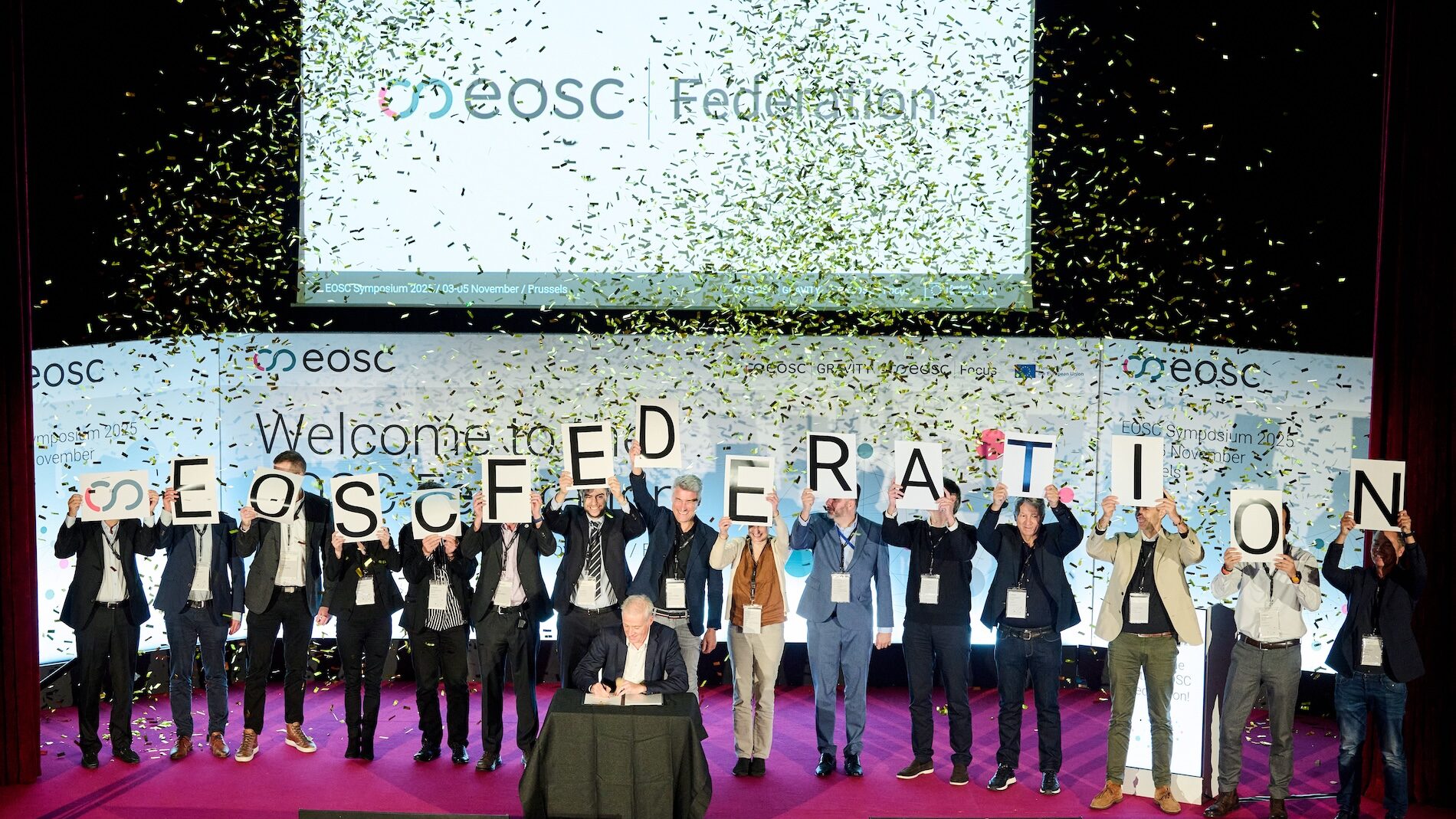
The Symposium’s main event closed out Day 1, when the 14 coordinators of the EOSC Federation’s first wave of EOSC Nodes were called up to join EOSC Association President Klaus Tochtermann and Co-Chair of the EOSC Federation’s Build-up Group Bob Jones on the stage. In the midst of confetti and fanfare, Tochtermann signed the EOSC Federation’s Memorandum of Understanding(MoU).
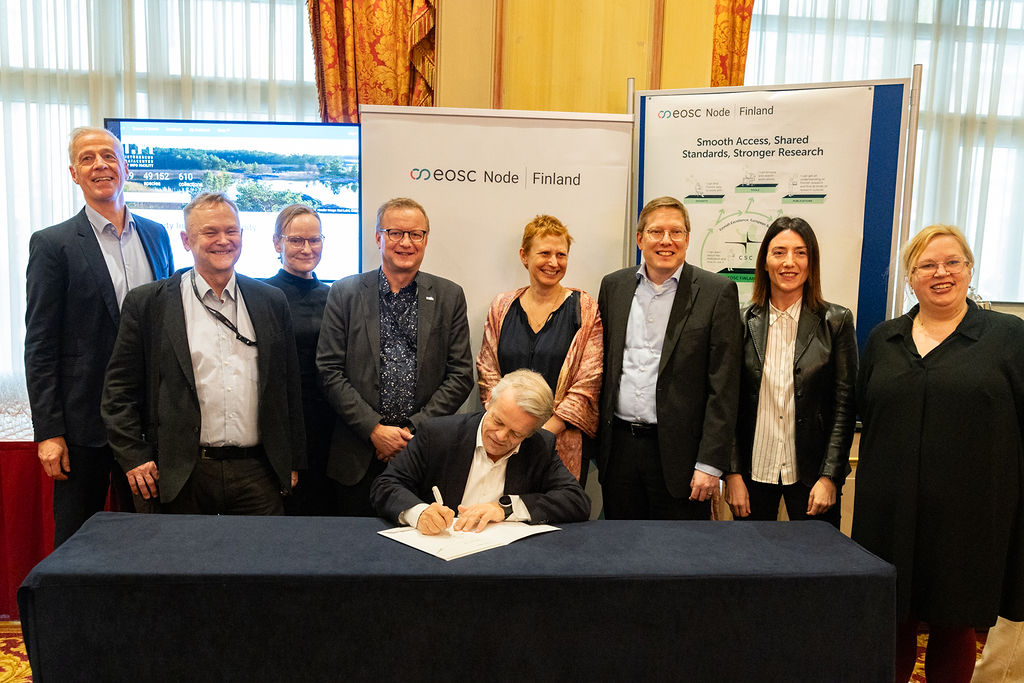
This agreement, to be signed by 13 candidate EOSC Nodes and EOSC-A, marks the culmination of eight months of hard work and coordination carried out on an in-kind basis by the dozens of European organisations standing behind the nodes. As champions of the European research community, these organisations, together with the European Commission’s EOSC EU Node, which is also invited to sign the Memorandum, have established the technical and organisational foundations for the future of Open Science in Europe.
“This moment shows what shared stewardship of Europe’s research ecosystem can achieve. The EOSC Federation will not only connect technical infrastructures, but also people and principles in a corresponding social infrastructure,” said Tochtermann.
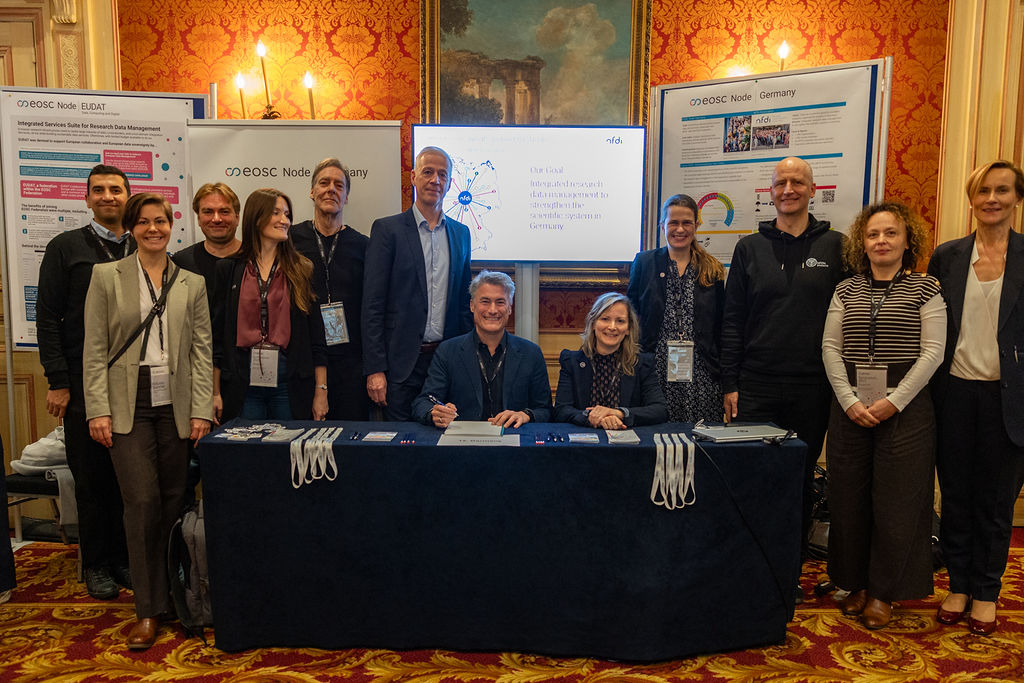
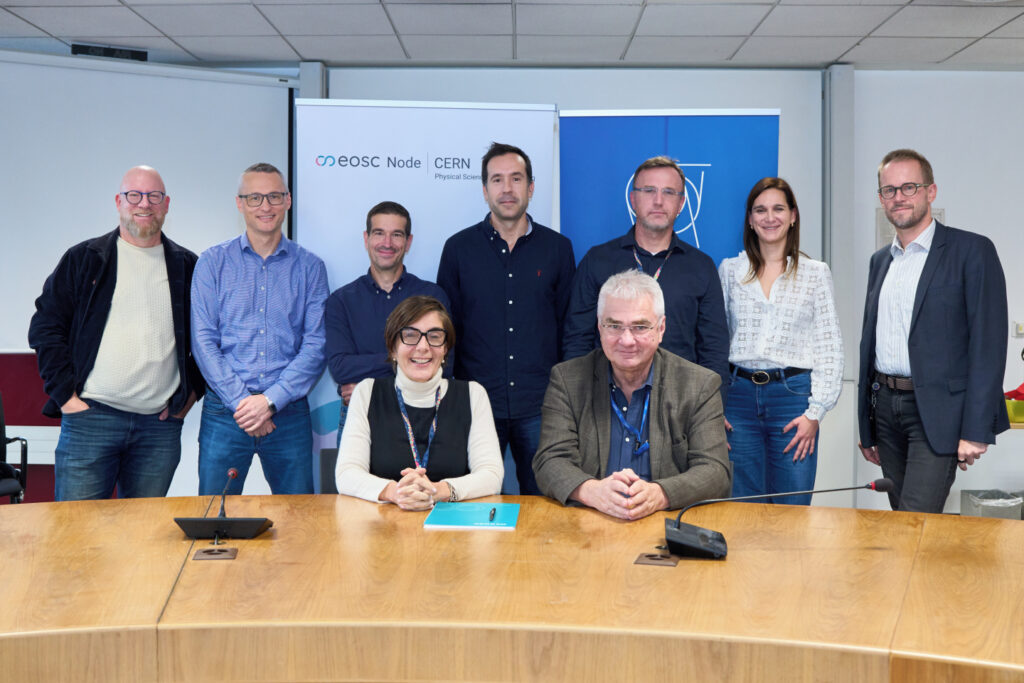
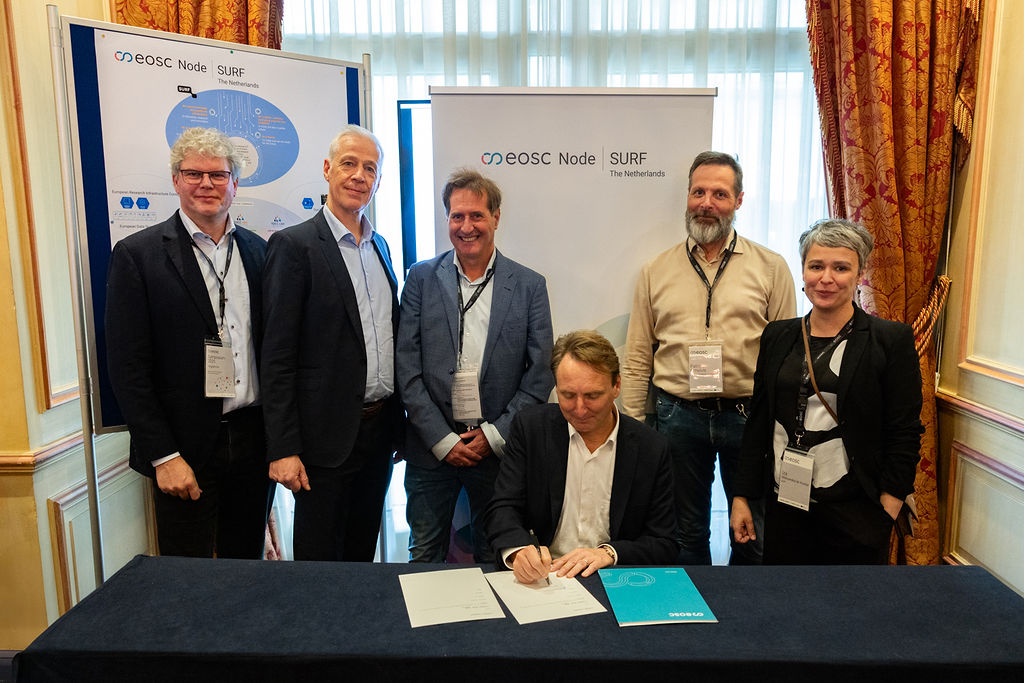
The following day, mini signing ceremonies were held for the Dutch (SURF), German (NFDI) and Finnish (CSC) national EOSC Nodes during breaks in the programme (CERN signed the MoU on 10 November).
“EOSC is all of us”
The strong sense of momentum from Day 1 carried through to the second day as the EOSC community turned its focus to the expansion and consolidation of the EOSC Federation. Discussions throughout the day examined the current and future governance frameworks for the EOSC Nodes, how to strengthen coordination across them, and how to align stakeholders around the next steps of implementation.
A much-anticipated moment then arrived with the presentation of the EOSC Tripartite Governance’s new enrolment call for the second wave of EOSC Federation candidate Nodes. The next wave of candidate Nodes will be sequenced by the Tripartite in spring 2026. The enrolment call was presented together with two calls by the EOSC Gravity project to support the growth of the Federation with a total of €1.6 million in cascading grants.
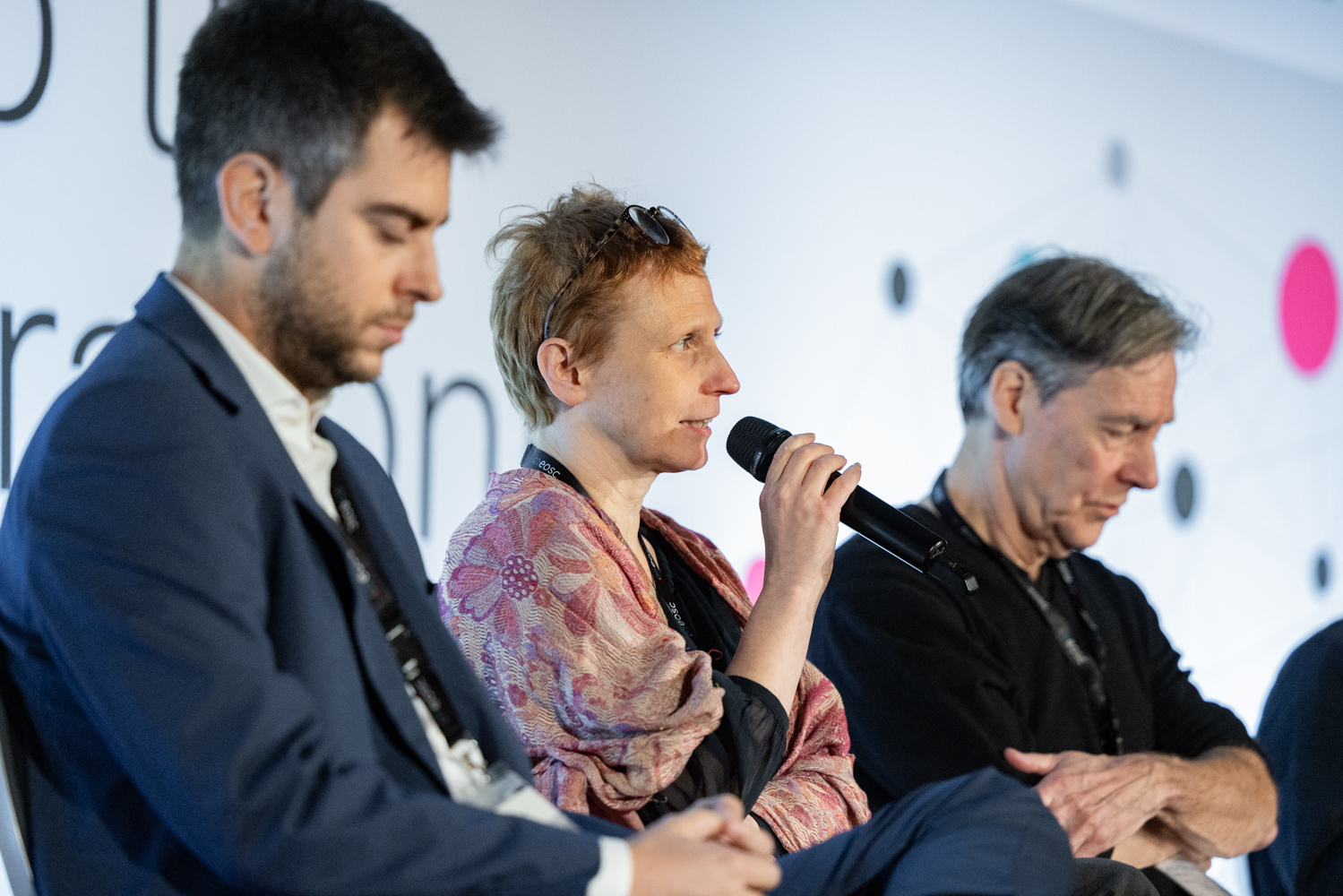
The themes of community collaboration and growth were continued in the day’s keynote address by Enrica Porcari [see video], incoming Chief Information Officer at CERN, who began by reflecting on CERN’s long-standing ethos that “knowledge only grows when it is shared”. Affirming CERN’s commitment to continue its investment in Open Science, Porcari concluded that the question is no longer whether we can afford to invest in collaborative science, but whether we can afford not to.
“This is the moment for federations like EOSC, the moment to open gates and break down barriers, and to resist the temptation toward isolation that comes when resources are scarce,” she said. “We have moved to a world where ‘federation’ is the keyword for success.”
In response to questions suggesting that CERN’s considerable gravitational mass might envelope EOSC entirely, Porcari dismissed the idea out of hand, emphasising that “EOSC is all of us”. The Symposium served as a poignant reminder of the breadth of the collaborative, participative effort with more than 20 percent of the researchers, policy makers, funders, and representatives of Europe’s major research organisations and data infrastructures engaged as speakers and panellists in the event’s 21 interactive sessions.
“’Federation’ is the keyword for success”
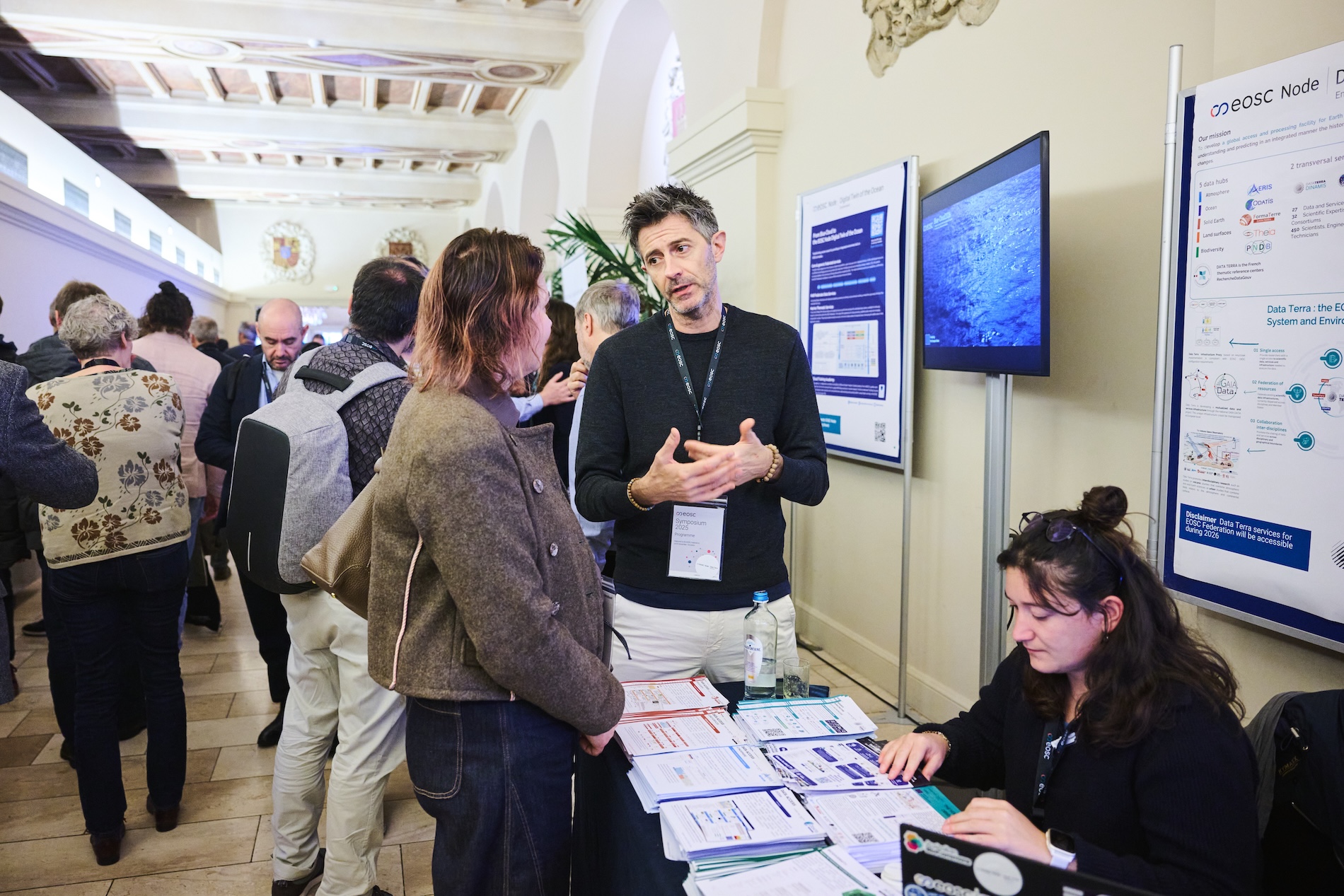
The Symposium’s community lightning talks and demos then translated Porcari’s words into action, convincingly demonstrating what success for the Federation might look like across a broad sampling of research areas. Featured among the 12 selected presentations were innovative scientific use cases and service offerings that showcased highly specific examples of how existing and anticipated EOSC Nodes will enable cross-disciplinary collaboration to empower researchers with unprecedented access to FAIR data and interoperable services.
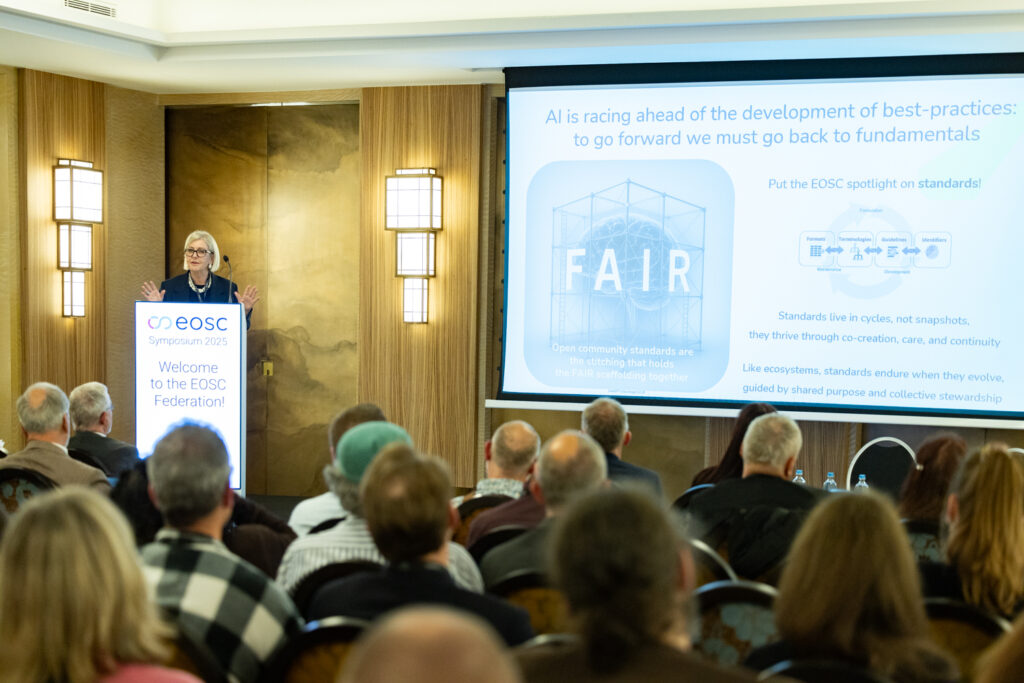
The afternoon’s breakout sessions explored both the practical and strategic dimensions of the EOSC Federation—from the opportunities and challenges of building EOSC Nodes to broader topics such as cybersecurity, the interplay between FAIR data and AI, EOSC’s positioning among Europe’s other Data Spaces, EuroHPC and the continent’s AI factories, and the essential role EOSC will play in ensuring European data sovereignty.
Developing EOSC properly: Global data resiliency amidst the digitalisation of research
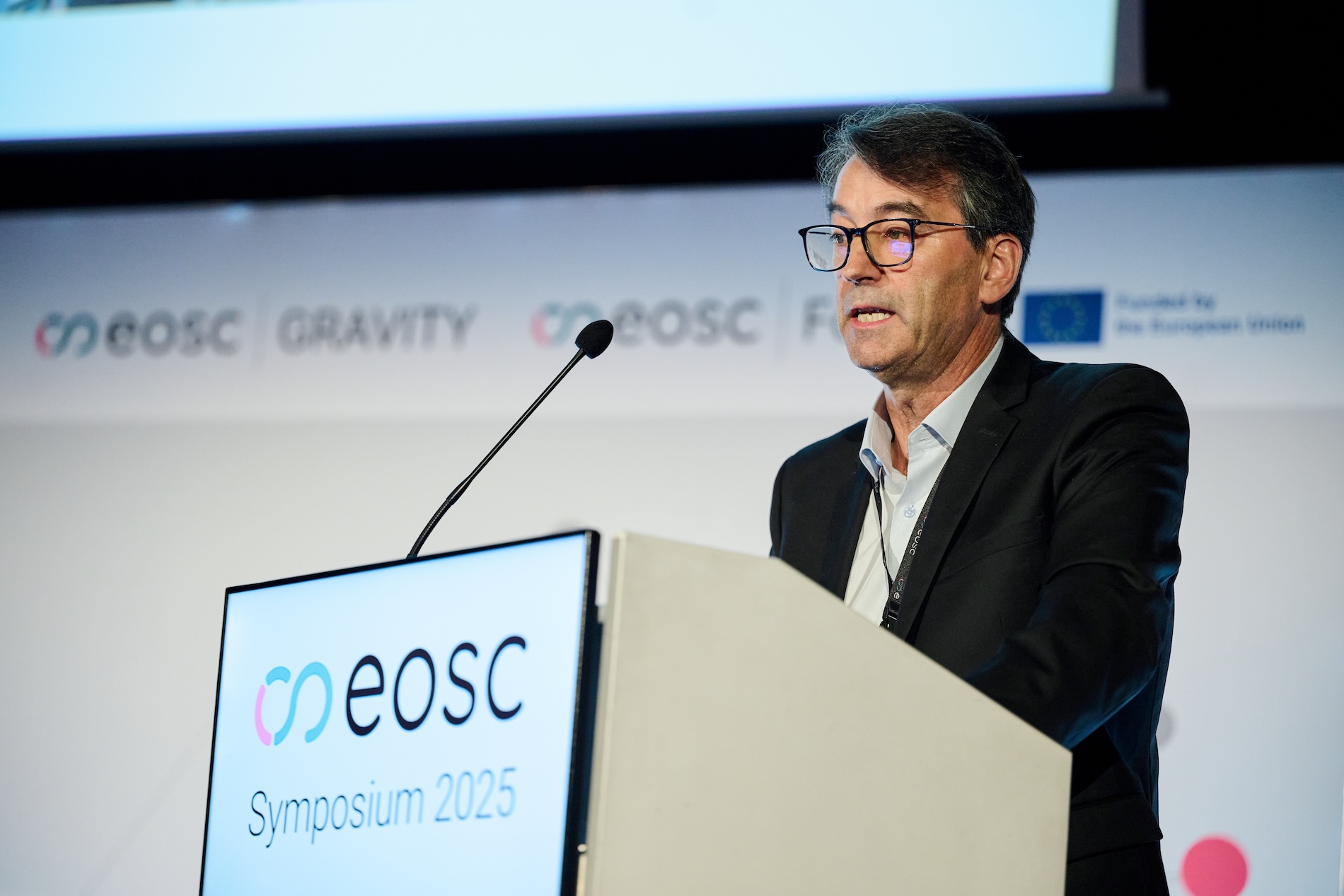
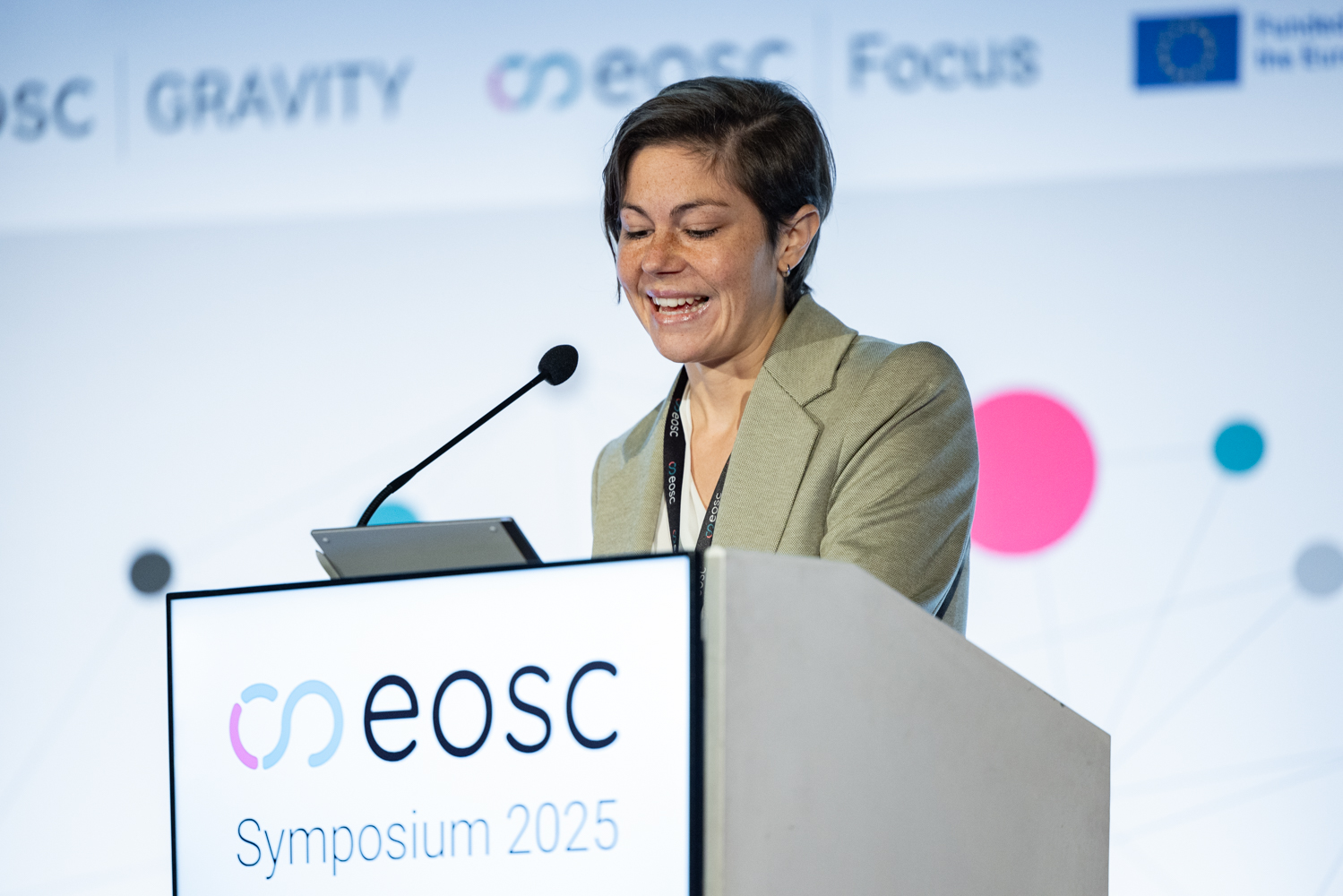
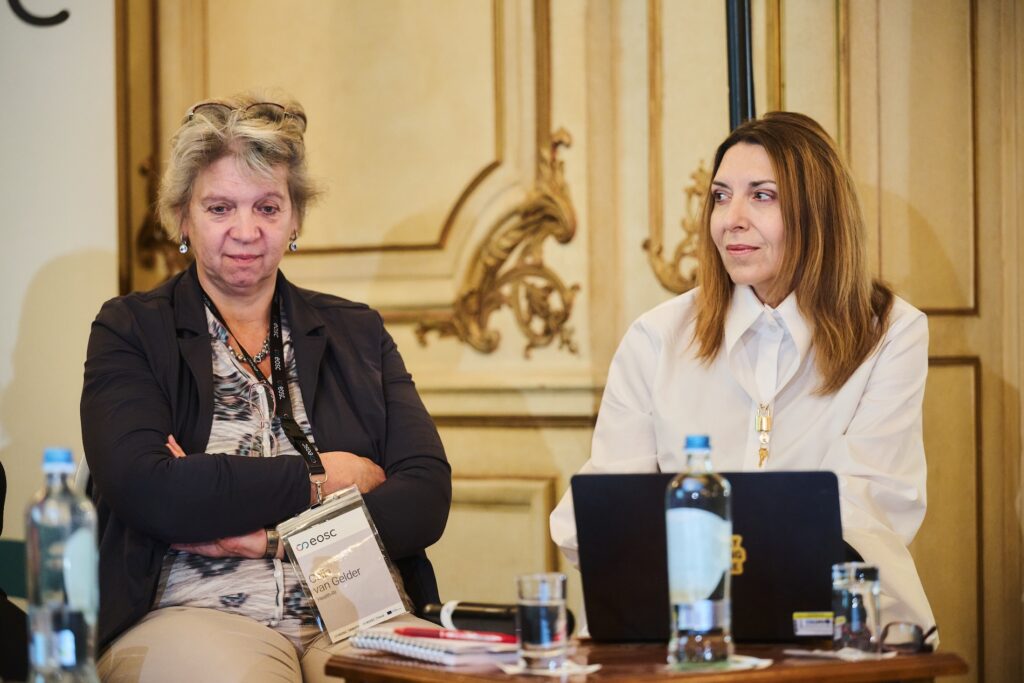
Opening Day 3 was the final keynote speaker, Shelley Stall, Vice President of the American Geophysical Union’s (AGU) Open Science Leadership Program. Stall electrified the Symposium participants with a rousing call to arms for global cooperation to secure the resiliency of scientific data. Stall began by reflecting on the journey from AGU’s position statement in the 1990s—when it became the first society to declare that Earth’s space and environmental science data are a world heritage—to the rapid and seismic disruptions to the US science policy and funding landscape in 2025.
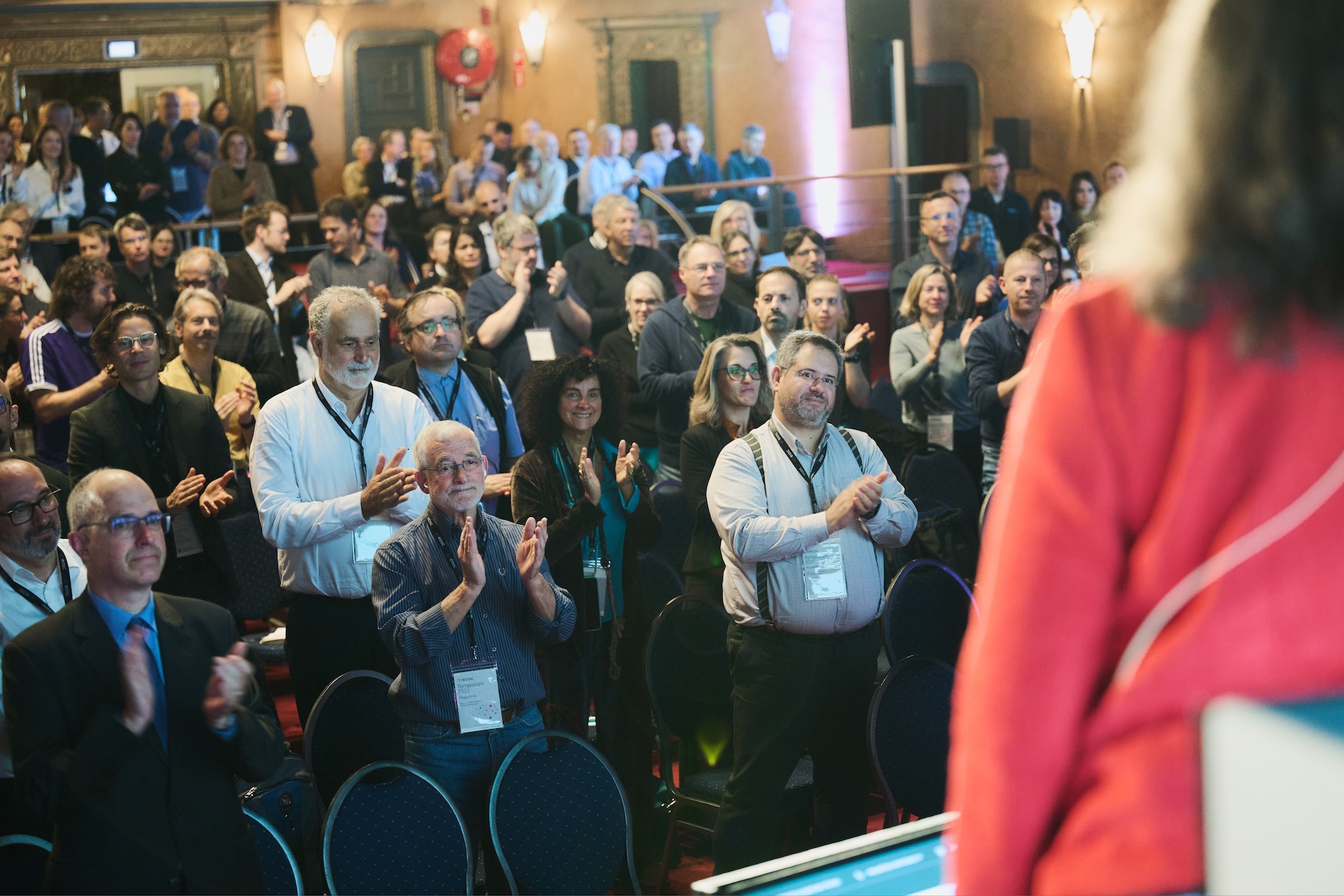
While government administrative priorities will change, and funding may shift, said Stall, “let’s not be frozen into complacency”. Citing the lost jobs, defunded tools, and deteriorating quality of data that come with funding disruptions, Stall made the salient point that sub-optimal operational management of research data is tantamount to its suppression. She concluded with a call to use the current global political challenges as an opportunity to focus on “building what we need”, and reviewed active calls from US organisations for overseas cooperation on new models for global data resiliency. The Symposium’s participants showed their appreciation for their American colleague with a standing ovation.
The meeting energetically rolled directly into a panel discussion on EOSC’s central role in the digitalisation transformation of the European research ecosystem by endeavouring to build a trusted, secure, and sovereign environment for high-quality FAIR research data and services, featuring speakers from the European Commission, GÉANT and Fraunhaufer IWM. Meanwhile, the final breakout sessions provided focused discussions on national initiatives accelerating EOSC, improving frameworks and incentives to entice researchers to participate in EOSC, and enhancing access to EOSC and the Federation for innovators, start-ups, and academic entrepreneurs. Sessions also examined the growing need for skills development and training, equipping researchers, data stewards, and support staff to thrive in an Open Science environment.
“Fast and furious!”
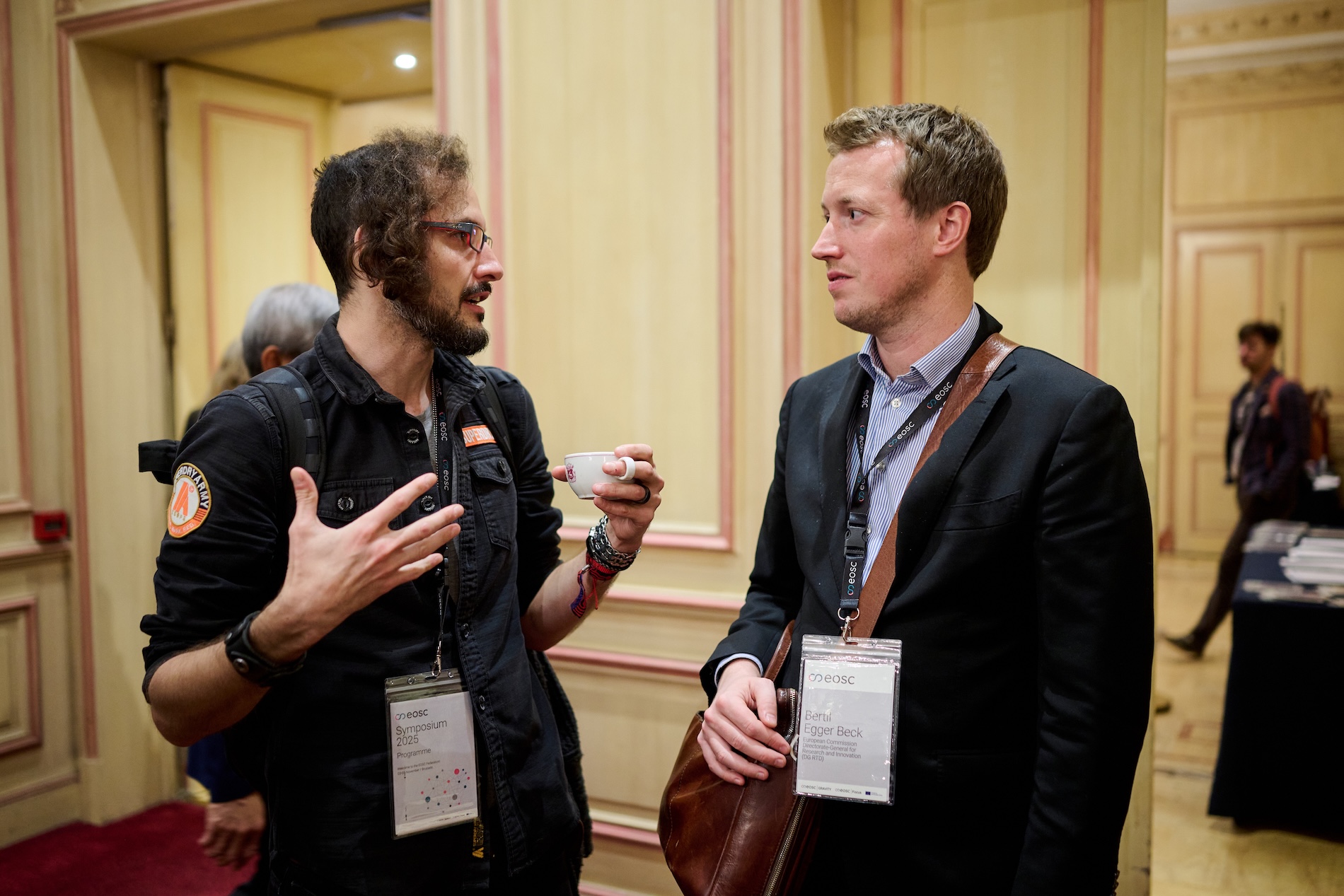
It was in the discussion on national-level contributions that one speaker lamented that his presentation on day three had already been overtaken by events on days one and two, rendering it outdated. “Fast and furious!” replied his fellow panellist, echoing Lemaître’s call for speed in the Symposium’s opening speech. But speed does not denote carelessness, as Lemaître noted on the part of the Commission, as one half—together with the EOSC Association—of the European Partnership driving the development of EOSC.
“As Mr. Heitor rightly noted,” said Lemaître in a reference to the widely influential Heitor report on European competitiveness, “the European Open Science Cloud clearly has the potential to become the most widely used infrastructure in Europe—if developed properly. And let me add, together we are on our way to developing it properly. The remarkable progress that you will be showcasing in this symposium in building the EOSC Federation demonstrates that Europe is leading the way towards a new model for open, trusted science.”