
The Albanian Academic Network (RASH) has been promoting Open Science through national efforts and EU-supported projects, navigating a complex and evolving landscape. Despite ongoing limitations, interest in and engagement with Open Science are increasing across institutions and research communities.
Arjan Xhelaj, CEO and Chairman of RASH, discusses how the organisation continues to build momentum by fostering strong partnerships and aligning Open Science with national research priorities. Conducted by Kaori Otsu (CREAF) and Isabel Caetano (EOSC-A), this interview is part of a series coordinated by the EOSC Focus project, in which we highlight the role of EOSC-A Mandated Organisations, and showcase their activities aimed at the implementation of EOSC.
What is the role of your organisation and what motivated you to become a Member of EOSC-A?
The Albanian Academic Network (RASH) is a National Research and Education Network (NREN) created by an international agreement of the Albanian parliament. It serves as an interinstitutional centre for ICT services and networking dedicated to higher education and research, with a focus on the development and innovation in ICT and digitalisation of academic and research processes. However, we are not directly involved in research.
The main motivation to become a member of EOSC-A was to push the agenda of Open Science (OS) and to bring a model that makes it possible for universities to share data and make them open for the region and for collaborations with other partners.
Some years ago, our Ministry of Education, Sport and Youth, and the European Commission requested census data for research. Working together with the National Agency for Scientific Research and Innovation (NASRI) and the Institute of Statistics (INSTAT), we created a portal to facilitate this data collection and the preparation and publication of statistics about Research in Albania, https://kerkimi-shkencor.rash.al.
Your country participated in the NI4OS project. What results did you achieve?
The NI4OS project represented the initial phase of assessing the state of research in Albania, aiming to advance not only the EOSC agenda but also the broader national research agenda. Our objectives were to motivate the Albanian research community to make their work more visible and open, thereby encouraging international collaboration. We promoted the principles of Open Science — that research data should be freely accessible to others, including industry. Together with NASRI, we organised around 20 training sessions for academic and research staff, focusing on Open Science, FAIR principles and the usage of OS platforms. RASH has also developed a dedicated portal for Open Science in Albania, the Albanian Initiative for Open Science (AIOS).
One of the key outcomes was the increased awareness among researchers and universities in Albania about the importance of visibility and international engagement. We encouraged researchers to collect and share their data, and make them openly available so that they could benefit others across various fields.
The project opened up an opportunity for us to collaborate with partners from Greece. At that time, Albania lacked a dedicated research agency capable of fully supporting such initiatives. The existing structure, including the NASRI and the Ministry of Education, Sport and Youth, was limited in capacity and focus. However, institutional changes have since strengthened Albania’s research landscape, especially in areas like natural sciences and nanotechnology.
How has your involvement in Horizon Europe projects been?
I have encouraged colleagues to support Horizon Europe initiatives, particularly in the Balkans and Albania. We initiated the NI4OS and NOSCI platforms to strengthen university capacity and promote Open Science. Despite formal agreements and internal funding, progress has been slow.
We have developed an in-house platform UCRIS based on Open Science principles and the Dublin Core model, and aim to integrate it into a national research information system. This system targets several areas, such as bibliometric data, research criteria, spin-off and entrepreneurship in Research, national research infrastructures, internationalisation and Joint programs, human resources criteria and more.
What kind of engagement activities have you implemented so far to promote Open Science in Albania?
We have embedded Open Science principles into our institutional bylaws and strategic planning, with a particular focus on the Albanian context. We have managed to organise a few workshops, supported in part by the NI4OS project, to present our platform and to promote Open Science methodology. However, broader implementation has been constrained by the lack of state funding. As a Mandated Organisation, we have found it very difficult to finance all necessary activities independently.
How is NOSCI currently functioning, and what are your thoughts on its future development and sustainability?
NOSCI formally exists, but it operates largely on a voluntary basis, without regular meetings or stable funding. The COVID-19 pandemic disrupted many of our planned activities as everything had to be done online. While we continued some initiatives afterwards, the anticipated funding from public agencies and science strategies have not materialised.
We are a development centre, not a state agency, and our operations are based on service agreements with universities. This means we are financed through specific service activities and cannot easily reallocate funds for broader NOSCI initiatives. Any additional work relies on the small amounts of financial support remaining from completed projects.
To ensure sustainable progress, broader institutional support is essential, ideally at both national and regional levels. Programmes such as Erasmus+ could offer new opportunities, and a relaunch of the NI4OS project could be highly beneficial. However, institutional commitment is key. Without it, it remains difficult to scale efforts or conduct vital face-to-face engagement activities. The vision for NOSCI exists, but support and funding will determine whether it becomes a fully functional national Open Science platform.
The challenges you’ve mentioned – lack of resources, capacities, and support – lead us to another question: What could be your priorities in the short term?
From my perspective, a tripartite arrangement could work – engaging the Ministry and NASRI, the universities, and the EU Office in Tirana. We need a strategic partner, perhaps even a patron or sponsor, to push this forward. We do not need just financial support. We need strategic support, too.
There are models where an experienced institution acts as a patron, mentoring a smaller organisation within a network. This helps push the agenda forward and find ways to finance it through governmental or European instruments.
At institutional level, particularly within universities, what could be done to tackle these challenges?
We need to establish a network of NOSCIs, i.e. nodes at each university, even the small ones. These could form a national network, starting with the 12 public universities and a few larger private ones. The first step would be to train the nodes and create a shared platform for collecting and managing data.
The rest follows from what we have already attempted, even though results have been mixed so far. This approach must be combined with efforts to internationalise higher education in Albania. If universities have good data systems, they might improve their rankings and visibility, making them more attractive to international students and partners.
Just talking about Open Science is not enough. Open Science needs to be attractive. If we can show universities that contributing to such a system improves their standing, their collaboration potential, and their reputation, they will be more willing to participate.
We also need to train staff to write and manage projects, maybe through partnerships with Members who have experience with Erasmus+.
Are there policies or legal frameworks in Albania that support Open Science, and how are they being implemented?
Yes, there are some legal and strategic provisions in place. Open Science is mentioned in a few articles of Albania’s national science strategy and the Law on Scientific Research. While these documents are not exclusively focused on Open Science, they do contain relevant references, particularly around ensuring that publications financed through government funds or research agency calls must be made openly accessible. These articles show clear intent, but the extent of their implementation remains limited.
Together with NASRI, we have tried to push this agenda further, especially by proposing that Open Science requirements be made part of eligibility criteria for public funding. Support from national institutions has helped to keep Open Science on the agenda, but actual enforcement is still lacking. This policy implementation gap is not unusual. We see similar challenges in many countries, but without clear implementation mechanisms and resources, it is difficult to make real progress.
There is also a broader institutional gap. Universities often lack the internal capacity or incentive to adopt Open Science practices unless they see direct added value, such as improving international rankings or attracting more foreign researchers and students. Financial instruments and EU support mechanisms could help, particularly through capacity-building initiatives at university level. But sustained engagement is needed. One-off projects or temporary partnerships tend to fade quickly if not embedded within a long-term strategy. That is why aligning Open Science with broader university development goals is essential for a meaningful change.
What are your next steps, and how do you see the future of EOSC and Open Science in your national context?
National collaboration remains essential for advancing the Open Science agenda. We need to initiate pilot projects at selected universities to start embedding these practices in a practical way. The biggest challenge is sustainability. Without institutional support and dedicated resources, it is difficult to make real progress.
From our experience, service-based models have proven highly effective in raising national awareness and engagement. Active involvement in such networks strengthens our position in broader European discussions.
In our case, we are involved in several organisations and initiatives. We are members of the European University Information Systems Association (EUNIS), we have signed the OpenAIRE agreement and are engaged in efforts like student metadata with the Groningen Declaration Network. These affiliations provide visibility and platforms to advocate for Open Science nationally.
We are also beginning to see tangible outcomes, such as our first HPC cluster from one of our RASH members being connected to CERN through GÉANT connection for research data purposes. This is a meaningful step forward for our infrastructure and international integration.
Looking ahead, we hope to organise an EOSC Info Day or a National Tripartite Event in Albania, possibly in collaboration with the EU Delegation Office in Tirana. Such events are important not only to raise awareness but also to create political momentum. Ideally, this could take place after the new government cycle begins in the autumn, which may offer new opportunities for support.
About Arjan Xhelaj
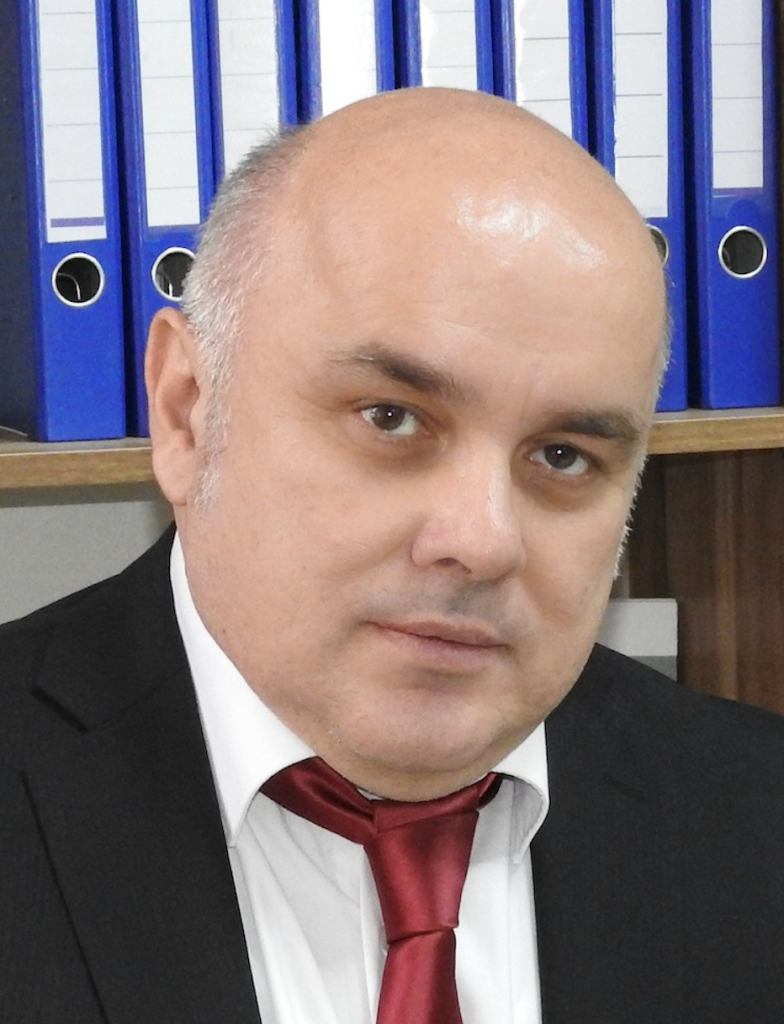
Arjan Xhelaj is the CEO and Chairman of the RASH Board. Since the organisation’s inception in 2011, he has led its institutional development. He is an experienced senior manager with a strong international background in education, administration, and industry. His expertise spans leadership, international relations, research, education, and innovation. Arjan has served on numerous governing and advisory boards and committees across the European Union, maintaining close connections with the European Commission and other international organisations and networks. He holds an Engineering Diploma in Applied Physics and Informatics, as well as a Doctorate in Biophysics and Informatics from Germany.
About Albanian Academic Network
Established by an intergovernmental agreement of the Albanian Parliament between Albania and Italy, the Albanian Academic Network (RASH) began its institutional development in 2011 as Albania’s National Research and Education Network (NREN). Internationally, it became a member of the Trans-European Research and Education Network Association (TERENA), later known as GÉANT. In 2018, following an agreement between the rectors of all public universities and the Ministry of Education and Research, RASH was reorganised as an autonomous inter-institutional R&D centre for ICT and networking.