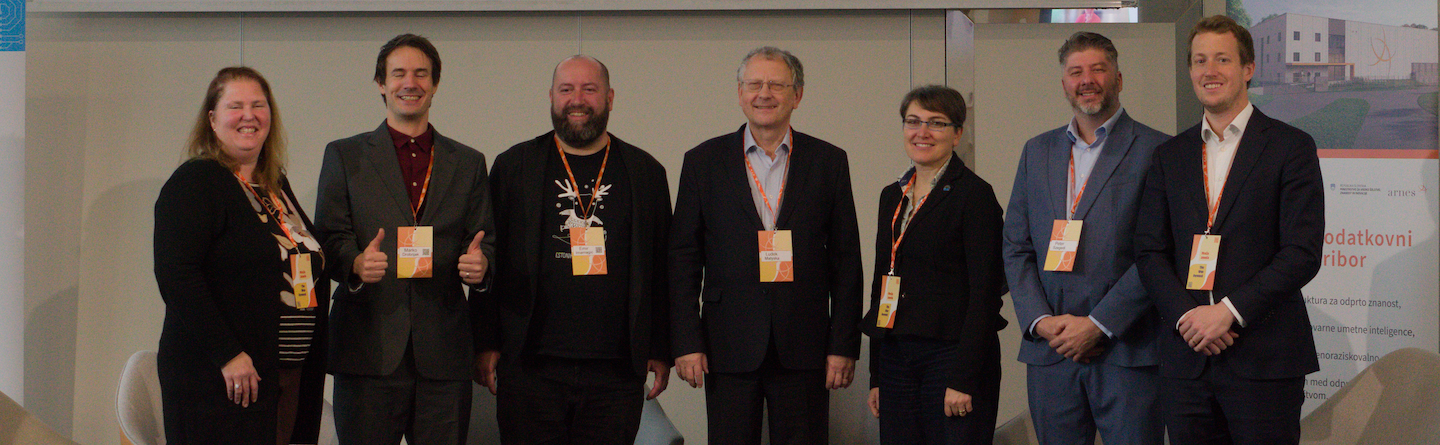
LJUBLJANA — The Slovenian National Tripartite Event (NTE) held on 21 November 2025 brought together experts to discuss the future of the EOSC Federation and the roles of research infrastructures, high-performance computing (HPC) as well as national EOSC Nodes.
With dynamic panels and strong national commitments, the event showcased Slovenia’s growing engagement in shaping an open, interconnected European research ecosystem.
Held on the second day of the Slovenian Open Science Days 2025 within the Knowledge Network 2025 conference, the event gathered representatives from the European Commission, the EOSC Association, research infrastructures, supercomputing centres, and Slovenia’s Open Science community.
Shared commitment to an Open Science ecosystem
Opening the event, Igor Papič, Minister of Higher Education, Science and Innovation, underlined the Slovenian government’s sustained support for research and infrastructures. This was followed by remarks from Bertil Egger Beck (European Commission, DG RTD), Sara Garavelli (Director of the EOSC Association), and Marko Bonač, delegate of ARNES – the EOSC-A Mandated Organisation for Slovenia. They highlighted Slovenia’s infrastructure development, the importance of embedding Open Science within everyday research practice, and the official launch of the EOSC Federation at the EOSC Symposium.
Marko Bonač announced two major developments relative to ARNES: the construction of a new data centre hosting Slovenia’s next-generation HPC system and the coordinated efforts to form a Slovenian EOSC Node.
Collectively, speakers reinforced a shared commitment to building a coordinated, sustainable Open Science ecosystem in Slovenia and across Europe.
Research Infrastructures, EOSC, and supercomputing
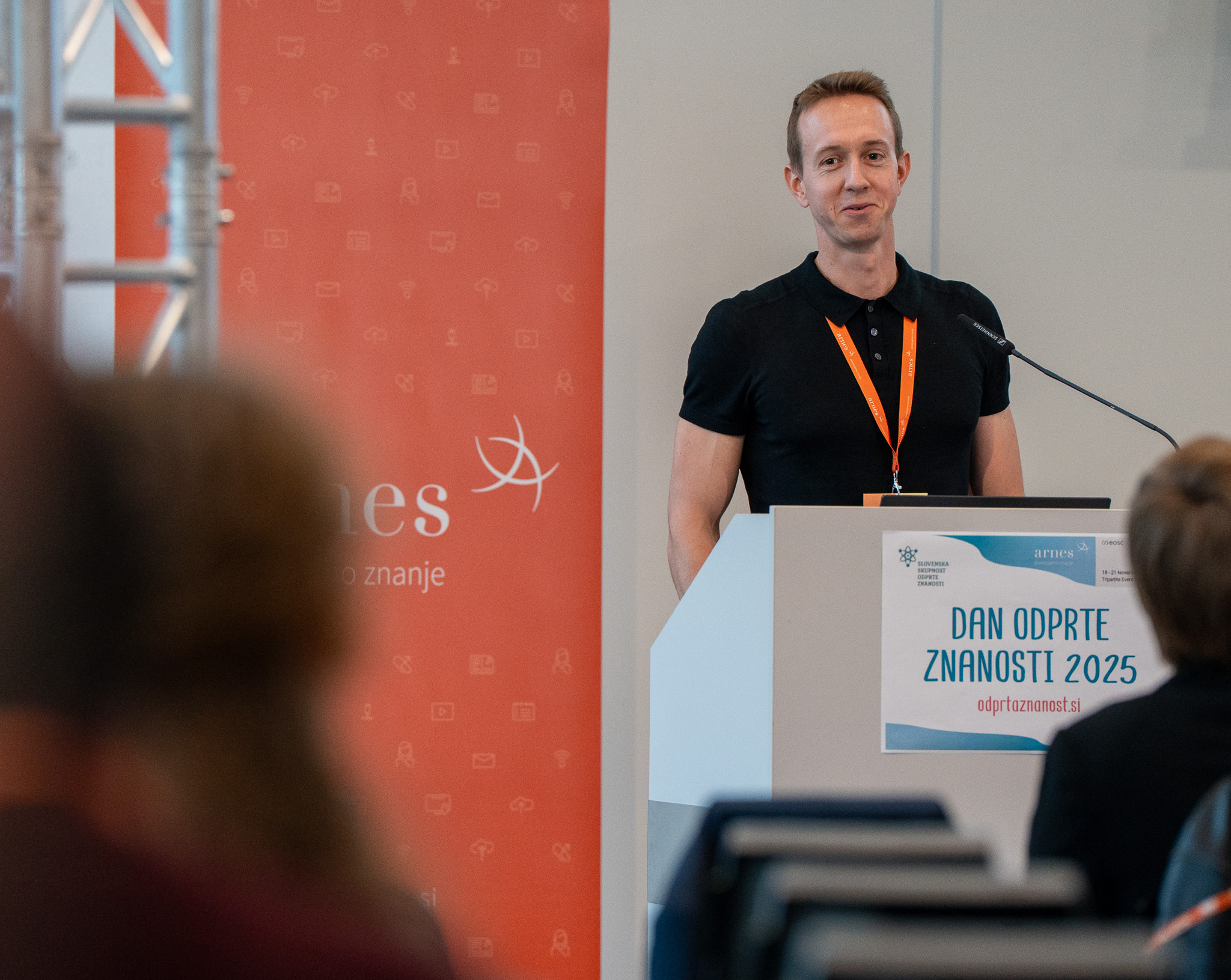
The first panel explored how research infrastructures and supercomputing jointly support the development of EOSC. Moderator Marko Drobnjak (ARNES) stressed the importance of interoperability to ensure researchers and infrastructures remain seamlessly connected.
Bertil Egger Beck opened the session with a presentation on EOSC’s role in EU policies, noting the EU’s investment of €500 million into EOSC since 2021. He described EOSC as a central enabler for Europe’s two million researchers to share and analyse results, and highlighted the EOSC Gravity open calls that will support future EOSC Nodes and onboarding of services to the EOSC Federation.
Péter Szegedi (European Commission, DG CNECT) celebrated the rise of European supercomputers in global rankings and emphasised the importance of European data spaces and AI Factories. He showcased the EOSC EU Node as a top-level repository for European research resources.
Tiziana Ferrari (EGI Foundation) presented EGI’s role in supporting research infrastructures and contributing to a federation accessible to all researchers. Stressing that “policy has to marry science, and science has to marry policy,” she underscored the vital link between researchers and stakeholders.
Samo Stanič (Slovenian National Supercomputing Network) explained Slovenia’s national strategy for Open Science, aligned with EOSC and FAIR principles. He highlighted SLING as the national coordinator for HPC resources and announced plans for a new HPC centre in Maribor, expected to open in 2026. He noted that HPC and AI have become cornerstones of modern science, public services, and competitive industry.
Sašo Džeroski, head of the Slovenian AI Factory, presented AI use cases supporting scientific discovery, emphasising that “AI is helping science address the global challenges of humanity”.
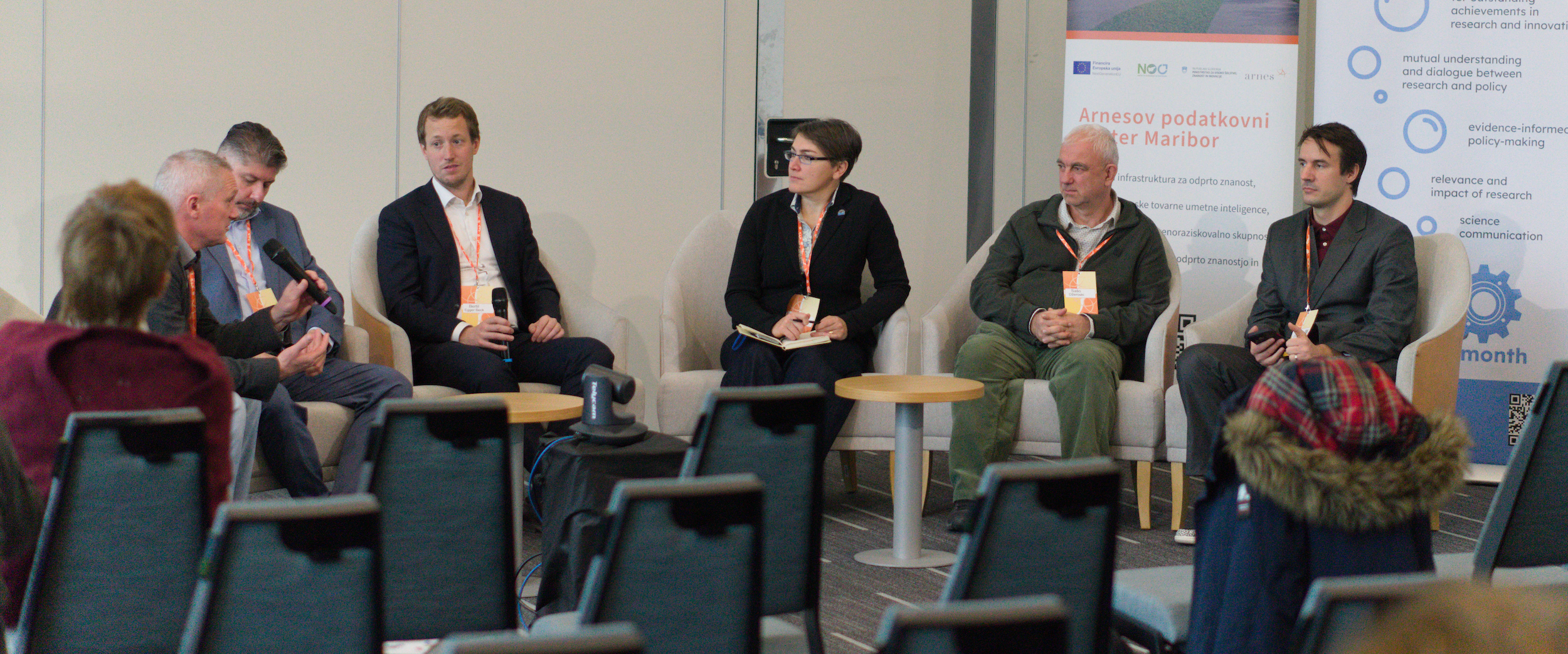
A vivid round-table followed, reinforcing the importance of interoperability, coordinated investment, and strong links between data services and HPC infrastructures. Supercomputing emerged as a critical catalyst for data-intensive research and a key enabler of the EOSC Federation in the future.
Building the EOSC Federation: The role of national EOSC Nodes
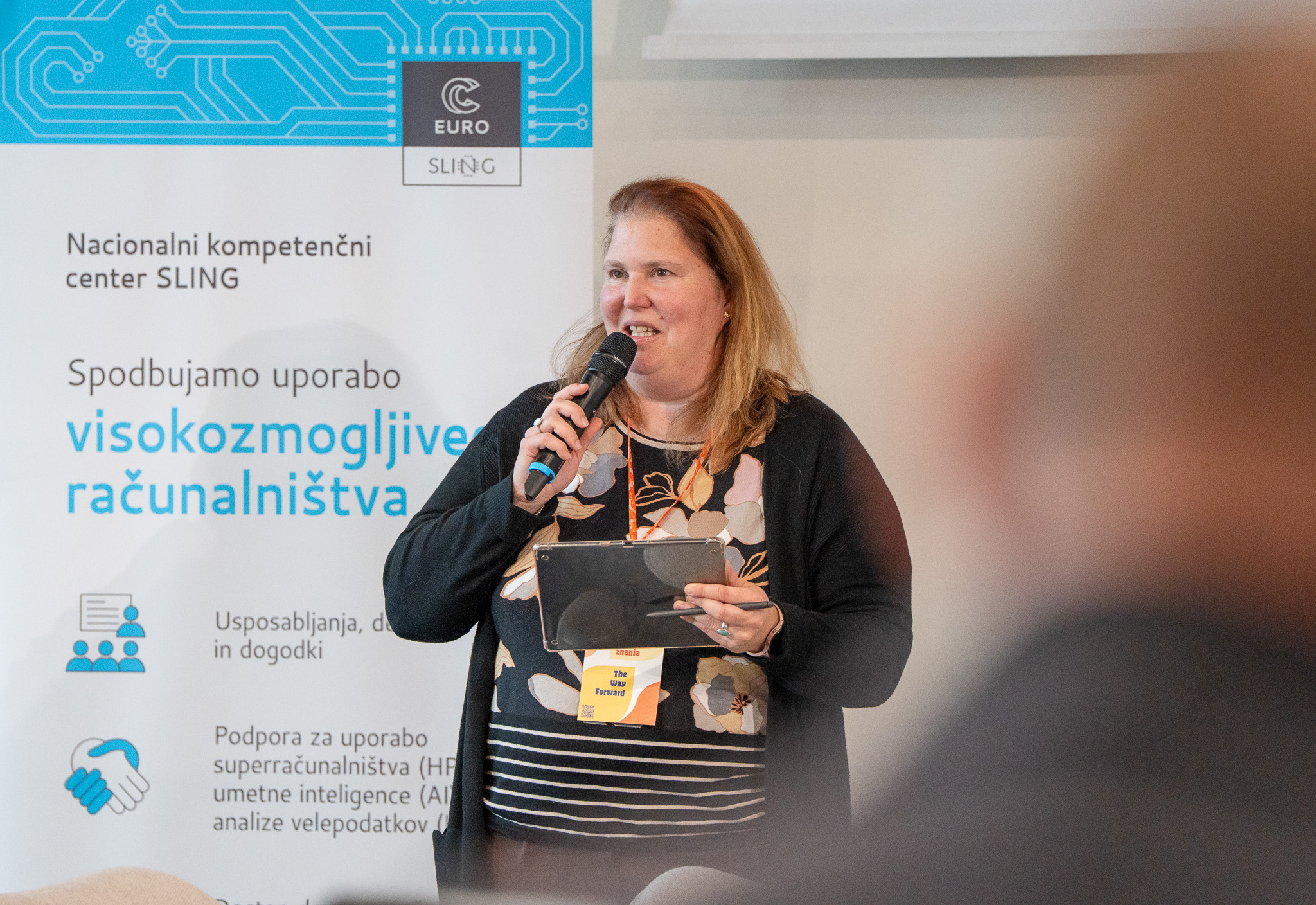
Sara Garavelli, Director of the EOSC Association, introduced the main principles of the EOSC Federation and summarised the work of the EOSC Federation Build-up Group. She outlined the enrolment criteria for future EOSC Nodes, the role of EOSC Gravity open calls, and presented the Finnish model built on a national, centralised infrastructure.
Experiences from Poland and the Czech Republic offered insights into overcoming fragmented infrastructure landscapes, strengthening national coordination, and ensuring government involvement in building EOSC-aligned systems.
The discussion included strong participation from attendees and concluded with remarks from Marko Drobnjak, who highlighted Slovenia’s ongoing efforts to form an EOSC Node and stressed the importance of human resources.
This session underscored the role of national EOSC Nodes as providers of trusted data services that support FAIR practices.
How supercomputing and AI are transforming research
The final round table discussed the evolving digital research landscape, where AI accelerates scientific workflows but also introduces new ethical challenges. Speakers emphasised the high cost of HPC and AI infrastructures, increasing storage demands, and the need to retain talent and data within Europe.
Education emerged as a central theme. It was underscored that universities must update curricula, address the widening knowledge gap between teachers and students, and develop new policies for AI use. Soft skills are becoming essential, helping researchers “learn how to talk to” emerging technologies. Speakers also noted that Europe’s cultural and linguistic diversity provides a strategic advantage.
While the long-term environmental impact of large-scale AI remains uncertain, panellists agreed that sustained investment, responsible innovation, and strong human capital are key to ensuring supercomputing and AI-strengthened European research.
In a nutshell
The Slovenian NTE delivered a clear message: the EOSC Federation can be strengthened through strong coordination between research infrastructures, national EOSC Nodes, and HPC networks. Through the event, Slovenia demonstrated both national leadership and Europe’s shared ambition to build a connected, efficient, and open research ecosystem.
Recordings and presentations are available on the video platform of ARNES.