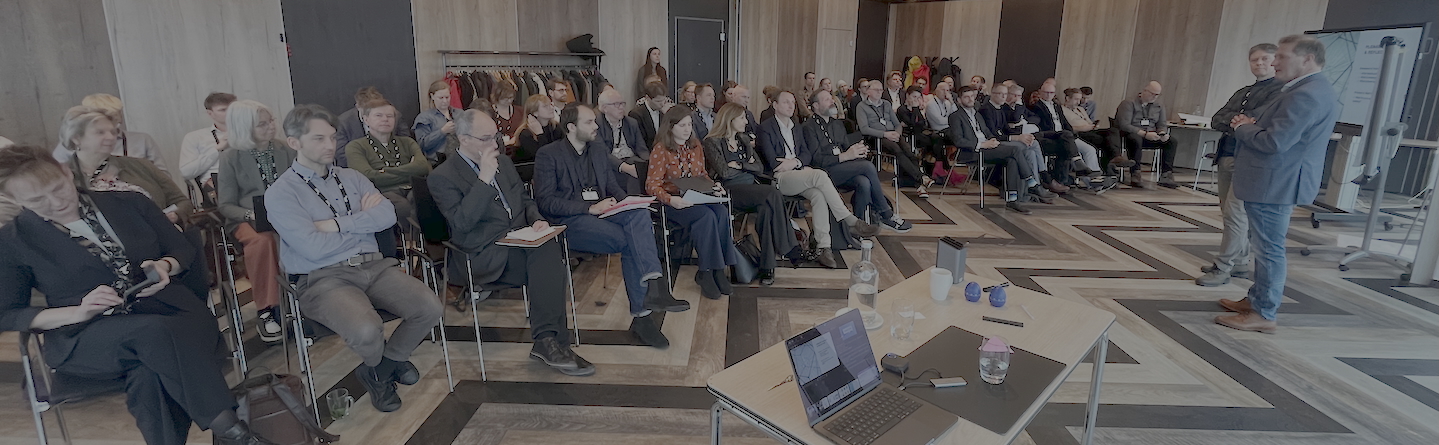
UTRECHT — The Dutch National Tripartite Event, held on 08 December 2025 in Utrecht, provided a timely forum to align the Netherland’s post-2027 EOSC ambitions with broader European developments, focusing on governance, sustainability, and the country’s strategic role.
Jointly organised by SURF, the EOSC-Association Mandated Organisation for the Netherlands, and the Dutch Ministries of Education, Culture and Science (OCW) and Economic Affairs and Climate Policy (EZK), the event brought together 65 participants, representing ministries, research organisations, infrastructures and funders, as well as trusted digital repositories, thematic digital competence centres, SURF, and DANS. Key European stakeholders, such as the European Commission, the EOSC Steering Board, and EOSC-A, also joined to discuss the Dutch position for EOSC post-2027.
European developments and their national impact
The third NTE of the Netherlands took place amid intensifying discussions on the future of EOSC , including its governance, sustainability, and funding models beyond 2027. As Member States are being asked to clarify their ambitions and level of commitment within the future EOSC Federation, the Netherlands is developing a shared position to ensure its research and innovation communities can both contribute to and benefit from EOSC in its operational phase.
The NTE opened with welcoming remarks by Ron Augustus (SURF) and Dirk Verloop (OCW), who highlighted that EOSC is evolving into a European framework for trusted data, services, and research workflows, firmly embedded in major EU strategies related to Open Science, digitalisation, data driven and AI-enabled science.
This was followed by a joint session on the European context, with contributions from the European Commission (Ana Teresa Mota), the EOSC Steering Board (Volker Beckman), and the EOSC Association (Lucia Florio). Together, these perspectives provided insight into:
- How EOSC is anchored in broader EU policy developments and digital strategies,
- Ongoing discussions on the EOSC Federation framework, including national EOSC Nodes, sustainability, and co-funding mechanisms,
- What these developments mean for the research community and for Member State engagement.
To ground the policy discussion in research practice, the programme featured a keynote by Daniel Oberski, Professor at Utrecht University and Scientific Director of the Research Infrastructure for the Social Sciences and Humanities (ODISSEI). His keynote focused on what EOSC enables from a researchers’ perspective and highlighted the need for simpler and more coherent infrastructures that align technical and organisational layers, reduce fragmentation, and support Open Science by design. Oberski also reflected on what is at stake, including Europe’s competitiveness, leadership in AI-enabled science, and the importance of coordinated national participation in the EOSC Federation.
Introduction of the Dutch advice paper on EOSC
Following the keynote, Ivar Janmaat (SURF) presented the SURF EOSC Node and demonstrated, by means of a scientific end-to-end use case, the value of the EOSC Federation.
During the next session, Anja Smit (DANS) introduced a draft advice paper entitled Netherlands in the Era of a Mature EOSC (2026-2035). Developed at the request of the Open Science NL Strategy Council, the paper proposes a shared national narrative and outlines a potential approach for participation in the EOSC Federation. Her presentation highlighted the main elements of the narrative and a possible national scenario, including the idea of a national EOSC Node with embedded thematic clusters.
A plenary Q&A allowed participants to ask clarifying questions and to reflect on the ambitions, assumptions, and implications of the draft advice paper.
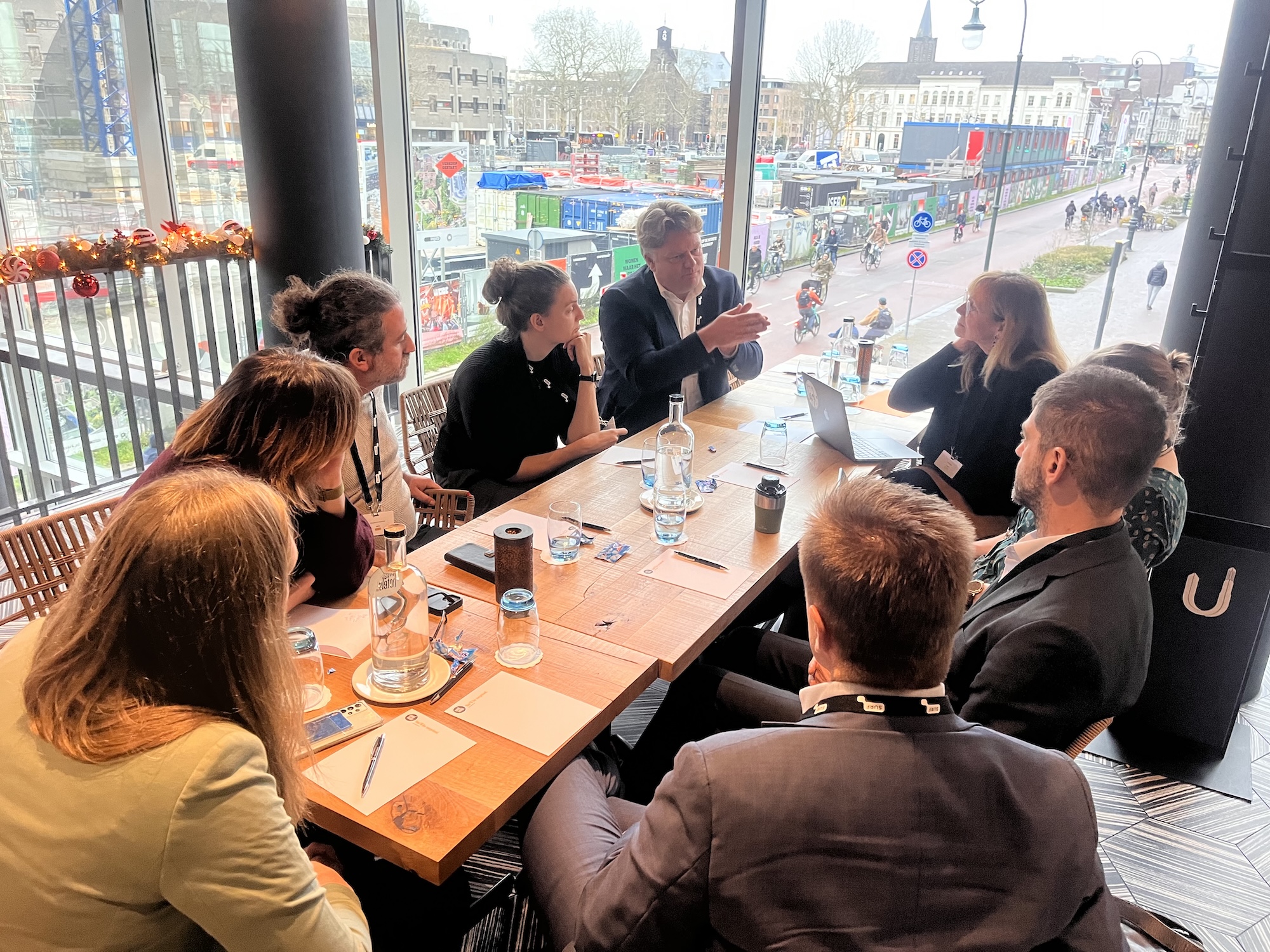
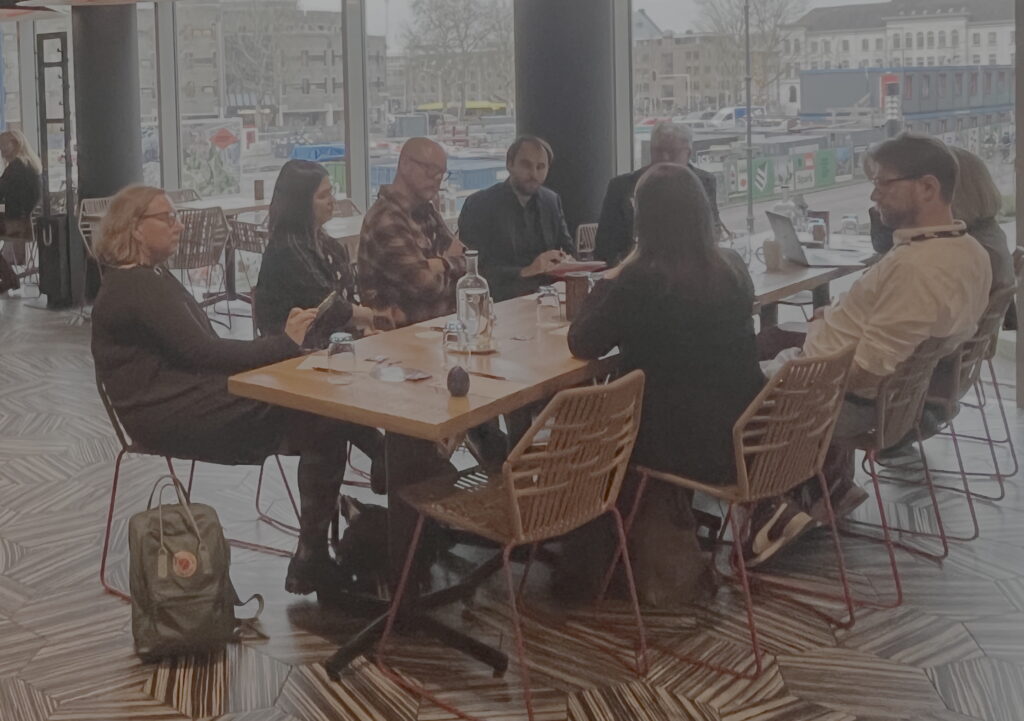
The core of the NTE consisted of an extended World Café session, designed to actively engage participants with the draft advice paper and to collect strategic and actionable input.
Three themes were explored:
- The ‘Why’: Dutch position in EOSC
- Discussions focused on why participation in the EOSC Federation matters for the Netherlands, how the national rationale is articulated, and what could strengthen the strategic ambition.
- The ‘How’: Preferred scenario
- Participants discussed the proposed organisational model, including the idea of a single national EOSC Node operated by SURF with embedded thematic clusters. They also reflected on its strengths, risks, and possible alternatives.
- Mandate and political anchoring
- This theme addressed long-term funding, sustainability, alignment between ministries and stakeholders, and the mandates and agreements needed to make the advice actionable.
In the final plenary, the hosts presented a consolidated summary of the discussions, including points needing clarification, elements that are missing from the current draft advice paper, and suggestions for next steps. The input gathered during the event will be used to refine the paper.
Ron Augustus (SURF) and Dirk Verloop (OCW) closed the event by summarising the main takeaway and reinforcing the sense of shared responsibility and momentum in aligning national priorities.